Because I actually enjoy these things, I watched the Winter Olympics Opening ceremony and listened to the Stan Sport coverage including Ally Langdon, Todd Woodbridge and Lydia Lassila. Sometimes the commentators sounded as though they were reading out words provided to them by a scriptwriter whose first language was not English, and their AI content had been put through Google Translate. For example, they commenced the Opening Ceremony with the words:
"Human potential is revealed through movement. The Olympic Winter Games is not just a competition; it's a bridge between preparation and performance - between individual ambition and shared celebration. Sport distils life to its essentials: discipline; courage; respect. This is where, in a few fleeting seconds, years of training could be validated; it's where focus meets pressure and where determination turns into possibility, and Italy, this country shaped by craft and creativity, is the natural home for such moments: a passionate place that understands that greatness is built, not rushed."
All this makes me wonder how that equates with the young schoolkids doing their flicks and tricks on snowboards, some of whom only got the call-up the week before - they giggle and snort and roll their eyes and use their youth jargon, which is all very well in the X-games, but is it the equal of a talented and determined Olympian who has trained for years? Mine is not to reason why, etc.

So it begins at the San Siro, as these things often do, with graphics and a video montage. We are treated to classic Italian images: a single skier carving a track down a mountain through pristine snow; alpine horns, traditional garb and stunning backdrops; food, wine and coffee; goatherds (thankfully of the non-yodelling variety); design and fashion in everything from cars to architecture.
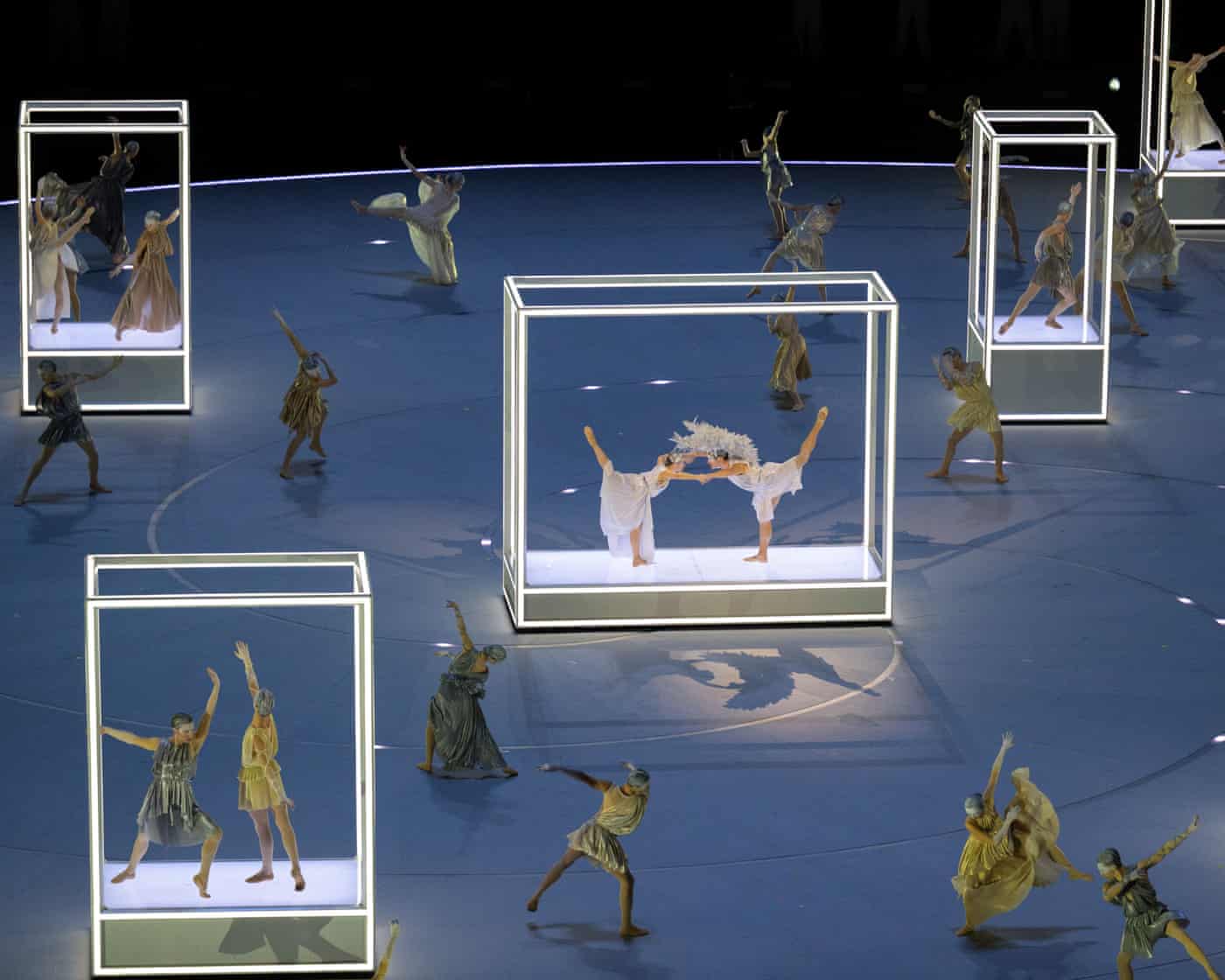
The opening live number is of people dressed as marble statues in light boxes. This is titled Armonia (harmony) and is apparently a narrative designed to unite territories, people and values with a shared vision or 'bringing together what is different'. It is an homage to neo-classicist 18th century sculptor Antonio Canova, who is known for his skill in bringing marble to life. There is something about Cupid wakening Psyche with a kiss, and then the statues become ballet dancers pirouetting and plie-ing about the stage. I learn that they are dancers from La Scala choreographed to evoke the fluid, dynamic movements of winter sports.

Men in suits with cameras surround a woman on a catwalk (I guess Italians invented the paparazzi too) in a chic velvet gown with shoulder ruffles inspired by piano keys, waving a conductor's baton about. She is 'famed Italian actress' Matilda De Angelis and she leads another set of dancers cald in black and white bodysuits, representing 'dancing notes in a kaleidoscope of Italian imagination' This is a reference to Guido d'Arezzo, an 11th-century monk from the Order of Saint Benedict and musical theorist who is regarded by many as the inventor of modern staff notation. These games will often to be referred to as the most gender equal as women are represented as much as men for the first time. The NBC commentator calls multi-award winning 30-year old actor De Angelis a 'starlet', so we clearly have some way to go with that then.
She is joined by three men with giant bobble heads for a Fantasia section inspired by three greats of opera: Verdi, Puccini and Rossini. They do a dance which is incredibly naff and apparently one of the repeated motifs of these games. The phrase 'rivoltarsi nella tomba' springs to mind.
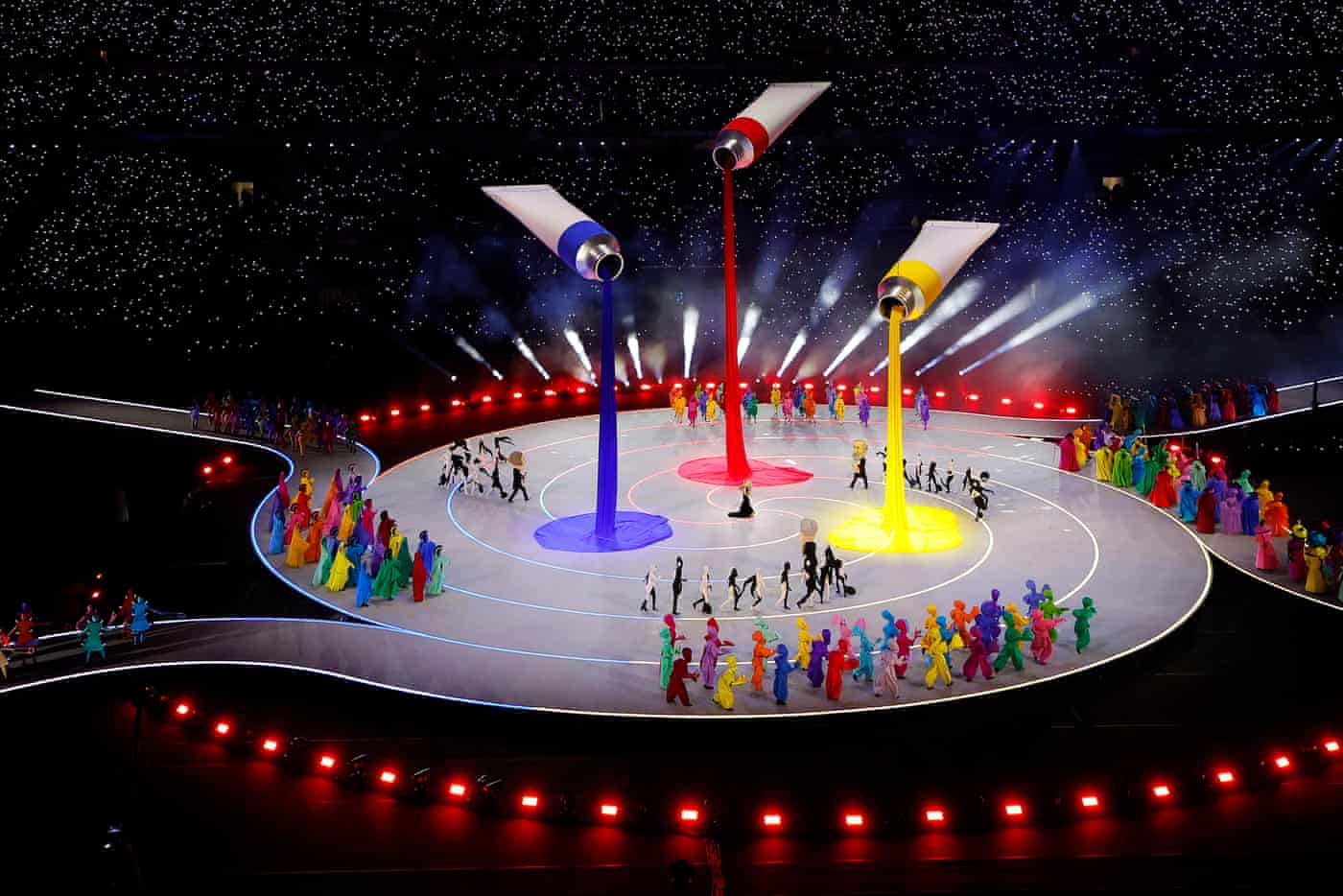
Paint tubes appear from the ceiling in the primary colours of cyan, magenta and yellow, and they 'drip' sheets of cloth which combine to make every colour in a rainbow swirl on the stage. There is now a giant parade of characters from Ancient Rome to the Renaissance who traverse in a grand Passeggiata. We have walking colosseums, coffee pots, picture frames, cut-out pattern dresses, chefs, gondoliers, figures from literature and opera singers in a tribute that combines the beauty and function of Italian design. They all form into a colour wheel and the segment ends with fireworks and the final notes of Nessum Dorma.
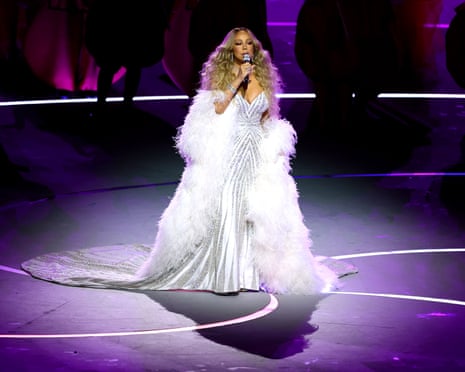
Mariah Carey for no apparent reason pops up and warbles and screeches her way through Volare and some drip-fest called Nothing is Impossible. she is redundant, sorry, I mean resplendent in a sparkly white gem-encrusted frock and draped in feathers and waves of hair. Why is she even here? If we are going to have an Italian-adjacent American, I'd much rather see Stanley Tucci. Anyway, she's presumably wheeled off, and we get to continue.
There is another video montage with shots of trams, fountains, families and illuminated buildings at night. Various Olympians get on a tram and a kid drops a mascot (I'm not surprised; those weasel things - named Milo and Tina after the host cities - are weird), which is handed back to them by a twinkly old gentleman who turns out to be the president of the Republic of Italy, Sergio Mattarella. And it transpires that the tram was being driven by Valentino Rossi, presumably at 46kph.
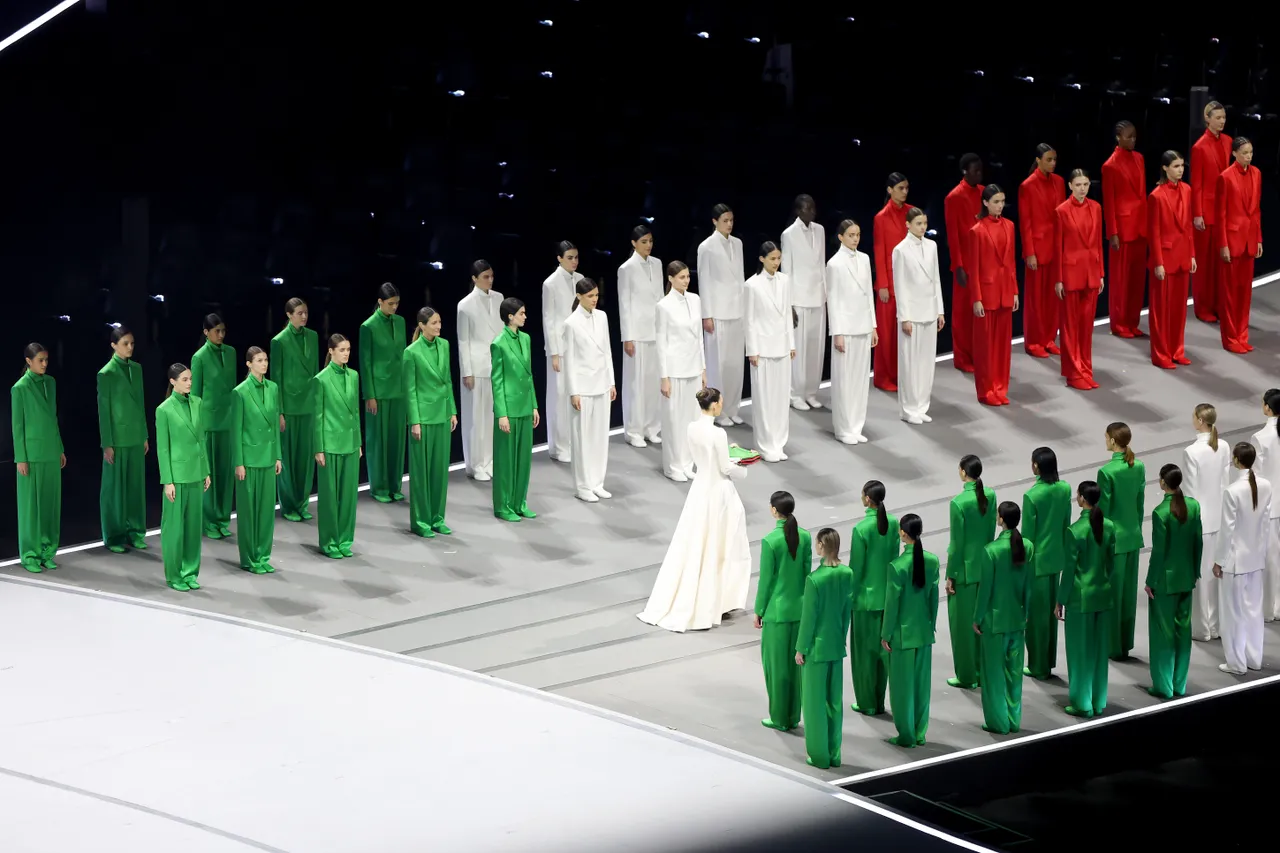
We now have a tribute to fashion icon Giorgio Armani, longtime designer of the Italian Olympic uniform and internationally-renowned Milanese, who died last year. Female models clad in suits of either red, white or green stalk down a catwalk to represent the Italian flag in human form. Armani design is said to embody simplicity over trend as the flag becomes a living expression of his style. Supermodel Vittoria Ceretti, the face of the last Armani collection carries the flag and hands it to a bloke in a plumed helmet - a member of the Corazzieri, the Italian Corps of Cuirassiers, to be precise - to raise it up the pole.
Because the Games are spread out across Italy, certain elements of the opening ceremony (including the raising of the flag and the parade of athletes) are being held over four venues: Milan (ice-hockey; figure skating; speed-skating) Cortina in the heart of the Dolomites (men's alpine skiing, curling and sliing events), Livigno in the Italian Alps (snowboarding; freestyle skiing; men's alpine skiing; ski mountaineering) and Predazzo in Trento (ski-jumping; Nordic combined; cross-country skiing). Meanwhile, back in Milan, Laura Pausini performs a stirring version of the national anthem.
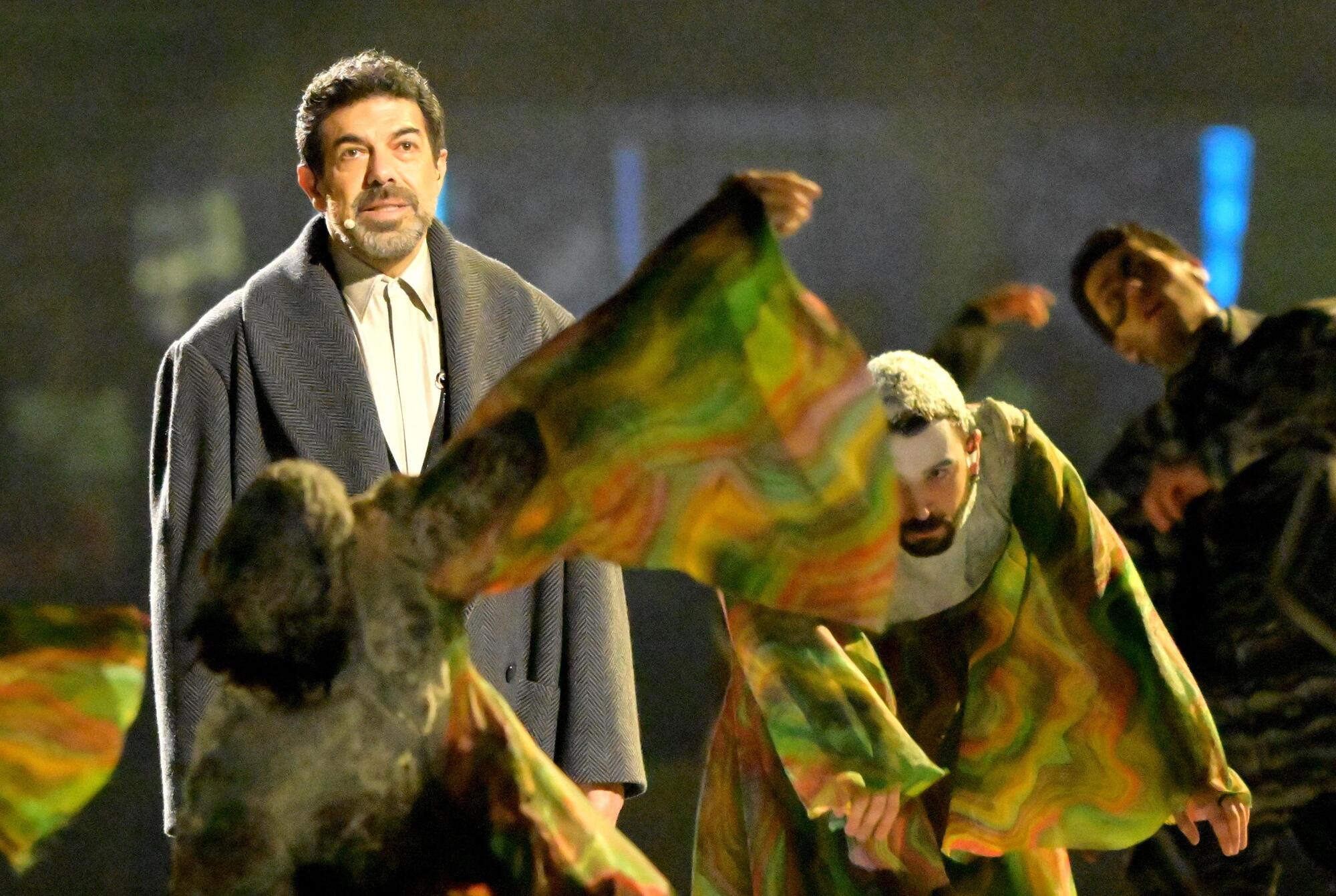
Then a chap in a suit recites a poem. It turns out (from a quick look on Google) that this is renowned 56-year-old Italian actor and film producer, Pierfrancesco Favino (I wonder if NBC referred to him as a starlet) wearing Armani and the poem is Giacomo Leopardi's L'infinito. The poem embodies a yearning to travel beyond restrictive borders and to experience more of the world of wonder. He is accompanied by a violinist (Giovanni Zanon) with an original composition, in the start of a section about how to balance human ambition and the natural world, incorporating performers representing the mountains and the city to show the harmony between them.
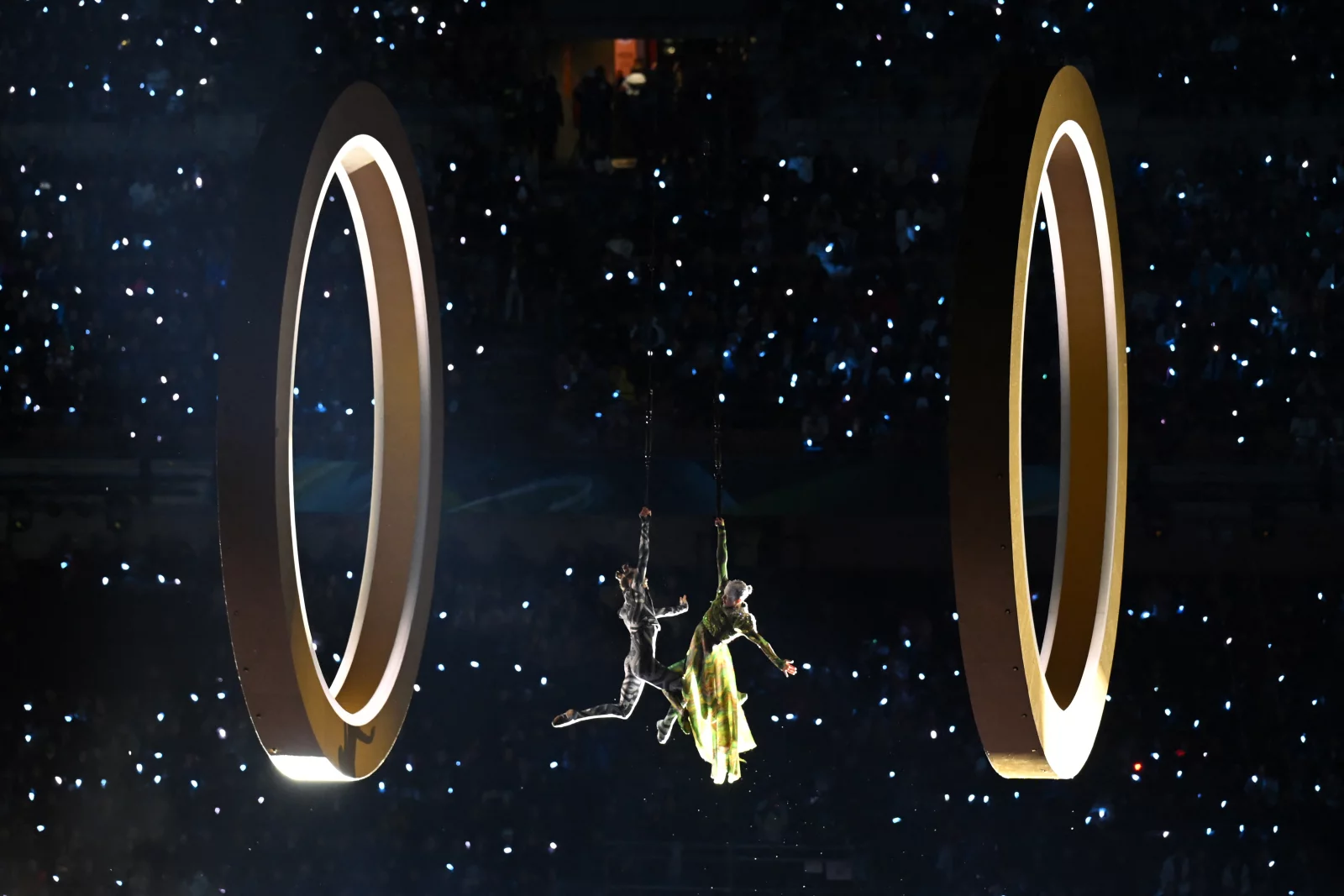
The harlequin-esqe dancers in earthy green tones dance around a couple of large rolls which are soon hoisted aloft to become two of the Olympic rings. These two represent the coming together of Milano and Cortina, and there are aerials as each ring contains one of the performers and they meet mid-air. The other rings join in until all five are up there united in harmony and pyrotechnics.
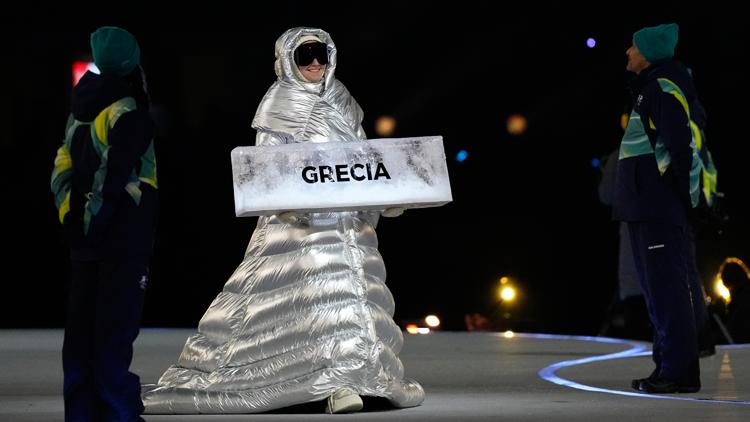
And so we come to everyone's favourite fashion parade as the nations all march in at their various venues - as noted above. Each nation follows a person dressed wrapped in padded tin foil and holding a iceblock etched with the country's name into the stadium, except sometimes the nation's athletes aren't in Milan and the name-bearer enters alone like they've been trapped in a walk-in freezer. Apparently this was the case with Australia's flag-bearer Matt Graham, whose parents were so excited when they heard he would lead the parade that they bought tickets to the opening ceremony in San Siro, and he proudly waved his national flag... in Livigno. Ooops.
Beceause I clearly know heaps about this fashion malarky, I shall be going into detail about these outfits elsewhere, but for now, let's progress with the rest of the ceremony, which continues with a section introduced by a montage summarily dismissed by the internet cognoscenti (another Italian word - see what I di there?) as AI slop. An actor (Sabrina Impacciatore) appears to be sitting on a sofa when disturbed by giant Olympic mascots (I have mentioned before - they are pretty disturbing) before morphing into an anime character who skates, skis, boards, slides and jumps her way through different art deco style former Olympic locations before arriving as herself at the stadium in an oddly-conceived white and gold spandex number.

She then dances through the decades with backing dancers beginning with jazz hands, wool and tweed, segueing into bold colours and 60s/70s funk and frug, through the best-forgotten 80s pastel and dayglo shellsuit combo (although I did like the elcetronica version of 'faster, higher, stronger' - music provided by green-haired DJ Mace, who had previously accompanied the athetes' parade), and culminating in a time-travel triumph to modern dance and techno, accessorising with a shaggy jacket, fluffy hat and big boots.
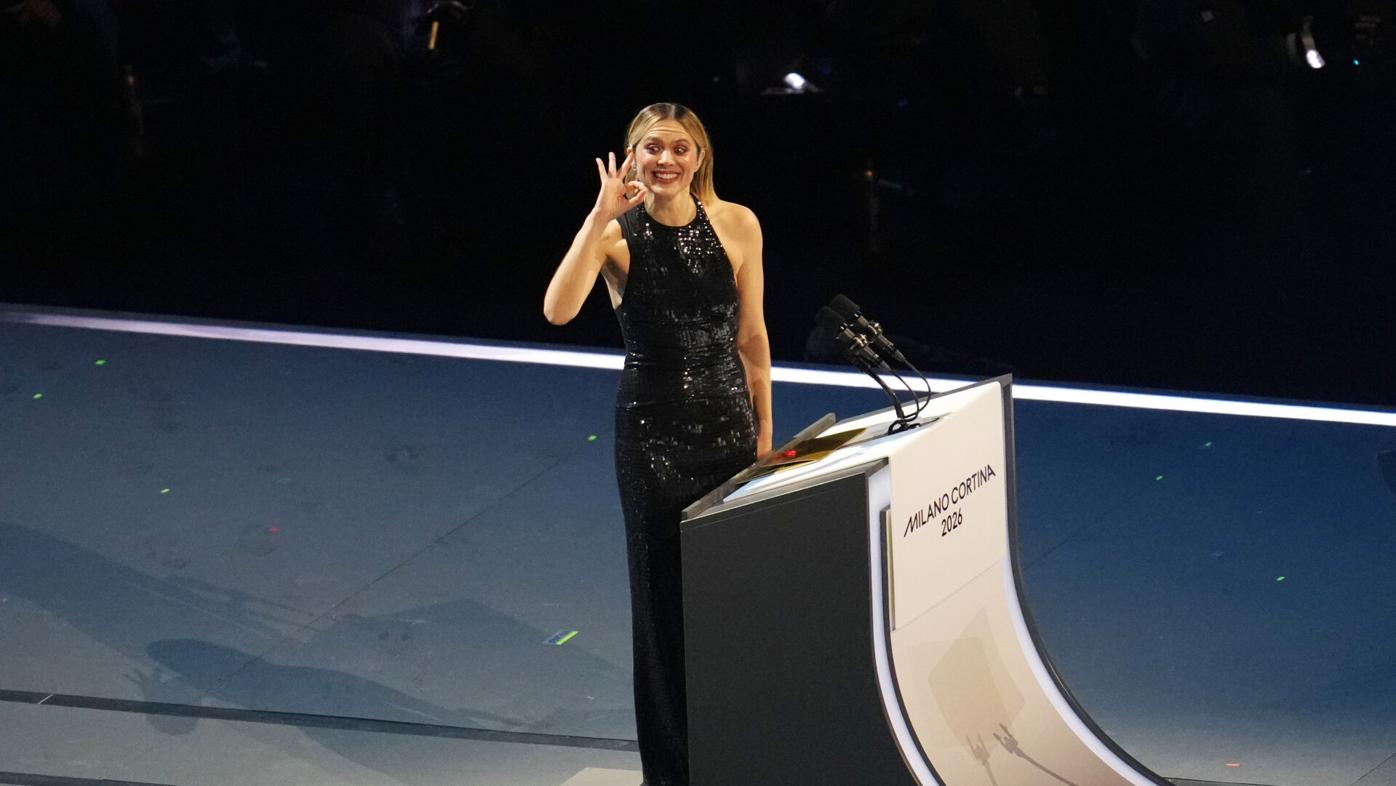
The tricky trifecta of long dress, high heels and desending steps is hard to watch but it transpires it is a comedy skit performed by Brenda Ladigiani in homage to Italian hand gestures as she attempts to get someone to switch on her microphone. It's sweet, funny, and succinct, and a great way to welcome us to Italy before all the nations' flags are raised in unison and the offical speeches get underway.

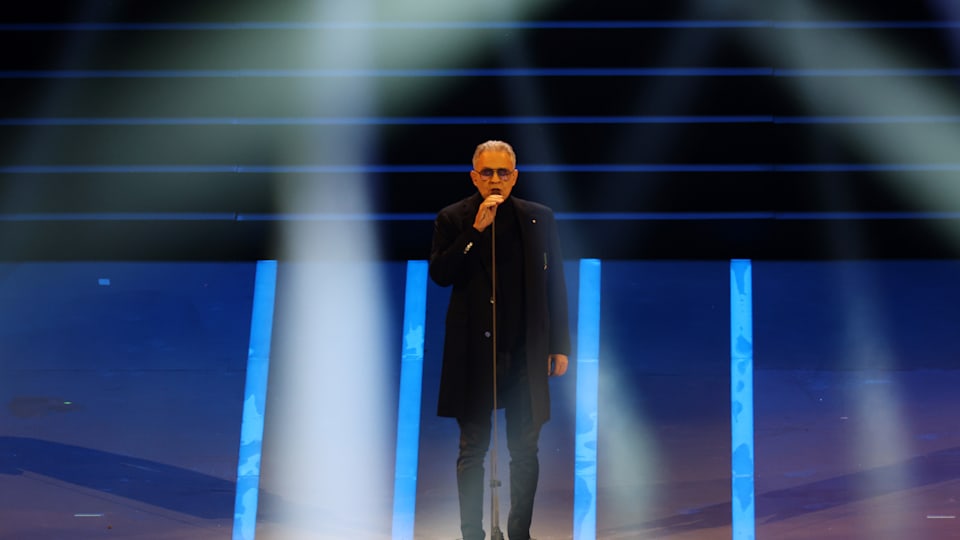
Thankfully Andrea Bocelli takes to the stage and shows how it's done (take note, Mariah - just the one and stick to it) with a spine-tingling rendition of Nessum Dorma. At the literal high point, the Olympic torch makes an appearance carried by footballers Franco Baressi and Beppe Bergomi who both captained Italy and AC Milan and Inter Milan respectively - a nice touch as we're kicking about a harmony theme.
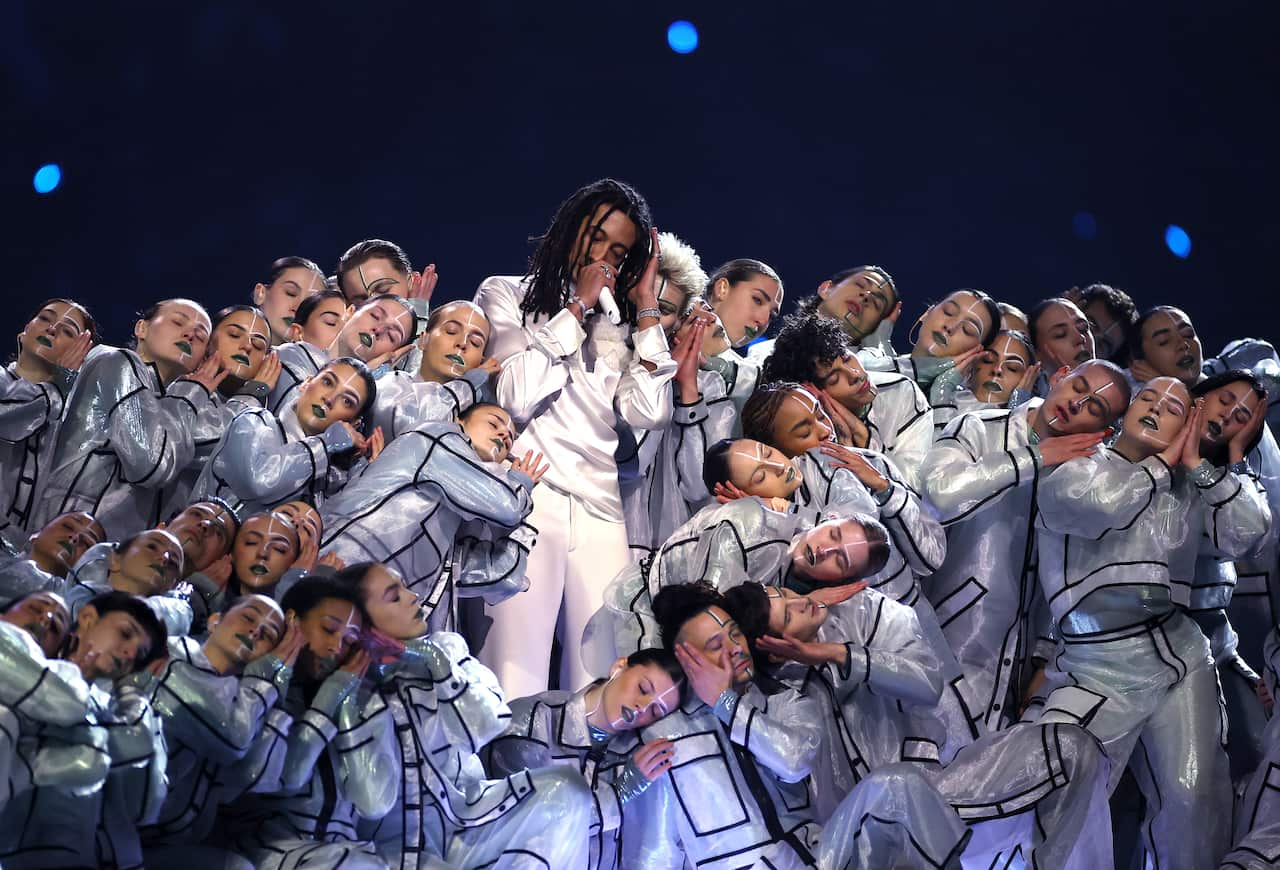

And then Charlize Theron pops out as the UN Ambassador for peace and quotes some words from her fellow countryman, Nelson Mandela, "Peace is not just the absence of conflict. Peace is the environment where all can flourish".

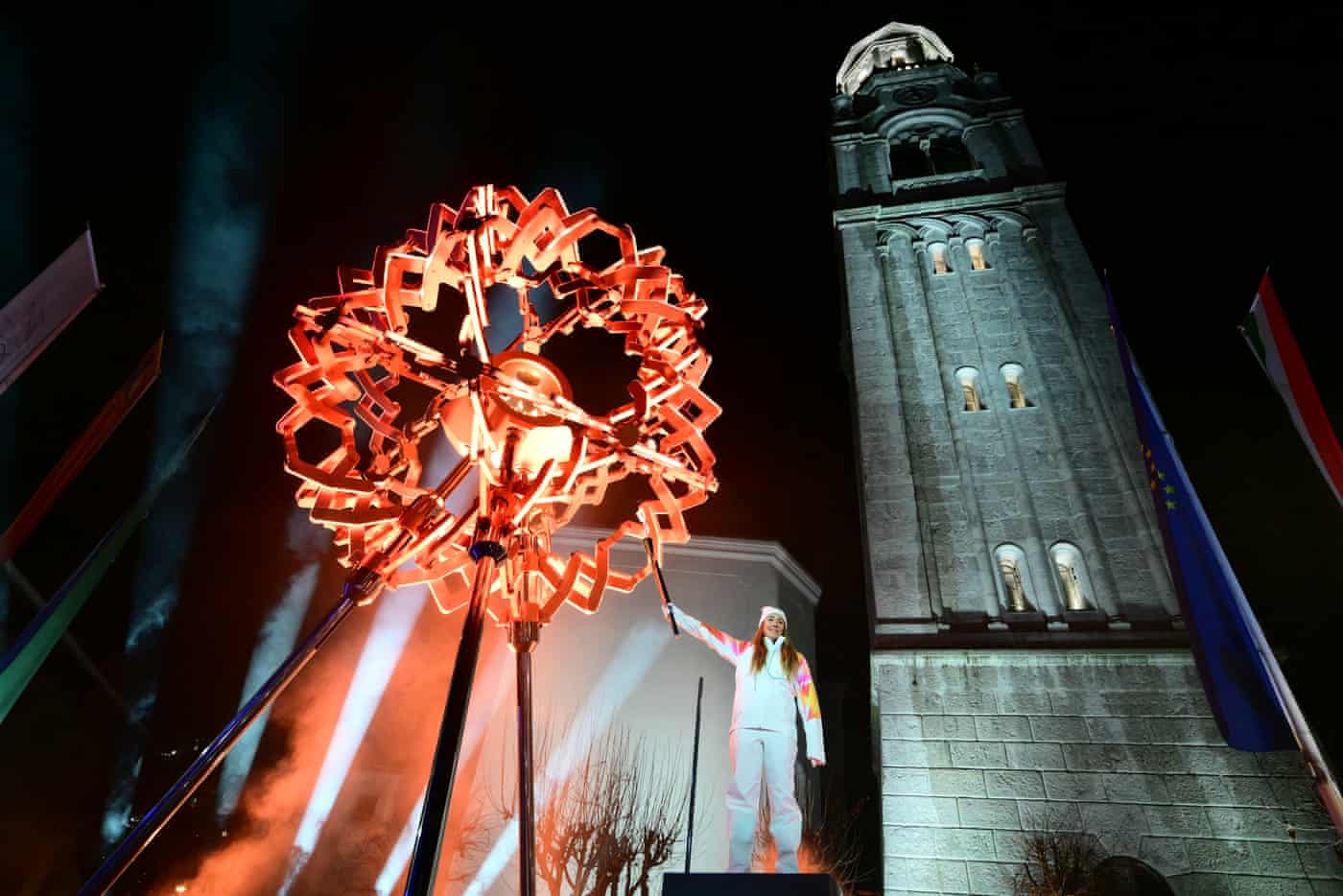
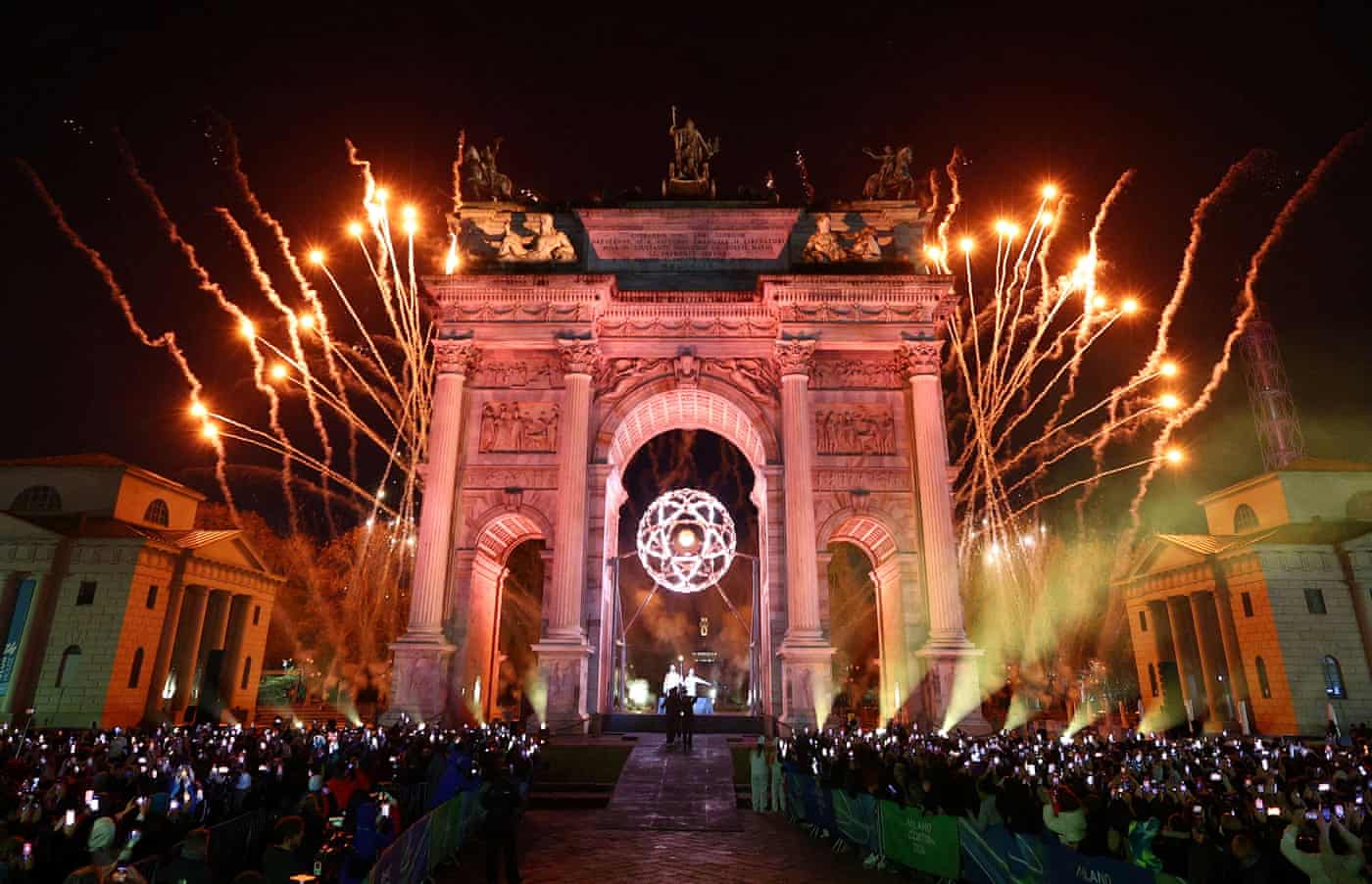
In all the venues, we now have the passing on of torches and flags. In Milan the Olympic anthem is sung rather wonderfully by mezzo-soprano Cecilia Bartoli accompanied by a children's choir and Lang Lang on keys (Chinese pianist because apparently Italians don't play piano...?). In Predazzo they are probably all down the pub by now singing along with Joe Dolce (because they gotta no respect and it's flippin freezing standing about in the cold night air). The theme of the European union (Ode to Joy) is belted out and the stars of the European Union is projected ont the Arco Della Pace.
While we wait for the torch bearers to arrive at their cauldrons (there are two this year, in a first for the Olympics), there is some palaver about a small child experiencing the wonder of the galaxy with a model of the solar system, before she is joined by Samantha Cristoforetti (the first woman to command the space station) who is supposedly symbolically bringing a bright sun to the stage, highlighting the need to "care for the planet, bridging scientific curiosity with environmental responsibility". There are more dancers who apparently create the Milky Way, but unfortunately, close up, they look like they are trapped in condom-clad trombones. Apparently the 108 dancers are a variation on NASA's Golden Record from the Voyager probes. (You can learn a lot from the internet if you know where to look).
And finally the cauldrons, designed by Marco Balich and inspired by Leonardo da Vinci's geometric studies, are lit at the Arco della Pace in Milan and Piazza Angelo Dibona in Cortina. The former is lit by past gold medal winning alpine skiers Alberto Tomba and Deborah Compagnoni, while current hopeful Sofia Goggia does the honours in Cortina. More fireworks; more cheers; more bright lights, and everyone heads off for some hearty Gluhwhein - except for those in Predazzo and Livigno who are probably well on their way. And that's it for tonight. Let the Games begin (apart from the curling, which has already been going for the last couple of days and in fact goes for every day of the Winter Olympics, but let's not quibble)!


