Showing posts with label Ian McKellen. Show all posts

Friday, 1 January 2016

Friday Five (Six): Favourite Films of 2015

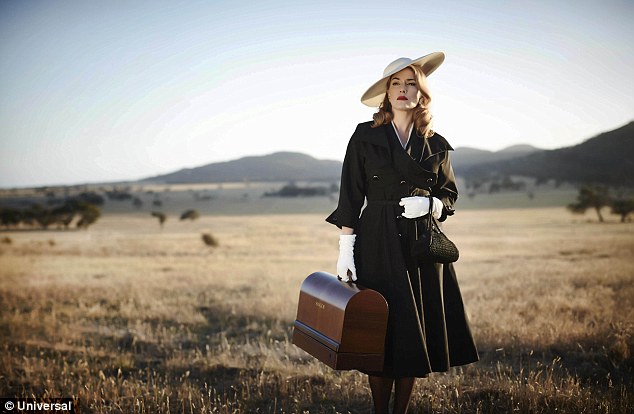
Kate Winslet in The Dressmaker
Obviously I have not seen everything that was released in 2015, but I totted up the number of this year's films I have seen and there are twenty on the list. So I have whittled it down to my favourites (in alphabetical order). And, yes, there are six, but as I've said before: my blog; my rules.

6 Favourite Films of 2015

  1. The Dressmaker – A glorious multi-genre Australian film directed by Jocelyn Moorhouse, with roots in fantasy, Western, black comedy and revenge drama, with the most outstanding costumes you’ll see this year. Kate Winslet is fabulous as the woman who returns to the town that spurned her as a child in a blend of Mary Poppins and Chocolat but without the songs or the saccharine.
  2. Mr Holmes – Ian McKellen is wonderful as the curmudgeonly retired detective with a passion for bee-keeping and a need to tell the truth about his last case, even if it doesn’t paint him in the most flattering light. His interactions with young Roger (Milo Parker) are heart-warming, and his oblivion to the feelings of Roger’s mother (Laura Linney) is equally affecting. Director Bill Condon has a great cast, and he makes the most of them in a reflective work.
  3. Selma – David Oyewolo portrays Dr Martin Luther King as flawed and conflicted despite his firm belief in civil rights. If you put your family in danger for your convictions, does that make you a hero or a martyr? Director Ava DuVernay poses this question as the film focuses on the specific 1965 incident of the Selma/Montgomery marches in Alabama. This cohesive narration avoids the potential of a rambling biopic, while the superb acting and direction make it a confident and assured work of cinema.
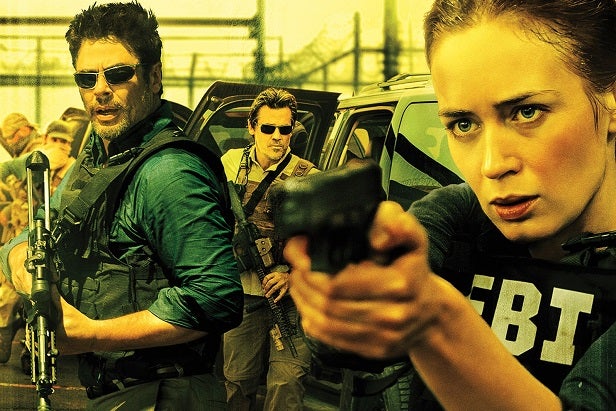
  4. Benicio del Toro, Josh Brolin and Emily Blunt in Sicario
  5. Sicario – Emily Blunt is the viewer’s Everywoman as she gets mired in an FBI operation to bring down the leader of a powerful and brutal Mexican drug cartel. She is unsure of who is in charge and the ethics of their actions, as is the viewer. Denis Villeneuve directs terrifically tight action sequences full of anxiety and tension. Benicio del Toro and Josh Brolin are also excellent in the frustrating thought-provoking drama.
  6. Testament of Youth – This is highly recommended quality film-making; one of the best adaptations of a book I’ve seen, and I loved the book! Alicia Vikander is excellent as Vera Brittain, who remains stoic at the heart of the dramatic narrative. Huge plaudits must be awarded to director to James Kent for handling this iconic memoir of WWI from a woman’s perspective with such subtle charm.
  7. Youth – Deliciously studied performances from Michael Caine, Harvey Keitel and Rachel Weisz at a luxury lodge in Switzerland also populated by Maradona, Miss Universe, an actor studying for a role (Paul Dano), and a couple that never speak, make this a marvel of cinema. Paolo Sorrentino directs with a masterful touch; the sound and the scenery, and the superb supporting cast all combine to make this simply sublime.
Michael Caine and Harvey Keitel in Youth

Wednesday, 24 August 2011

Playing Dress-Ups

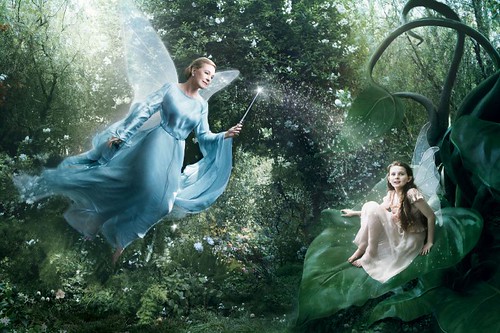
The Weevil took her children to see a production of Pinocchio at the Gryphon Theatre the other day. They loved it, especially as they got to meet the actors afterwards; the Blue Fairy was a big hit by all accounts. There are photos on the wall of the theatre of previous productions and they spotted me in one of the pictures. 'Is that Aunty Katy playing dress ups?' the youngest one asked, apparently. And yes, I suppose it is.

I am currently rehearsing for Secret Bridesmaids' Business (which is due to open on Thursday 1st September at the Athenaeum Hall in Arrowtown), in which I get to play a character completely unlike myself. Lucy Dean is 'earthy, impetuous, direct.' She is 'tall, striking', and one hell of a trouble-maker. She never censors herself, is impossible to embarrass, and is 'not scared to say things that people don't want to hear'.

I am a Libran who is almost incapable of making a decision. I hate conflict and am terrified of hurting people's feelings. Can you imagine how liberating it is to portray the exact opposite? There are many reasons that actors act. This is one of them. You can slip into different characters and try them on for size just like a new outfit. It's a lot of fun, and can be a thrilling experience. I think you just have to make sure you don't take it too far, however, which is why I am not a fan of method acting.

When the lights go down and the audience leaves, you have to remember who you are underneath the temporary wardrobe. Acting (in the words of the great Sir Ian McKellen) is pretending. Imagination is powerful, and children instinctively know that. Maybe I have just never really grown up, but I still love playing dress ups and hope I always will.

Friday, 9 July 2010

Worth the Wait

Waiting for Godot
(Theatre Royal Haymarket Productions)

St James Theatre, Wellington
30 June – 2 July

“The acting was fantastic, the set was great, but I don’t think I really like the play.”


“I didn’t really like it at the time, but I’ve thought about it so much since and seen many more layers the more I think about it.”

“There are many ways to interpret the play, and this production really accentuated the comedy.”

“I think this is perfection – I’m not sure that I ever need to see that play again.”

The above comments are from my friends who saw the recent production of Waiting for Godot in Wellington. I can agree with all of them. It’s a ‘difficult’ play. Ostensibly nothing happens – a couple of old blokes wait around for a man who never comes. A messenger tells them that Godot is sorry that he won’t be able to come today, but can they come back again tomorrow. They do so. We get the impression that they may have been doing this for some time now and may continue to wait forever.

People admire Beckett’s formidable reputation: they respect Waiting for Godot; they study it; they wrestle with it; they fear it; and they appreciate it. But do they really like it? After all; what’s to like (see synopsis above)? There is no real character development, no explanations, and no glib back-story: the characters merely are what they do and say, and that really isn’t very much. I have heard this described as “an actor’s play” but it could equally be “a directors’ play” because the interpretation is everything – and director Sean Mathias has worked with his actors to produce a sumptuous production.

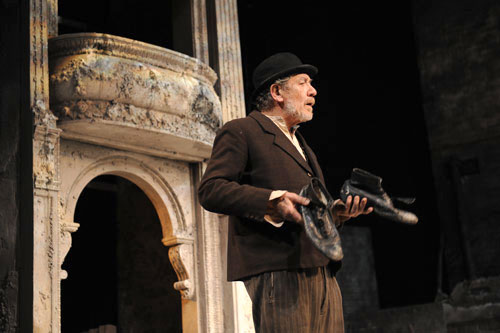
Estragon (Gogo) – Ian McKellen – and Vladimir (Didi) – Roger Rees – are perfectly balanced like children on a see-saw that have rocked to a stand-still. Didi seems to be the practical, protecting one, while Gogo is the entertainer or whiner, depending on his mood. Didi tries not to laugh, due to a weak bladder and unspoken prostate complaint, but Gogo frequently has him in stitches. To pass the time as they wait, they try conversing, arguing and contradicting each other. Their verbiage is delightful and it is refreshing to hear Ian McKellen talk in his natural Lancashire (not Yorkshire as I have seen reported – he was born in the same hospital as Him Outdoors) accent.
 
The two old men are totally in-synch, and we believe theirs is a relationship that has blossomed over the years with equal parts affection and irritation. They are clearly afraid of being alone but even the talk of hanging themselves from the emaciated tree is done in a quirky and flippant manner. The humour masks the sinister, nightmare quality that can seep through this play. As Didi tries to explain to Gogo that they were here yesterday and what they did, Gogo’s inability to remember is not as dark as it could be – nor is the fact that he is beaten every night – by what or whom we don’t know, but it doesn’t seem to matter as much as it could.


Across their radar stumble Pozzo and Lucky. Matthew Kelly (yes, the one from Stars in their Eyes) is sensational as Pozzo. He uses his imposing height and commanding voice to tower over the cowering old tramps. But although he is the one literally cracking the whip and pulling the strings, he is helpless and lonely, demanding companionship from the macabre Lucky (Brendan O’Hea) who is anything but. He can command Lucky to sing, dance or think, which he does with energetic aplomb. These two are defined by this chilling master/servant relationship with an unidentified tipping point.

The raw emotion is paramount as the characters behave like vaudevillian clowns – Lucky even appears with white-face and big blackened eyes. The physical theatre is excellent from the business with the bowler hats and boots (as explicitly specified in the stage directions), to the shuffle dance and mocking imitations. This isn’t a long play on paper, but it lasts for over two and a half hours and the repetitions begin to feel increasingly surreal.

The silences are substantial as the men inhabit their feelings: anxiety; hope; fear; anger; frustration; sadness; envy; need; hunger. They cross the boundary between mental sensation and physical state. We have animal sensibilities but we are human in our need to relate. We are only who we are in relationship to each other, and how that relationship develops depends on the part we choose – yes, choose – to play. The theory that we can choose to determine our own development is the definition of existentialism, of which this play is regarded to be one of the greatest proponents. As ever, the great man was right: we are all merely players; and one man in his time plays many parts.

The set (designed by Stephen Brimson Lewis) deserves an individual mention as the ruined theatre confronts us. Is the rubble the aftermath of some violent event; should we be worried about the absence of Godot? Is it an indication of the deconstruction of the theatrical experience – no longer content to follow a traditional plot that troops through its chronological stages and sends us away satisfied with a happy ending? The spindly tree, frigid moon (lighting designer – Paul Pyant) and discordant sounds (sound designer – Paul Groothus) leave us aching with longing for something, but what? There really are more questions than answers in this play.

In essence, this raises the question of how we validate our existence. If I have been for walk, read a book, shopped for groceries, done the washing, paid the bills and written a couple of letters, I will still answer ‘nothing much’ when someone asks, ‘what have you done today?’ We spend a lot of time waiting for something exciting and diverting to happen to us – when it doesn’t, can we really say we have lived, or just existed? I think we can consider this production of Waiting for Godot to be one of the most exciting and diverting to happen in a long time.