Showing posts with label rehearsal. Show all posts

Sunday, 11 November 2012

Quote for Today: Reheasal Space

We had a technical rehearsal today for Alan Ayckbourn's Improbable Fiction, that I am performing in for Canberra Repertory Theatre. Technical rehearsals are always long and usually tedious, but totally necessary. We got through today's quite well, and, as far as I know, without too much major incident.

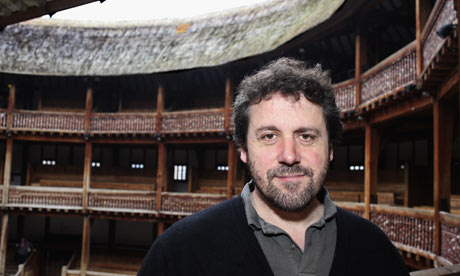
Dominic Dromgoole has some sage words about rehearsal rooms, although clearly he has never worked in Queenstown.
“For some, it’s a seminar room (the deadliest); for some a party (the most fun, with the most variable results); for some it’s a therapy session (avoid like the bubonic plague); and for many it’s a knocking shop (be selective). But for the best it is often a temple. Something special and magical takes place in there, and the air around it has to be carefully looked after to ensure anything is possible. This doesn’t mean everyone prays or takes off their shoes and pads around with Peter Brookish Obi-Wan faux religiosity. It means you treat it with respect and humility. And you don’t allow kids in.” - Will and Me: How Shakespeare Took Over My Life by Dominic Dromgoole, artistic director of the Globe Theatre.

Thursday, 22 September 2011

When communication counts


One of the things I enjoy about theatre and performing or directing is the way all the elements come together. Sometimes these blend almost seamlessly, and at other times they are more awkward.

We are currently in 'black week' for the Alexandra Musical Society's production of The Full Monty. This is the term given to the week before the performance where the actors, having been the focus for the past three months of rehearsal, are no longer centre-stage. Instead the director turns his or her attention to aspects of sound, lighting, cotumes, hair and make-up, the band and traffic.

This show uses 'trucks' or set pieces on wheels which must be rolled into position and then removed from stage for various scenes. We have to negotiate urinals, pianos, police sergeant's desks, sofas and coffins: the stage-crew are busy. There are very quick changes: the costume department are very busy. Microphones have to be attached and removed in a rapid time-frame; meanwhile lighting and sound cues are crucial to the actors and the band.

It's all coming together and it will be a wonderful show. Many people are learning a lot and learning it fast. Our director, Bryan Aitken, is a good teacher - he spells things out clearly and concisely. The most important lesson he teaches is, "It's not just about you. Make sure you communicate". The stage manager calls the show - he or she makes sure that the actors are ready; the sound and lighting technicians know when their cues are; the band are tuned up and focussed in the pit.

No one component can start without the other. It is a giant dramatic jigsaw puzzle and each piece fits in exactly the right place - if it doesn't, then the picture will be subtly (or radically) altered. Clear forms of communication are necessary between departments, which may mean that not everybody has to pipe up at the same time and create a chaotic cacophony.

Meanwhile the rest of the nation is embroiled in the throes of the Rugby World Cup. The media here is still harping on about the mess of the 'party central' when lots more inebriated rugby fans, and other folk, turned up to the Auckland waterfront than were expected so all public transport was thrown into turmoil, even though this was routinely advertised as 'the place to be'.

Ignoring the sideshow, the players have been out and about mingling with the public and attempting to foster good PR networks. You may have noticed that I went along to meet some of the England team when they visited the local school. Other team members (including top trump Jonny Wilkinson) went to Wakatipu High School for a skills sessionwith the young players.

Asked for advice, Jonny Wilkinson (OBE) said the most important aspect of any team sport was to communicate clearly with your team so everyone was aware of what the others were doing all the time. It's all very well to be the Flash Harry, but for the sake of cohesive teamwork and ensemble performance, it's better to be Johnny-on-the-spot.

Thursday, 18 August 2011

Bisy Backson

This is the reason I've not been a particularly prolific poster over the past couple of weeks. I have been rehearsing hard for The Remarkable Theatre production of Secret Bridesmaids' Business. It's an intelligent play full of real relationships and awkward questions that you don't want to ask in case you get an answer you don't want to hear. It's funny and smart and tinged with emotion throughout.

If you are in the area, I thoroughly recommend you get yourselves down to the Athenaeum Hall in Arrowtown in a couple of weeks and enjoy a great night out! (Poster designed by Emma Newell of An Eye for Design)

Secret Bridesmaids' Business

Monday, 6 July 2009

Speak the speech


We have a set for Twelfth Night now. We are performing in a school hall so we had to wait for the school holidays before we could create anything semi-permanent. The set construction people have been busily beavering away all weekend to create us a space to strut our stuff. I called them the set fairies yesterday, which I’m not sure was taken the right way – construction angels might be a better description.

I love it when you first step onto the stage you will inhabit every night for the foreseeable future. As you become accustomed to renegotiating entrances and exits, squeezing past set furniture in multiple layers of skirts and tripping (hopefully not literally) up split-levels in high heels, the play begins to come alive, and you can explore the physical as well as the verbal presentation of character.

I have been reading Will & Me: How Shakespeare Took over My Life by Dominic Dromgoole. He is, among other things, the artistic director of the Globe Theatre and he has a particular hatred for people trying to impose a ‘concept’ onto Shakespeare’s plays, which I entirely share.

He believes that Shakespeare wrote of amazingly intricate and messy characters – their strength is in their words and they should not descend into stereotype, cipher, or imagined subconscious motivation. Why invent an interior monologue for a character when Shakespeare has already given you a soliloquy?

Dromgoole eschews elaborate and unnecessary stage business to let the poetry of the text paint its own pictures. In fact, he advises Shakespearean directors and actors to do just as Hamlet tells the players: speak the speech clearly and suit the word to the action.

I really appreciate what directors Mark Da Vanzo and Kathi George are doing in our rehearsals by respecting the value of character and textual analysis. What do you think he means? Who do you think she’s referring to? These are frequent questions in rehearsals, and I really do think they are open to discussion. Of course, the final decision comes down to the director, but there is a place for trying out different approaches, and this place is in rehearsal.

Him Outdoors loves training more than the race. In a way, I almost prefer rehearsals to the performance. By the time you get there, everything should be fixed and constant. You know where you are. I like getting there. I’ve always enjoyed anticipation. After all, ‘It is better to travel hopefully than to arrive’ as someone once said. Probably British Rail.

For details on the production and to book tickets, visit the Khandallah Arts Theatre website.

Wednesday, 29 April 2009

Epiphany in rehearsal

Our first Twelfth Night rehearsal was a read-through, which is fairly standard procedure. Our second was another read-through but this time we had all translated our own lines into modern English. I found this really interesting and there were several lessons learned. Here are three of them:

1. Because people were only translating their own lines, some didn’t think about the speeches that followed. Some of the comic interchanges don’t work if a person hasn’t thought to use a word that the next person puns with. This proves the fundamental way a play works – that all the dialogue is interconnected and no one person, whether they be the lead or the comic relief, can consider their speeches in isolation.

2. Many had thought that the modern read-through would be shorter than the original, expecting the traditional Shakespeare speeches to be unnecessarily wordy. In fact, they were the same length. Modern speech may be much more economical, but it is also less colourful, having lost many idioms and phrases.

Things the sixteenth century peasants knew are no longer common knowledge. Words such as cuckold or cockatrice require lengthy translation, such as ‘man who has been betrayed sexually by his wife and another man, so now has horns growing out of his forehead’ or ‘fabulous beast hatched by a snake from an egg laid by a cock, with a serpent’s body and the legs, wings and head of a cock, which can kill people just by looking at them.’

Sure, sometimes the classical allusions may spin things out a bit, but they also enrich and delight, not to mention reveal an insight into the character and create a bond with the audience. After all, there is an argument that culture is based on shared stories and mythology.

3. This play is funny – the humour comes through clearly and it is not all visual, as some people contend. When people drop the ‘thee’s, ‘thou’s and ‘marry sirrah’s to make it flow in their own accent and vernacular (Shakespeare did not have the squeaky snipped vowels of the antipodes in mind when he penned his dialogue, which is why his plays can sound so awful here), they can really appreciate it.

"He’s a very fool and a prodigal" becomes 'He’s a right flash wanker' and it speaks to us as the bard intended. Of course, some of it defies translation, particularly the iambic pentameter and the rhyming couplets. There is a reason it has passed into the canon of literature and the litany of cliché.


“Some are born great, some achieve greatness, and some have greatness thrust upon 'em.”