- The Dear Departed: Live Radio Play - Lexi Sekuless Productions and ArtSound, The Mill Theatre: A fun hour or so spent in the presence of some fine actors going through their paces and clearly enjoying themselves. The play itself is a fairly innocuous drama from 1908 by Stanley Houghton which Bart Meehan has adapted into something more immediately palatable. A couple of sisters, Amelia and Elizabeth (Andrea Close and Helen McFarlane) and their extended family of husbands and child (Richard Manning, Sarah Hartley and Timmy Sekuless), squabble over the last will and testament of their dear deaprted father, until they realise that he (Graeme Rhodes) is not dead a at all. Although they do their own foley and commit to the characterisation, I question whether performing a rehearsed reading is a little self-indulgent. Don't get me wrong, all these people are charming actors and delightful company, but I can't help questioning whether it is more entertaining for the actors than the audience.
- No Exit - Mockingbird Too, The Studio, Belconnen Arts Centre: The famous quote, "Hell is other people" is the premise of this play, except it was written by Jean-Paul Sartre, so it is actually, "L'enfer, c'est les autres". The originial title is Huis clos, which is the French equivalent of the legal term, in camera, itself Latin for 'in a chamber' or a private discussion behind closed doors. These levels of translation and interpretation are relevant to this existentialist drama first produced in 1944, in which three people, Garcin (Eli Narev), Inez (Victoria Tyrell Dixon) and Estelle (Phoebe Chua) are trapped together in the afterlife. They imagine they will face torture or flames of damnation but the Valet (played with goblin-like glee by Peter Fock) who guides them to their room, assures them that while there is none of that, they can never close their eyes. While physically this does indeed sound like torment, metaphorically they are forced to see everything, including themselves through others' eyes and without filters. Initially they attempt not to speak to each other, but they then decide to explain why and how they died, before falling back upon the realisation that they don't like each other and perhaps silence might be the best policy. Being as we know that hell is eternal, there is no dramtic intrigue in the expectation of a denoument which compromises the pacing of the play. The actors try their best to enliven the situation and Victoria Tyrell Dixon in particular displays her range, from anger to seduction and back through desparation and ennui, as well as she can. The other two are less successful and once the premise is set, the action doesn't really take us anywhere - perhaps that is the true meaning of hell.
- Thom Pain (based on nothing) by Will Eno - Lexi Sekuless Production and Joey Minogue, The Mill Theatre: Do you like those stream of consciousness comedians (usually American - usually New York) who seem to fall apart in front of your eyes when performing in a club? Or do they make you cringe as you have no option but to sit and endure their manic inner monologue, wondering if there are actually any jokes in this set at all? If the former, this is the play for you, as Joey Minogue as Thom Pain performs an hour of deep introspection, musing on seemingly random subjects including the death of his childhood dog, which informs his adolescent trauma, while being constantly distracted by his environment. It's a rambling monolgue delivered as therapy, without inviting the audience to do anything but witness a private meditation. The performace is solid, but the show is unengaging.
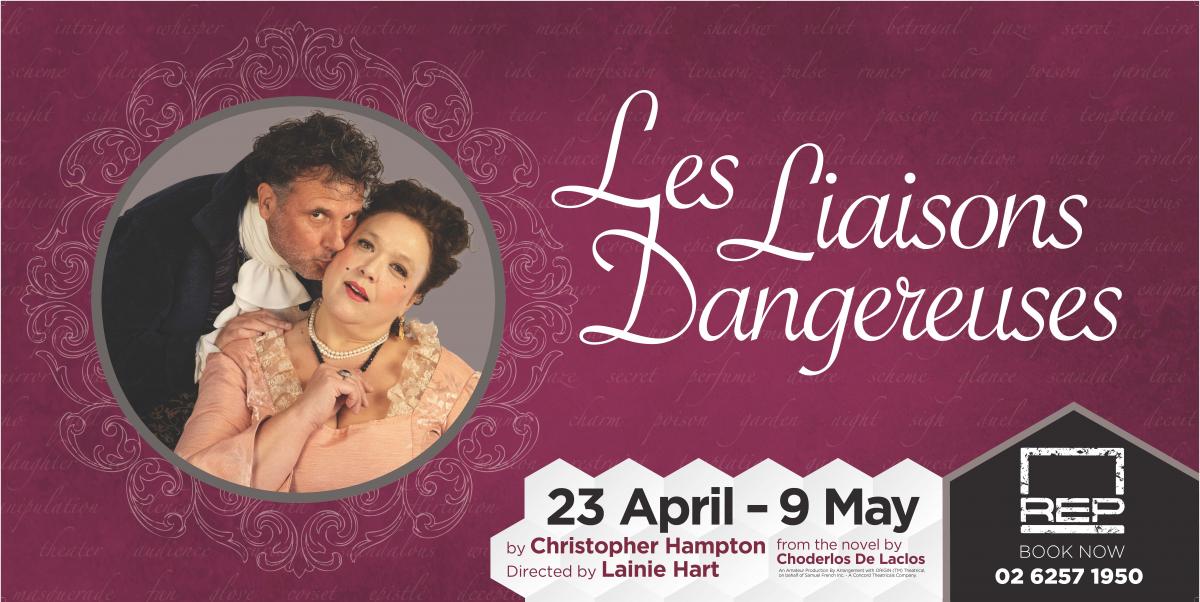
- Les Liaisons Dangereuses - Canberra Repertory, Theatre 3: This is a strong production of a highly-regarded play. Excellent performances from the three leads carry the drama and wit well; the casting of married leads (Jordan Best as Merteuil and Jim Adamik as Valmont) allows the sexual flirtation to flourish, and Yanina Clifton as Tourvel displays a haughty demeanour which is broken as she abandons herself to a torturous love. Director Lainie Hart keeps the action tight, with staging in quadrants and sharp character-driven scene changes, the fight scene is well executed, and the understanding of the game-turned-bad nature comes across well through card games and levels of both actors and set. The innovative approach to multiple scenes and locations keeps the pace from dragging too much, as the scene changes are fluid and morph into each other, although a touch more of the letters on which the play/novel is based would have been welcome. The set, sound and costume and are all cohesive; the scarlet woman taffeta of Merteuil and matching waistcoat of Valmont are suitably sumptous, and all the bodices, bustles, ruffles and cuffs look absolutely comme il faut. A commendation must go the intimacy consultant (Jill Young) as this play contains a rape scene which is vey sensitively handled.
- Vanya and Sonia and Masha and Spike - Mockingbird, The Studio, Belco Arts Centre: Brother and sister (by adoption; not birth, which accounts for some almost incestous contemplations), Vanya (Chris Bladock) and Sonia (Tracey Noble) live alone together in a Pennsylvanian farmhouse contemplating the blue heron in the garden and their daily grind. Their lives stretch before them in an endless future of ennui, until the third sibling, Masha (Helen McFarlane) returns from her rapidly-drying-up screen career with a toyboy lover, Spike (Darcy Worthy), in tow and news that she is going to sell the family home (which she owns and allows her siblings to live in rent-free). There is also a fancy-dress party next door to which she has invited them, bringing costumes that show her in a good light. A young woman, Nina (Lily Welling), suggests a threat to Masha's hold over Spike while providing a catalyst for Vanya to stage his play based on the avant-garde work of Konstantin in The Seagull. And hovering on the edges is Cassandra, the housekeeper who spits out random portentious warnings and dabbles in a little voodoo on the side. Mockingbird Theatre often mixes veteran actors with newcomers, and the effect can make for an uneven production. Chris Baldock is commanding as Vanya, particularly shining in his closing tirade lamenting the decline of manners in the modern world, Tracey Noble fully embodies the petulance of a woman afraid she has missed out on life and trying to blame someone else for her failings, and Helen McFarlane is utterly beliveable as the one trying to cling to her outward presentation to the world, secretly knowing that it isn't their true self. Darcy Worthy keeps taking his clothes off as the script demands and he is certainly nice to look at, although his acting is laboured and gestures repetitive, Lily Welling's freshness and innocence are delightful but the pitch is a little too high, and India Kazakoff feels too young and inexperienced to carry the weight of the Cassandra character (described as '30-60' in the script). Steph Evans directs with a relatively light touch - the best moments are the natural sibling bickerings - in this consummate satire of Chekovian drama in which nothing appears to happen, but everything actually does.
Showing posts with label Canberra Repertory Theatre. Show all posts
Friday, 22 May 2026
Friday Five: The shows keep on coming
Friday, 29 November 2024
Friday Five: Bits of Theatre Reviews
- Away - Canberra Repertory Society, Theatre 3: This is considered an Australian classic, and it is treated as such, with weighty moments and dragging pauses. It tells the story of three internally conflicted families holidaying on the coast for Christmas, 1968 and, according to Wikipedia, is one of the most widely produced Australian plays of all time, being on the school curriculum in many states. It incorporates several moments of Shakespeare which don't so much subtley enhance the story but profoundly crash into it to try and suggest merit. This production doesn't hang well together, with some self-indulgent drama school moments (the storm at the end of the first act is enacted by cast practicing physical theatre in the way that non-theatre people is typical am-dram), but the sound (Neville Pye) and lighting (Nathan Sciberras) are excellent with a multitude of notes, techniques and colour to enhance the production. A variety of acting styles speak of a lack of cohesion - Callum Doherty excudes a flamboyant melodrama as Tom, a teenager with leukemia trying to experience all he can while he is well enough, while Andrea Close as Coral portrays the ups and downs of someone medictating through grief with great sincerity. The stage is not used to its full extent and scene changes are uneven - some of the cast remain in character to perform them; others don't. The play-within-a-play is appropriately intimate, and the half-painted scene for the 'beach' in the second act is evocative, although some of the kodak screen images are poorly projected and detract from the overall ambience. A stronger vision from director Lainie Hart communicated more clearly to all cast and crew might have helped this play find an even keel.
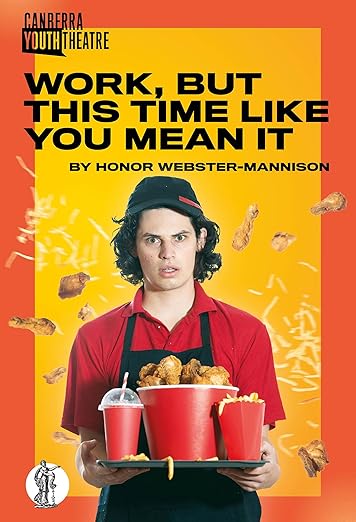
- Work But This Time Like You Mean It - Canberra Youth Theatre, Courtyard Theatre: A play about young people's first experiences in the workplace explores subjects such as trying to survive and have a good time on a minimum wage, dealing with demanding customers and irritating colleagues, and the realisation that this might be all there is for the endlessly foreseeable future. Written by Honor Webster-Mannison, the script won the 2022 Emerging Playwright Commission, and this production is really not as bleak as that might sound. Working in a fast food outlet (no names but it is red and yellow and the actors dress in chicken suits at one point), the characters are simply called after their positions, such as Shift Manager, Drive, Deep Fryer, Kiosk, etc. and perform repetive gestures, throwing and catching balls in synchronised movements. The young actors are mainly self-satisfied and have little rapport with their fellow cast members, with the possible exception of Kathleen Dunkerley as Register 1 (good range of pace and emotion) and Sterling Notley as Food Prep (measured and generous performance providing a foil to other actors). The set (Kathleen Kershaw) is the highlight of the piece, marking the transition between childhood (a soft play centre) and the slippery slope of post adolescence with a bright and obvious visual metaphor of a ballpit. Multiple overlapping voices, recorded speech, video games projections and dance breaks all add to the anarchic feeling, as directed by Luke Rogers, but each one of these elements could have been explored more thoroughly, instead of too many ideas appearing under-realised. The play has interesting moments and deliberately descends into chaos, but the unstructured disorder soon becomes tedious and looses the audience engagement.
- Play Me Something - Green Oak Theatre, Belconnen Community Centre: Four short plays with no apparent direction (although Shaylie Gillies is credited) or cohesion. INT.THEATRE by Amelia Chittick is a play about actors preparing to do a play, while Sir Harry vs, The University by Bart Meehan is a well-written comedy about a disgraced actor who applies for a job at a university only to sue for discrimination when they don't get the role. I was surprised to see that Blame by Shaylie Gillies is about the effect on the community of the Aberfan disaster, until I was told that the event featured heavily in the TV hit show, The Crown, which would explain why people in Australia suddenly know about it. The last play on the bill is The Bridge, also by Bart Meehan, which deals with family loss, grief, difficult relationships and distorted memories. Due to the changing sets required, these were necessarily perfunctory, although the use of sheets in Blame is interesting, and the Greek chorus effect adds a much-needed diversion. I also admire the decision not to make the cast attempt Welsh accents. Actors performing in different pieces are at best competent and have clear favourites, interpreting these and mumbling inaudibly through others. For example Chazelle Cromhot plays Professor Turner with solid gestures in Sir Harry, obviously relishing the role, while leaving unnecessary pauses and being almost completely uncommitted to the role of Daughter in The Bridge. While I applaud the motivation to bring short plays to the stage in search of a wider audience, the performance feels under-rehearsed and could be considered a drama exercise, but not a finished product. The poster is a highlight.
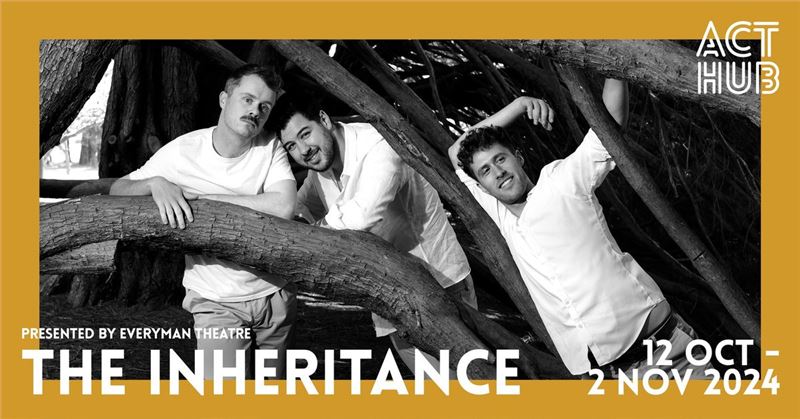
- The Inheritance Pts 1 & 2 - Everyman Theatre, ACT Hub: Seen over two nights (or for a solid six hours on a day with a matinee), this is a massive work of friendship and death, intended to be a re-imagining of E. M. Forster's Howard's End. It deals with homosexuality in the 1980s, so of course the promising young men are struck down by AIDS, in that decade's anthem for doomed youth. This is an intergenerational piece as the contemporary couple, Eric Glass (James McMahon) and Toby Darling (Joel Horwood) deal with the inherited trauma of that era through their privileged existence in Eric's family-owned apartment in New York. They are surrounded and embraced by a coterie of quasi-intellectuals, who shuffle bare foot across the boards, offering metaphorical foils if not rapier-like wit, and draping over each other to produce carefully posed tableaux. Self-referentially enough, Toby's semi-autobiographical novel is due to be adapted for Broadway, and he involves himself in the writing and the auditioning of himself through the character of Adam McDowell (Andrew Macmillan). It's full of in-jokes and meta-theatrical references, and it's actually quite hard to like these characters as they lounge about the stage reading and pontificating as though their every utterance holds weight. It doesn't. It's didactic and preachy and finishes with a monologue from Margaret (Karen Vickery), the only woman of the thumpingly male show, who loves all the rogues and scamps. And yet. Director, Jarrad West has done wonders with the material, not least in finding twelve men of solid acting ability. Joel Horwood's petulance is compelling, James McMahon's brooding presence is powerful, and Duncan Driver delivers an excellent commentary as the unfairly criticised E.M. Forster (why didn't he make his sexuality public?). There are simulations of sex and abuse, but the moment where an actor leapt into the arms of his acolytes who failed to catch him, leaving him crashing into the stage, was the one that really brought tears to my eyes.
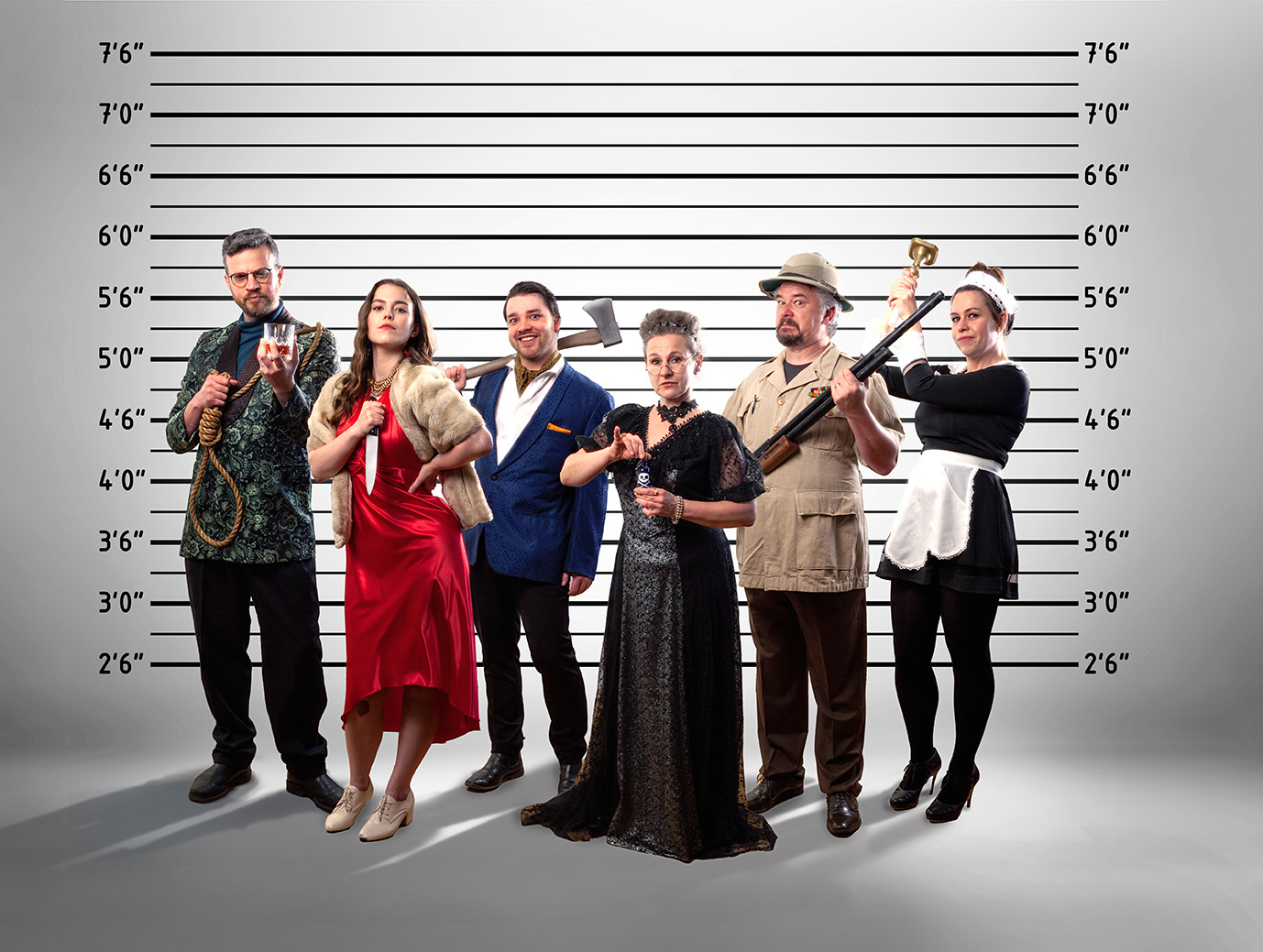
- Bloody Murder - Canberra Repertory Society, Theatre 3: Canberra Repertory traditionally stages their final production of the year as a fun night out in which audience and actors main purpose is to have fun. This is achieved in Bloody Murder, written by Ed Sala and directed by Josh Wiseman. The premise is that the characters in a quintissential country house murder mystery get fed up with playing the same old roles and turn upon the author (and the audience) to forge new ground and subvert their sterotypes. Antonia Kitzel is the matriarch of the house, Lady Somerset; Glenn Brighenti is her nephew, Charles, waiting in the wings to inherit her fortune, Steph Roberts is the maid in the ridiculous sexy French maid outfit favoured of male directors while delivering a Sybil Fawlty-esque performance, Arran McKenna is the war bore, an uptight mayor from India via central casting, Stuart Roberts is Devon Tremaine, the alcoholic has-been actor, and Holly Ross is Emma and the Countess, with a variety of accents with which she has a lot of fun, although I would caution that self-satisfaction on stage doesn't always equate to enjoyment from the audience. This is an ensemble piece so there are not meant to be stand-outs, but Aaron McKenna and Stuart Roberts both excel in their commitment to harmonious performances, never pulling focus, remaining pitch perfect in vocal and physical delivery, and offering supportive presence demonstrating superior textual understanding. The technical details all serve the play well, particularly the sound where Neville Pye is in his element, heightening atmosphere in an ironic manner from creaking floors to sensuous foreboding mood music. When it remembers not to take itself too seriously, this play is a lot of fun.
Friday, 2 March 2018
Friday Five: Different (Re)viewpoints
One of the first things I learned is that a review is only one person's opinion; not everyone will like what you do and that's just fine. A good reviewer should never divulge the plot or criticise without good reasoned argument; neither should they refer to themselves unless they believe the reader is more interested in them than the product they are reviewing, such as Jeremy Clarkson's car 'reviews' or Martin Scorsese's film choices.
The purpose of a review should be to give the potential consumer an idea of whether they will like the thing being reviewed or not, by placing it in context and mentioning the ways in which it is similar to or different from other comparable works. It should review the object that is there; not what the reviewer would have liked it to be. In that light, some of these are better than others - not because of what they say, but because of how they say it.
5 Reviews of Oh, What a Lovely War!
- Reviewed by Joe Woodward in The City News - "The production is a triumph for what theatre can achieve in a cultural and social connection with the political agendas of our time."
- Reviewed by Len Power for The Canberra Critics Circle - "This production is a puzzling disappointment...This was an important play in its day but with this uninvolving production it’s hard to see why."
- Reviewed by Peter Wilkins for The Canberra Times - "A precisely marshalled demonstration of outstanding ensemble work by the company, inspired by Baldock's directorial inventiveness, Ewan's excellent musical direction and Ylaria Rogers' lively and appropriate choreography."
- Reviewed by Cathy Bannister for Stage Whispers - "A fresh and vibrant interpretation... handled with alternating humour and foreboding, formality and relief."
- Reviewed by John Lombard for The Canberra Critics Circle - "While there were a lot of good physical ideas, they did not always tell the story effectively. Between thick accents and some poor articulation, it was hard to follow the extremely dense narrative."
Friday, 15 December 2017
Friday Five: Recent Theatre Excursions
And here are another five shows I have seen and enjoyed, to various extents.
![]() |
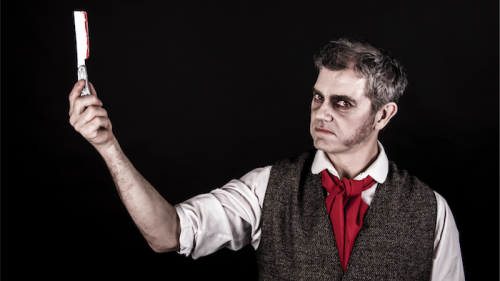
| David Pearson as Sweeney Todd |
- Sweeney Todd: The Demon Barber of Fleet Street produced by Dramatic Productions at Gunghalin College Theatre - The staging of this show is problematic, as the pivotal scenes (such as the action in the barber's shop and the hellish production detail of the pie-shop) are shunted too far up-stage to receive the full attention they deserve. As is often the case with amateur musicals, director Richard Block has largely jettisoned acting ability in favour of singing voices. David Pearson as the titular barber has strong presence and a commanding voice, but doesn't bring sufficient contrast to his performance, striking the same sneering pose throughout. Kate O'Sullivan in an understudy role as Mrs Lovett has better acting chops than most, although she struggles a bit with the higher register. Demi Smith is the complete opposite bringing a piercing clarity to her singing that is noticeably absent from her dialogue; Lachlan Agett as Antony Hope does neither, and Max Gambale's Judge Turpin does a fine job of bring the sleaze and cynicsm. While some of the set pieces (No Place Like London; Pirelli's Miracle Elixir; God, That's Good!; By the Sea) are entertaining, they are incongruous with the tone of the whole, and generally filling the stage with chorus members doing a number does this show a disservice. It should contrast the demonic with the divine, but instead comes across as dull and dismal.
- The Merchant of Venice produced by Bell Shakespeare at The Playhouse, Canberra Theatre Centre - My problem with Bell Shakespeare is that they often re-interpret the bard's plays to fit their own sensibilities by re-arranging the words and forcing modern meanings into the text. Admittedly The Merchant of Venice is a tricky play with its tones of antisemitism, but the ending is generally one of couplings, suggesting a more tolerant and understanding future, not one of heart-rending guilt. When Jessica says 'I am much ashamed', it is in Act II and refers to her dislike of being seen in male clothing by her lover. Bell Shakespeare moves these lines to the end of the play as she rocks back and forth and pretend they reveal her feelings about the treatment of her father, Shylock. This may work for schools (and the slick production values and strong acting styles will certainly please teens used to one-dimensional characters and plots) but is insulting to the intelligence of anyone who appreciates the intrigues and subtleties of Shakespeare.
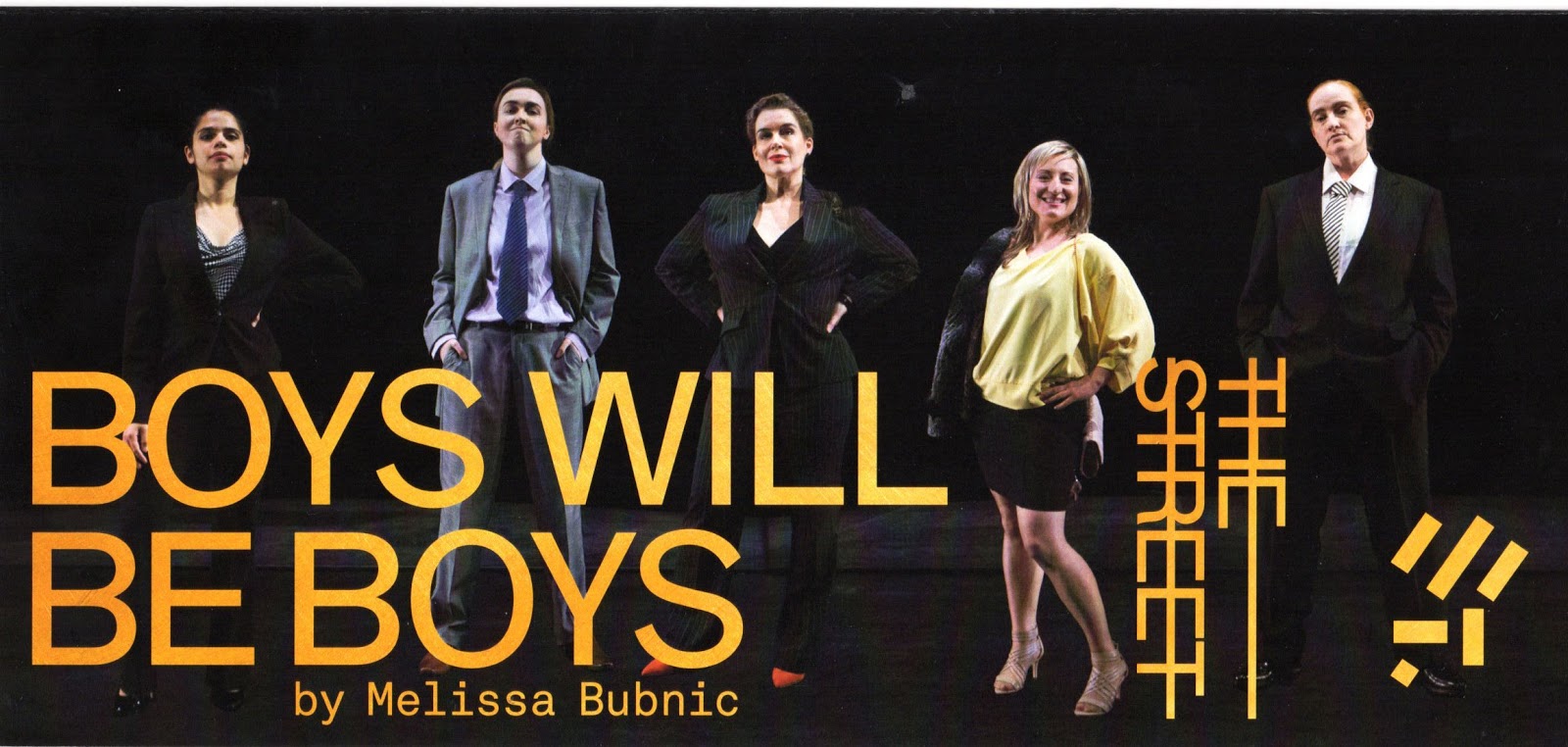
- Boys Will Be Boys produced by The Street at The Street - Caroline Stacey directs this hard-hitting boardroom drama in which all the men are played by women in sharp suits and cutting dialogue. The world of financial politics is clinical and unforgiving with no room for compassion, and everyone has a price. The stark set of mirrors and neon reflects the emptiness of the characters' souls, but there is also nowhere to hide. This is a problem for some of the weaker actors who are simply not strong enough to wield the crushing testosterone wrecking balls indicated by the text. Pippa Grandison stands out as Astrid, the woman with the most at stake who strikes the hardest deals and dares reveal a softer side only in song.
- Love/ Chamberlain produced by Moral Panic and Ainslie and Gorman Arts Centres at Ralph Wilson Theatre, Gorman Arts Centre - Playwright Bridget Mackey imagines that Courtney Love and Lindy Chamerlain might have a lot in common. Despite coming from contrasting backgrounds with seemingly disparate outlooks, they were both pilloried by the media for not responding to grief and trauma the way women are expected to react. In her play directed by Cathy Hunt, Love (Emma Macmannus) and Chamberlain (Heidi Silberman) meet several times in several contexts as they jump back and forth in time across the Federal Highway; strewn with the paper detritus of old news. They are aided and abetted by the versatile barb barnett in a dozen different and well-developed roles, but even as the Oracle (dispensing advice from a cardboard booth like Lucy in Peanuts) she doesn't have all the answers. It's great to see new work by local theatre artists, especially when it is as thought-provoking as this.
- Australia Day produced by Canberra Repertory at Theatre 3 - What is the purpose and relevance of the national celebration? Jonathan Biggins opens this can of worms in his satire set in a fictional country town. Lofty ideals clash with political expediency, torrential rain and an outbreak of food-poisoning. Anyone who has ever sat through tedious committee meetings will appreciate the contrasting personalities and sensitivities encompassed in the preparations conducted in a scout hall, which is freezing in the winter and boiling in the summer. The set is basic, and so is the acting and the direction by Cate Clelland, but this is not necessarily a criticism, as the script is allowed to take centre-stage where it belongs without distracting interpretations or excessive 'input'.
Friday, 2 June 2017
Friday Five: Five (More) Theatre Outings
I have been on more theatrical excursions of late, so here is a brief summary of some of the shows I have seen:
![]() |
| Dracula by shake & stir theatre co |
- Hamlet at The Phoenix - advertised as 'A staged reading of an edited Hamlet by William Shakespeare', this is Cameron Thomas and a group of his mates reading sections of an extremely abridged Hamlet in a pub. As one would expect, there are drinks between acts, which means things get a little loose towards the end, but as the audience do too and pretty much everyone dies anyway (you can't possibly call that a spoiler!), it seems to fit the theme. Some of the actors are much better than others (inasmuch as some of them can actually act), and some sound like they are reading it for the first time - which, they might well be, as rumour has it that someone pulled out on the day of the performance. Live music from Cameron Ewens on keyboard throughout keeps things moving along nicely, and the actors swap characters along with their hats, which provides some humorous moments. There isn't a lot of depth or complexity (Fortinbras and the notion of restoration of order to Denmark is entirely absent) but it is fun and fast and not at all furious.
- Dracula produced by shake & stir theatre co. at The Playhouse, Canberra Theatre Centre - Shake and Stir once again bring sumptuous production values to the stage. The design and technical elements are faultless with a multipurpose revolving set and truly atmospheric sound and lighting. The adaptation honours the original book, eschewing some of the more schlocky aspects of later incarnations. While the darkness is ever-present, however, the fear and tension is absent, which may be because Old Creepy Dracula (Nick Skubij) seemed to morph into The Terminator, and I kept expecting him to say, "I'll be back."
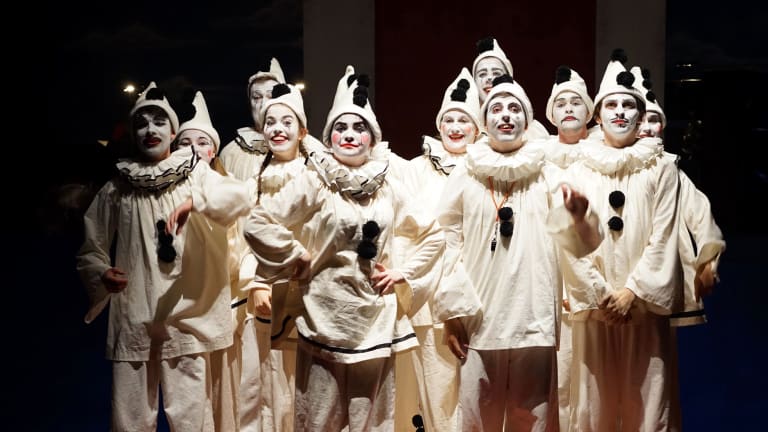
- The Iliad Out Loud & Abridged at The Street - Three people (William Zappa; Nick Byrne; Chrissie Shaw) read an adapted version (by William Zappa) of Homer's Iliad over the space of nine hours (that's three hours a night). They don't interact with each other or the audience, and harangue us with details of ships and battles, misogynistic Gods and rampant masculinity, while percussionist Gary France hits things in the background. They all have beautiful voices and bring out the poetry of the repetitious language, which was always meant to be spoken aloud rather than read in isolation. There is a strong appeal to school groups and university scholars, of which there are probably many in Canberra, who want to feel worthy. This is theatre for radio; best listened to while doing chores about the house.
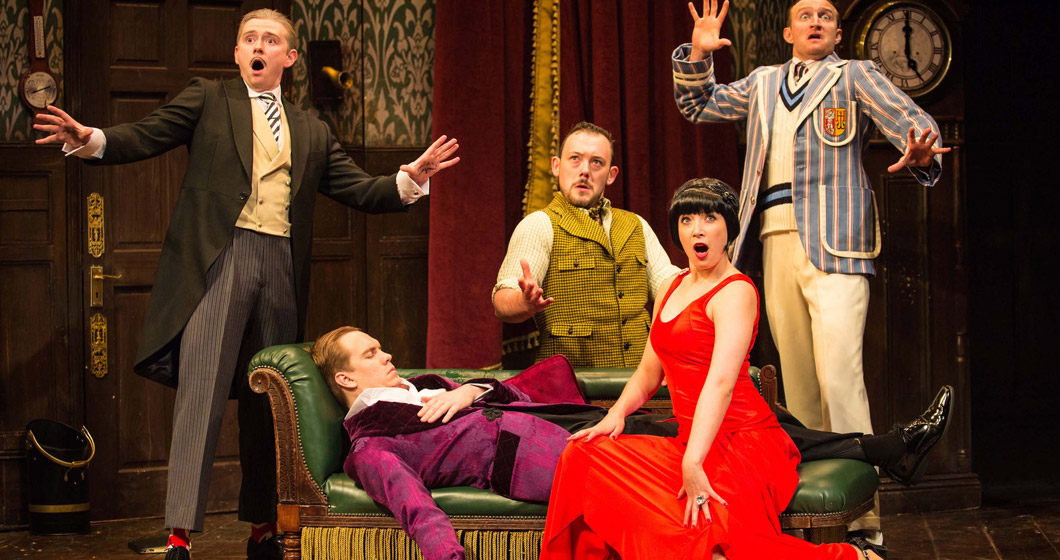
- The Play That Goes Wrong produced by Lunchbox Theatrical Productions Pty Ltd at The Canberra Theatre Centre - The fast-paced, critically well-timed production provides a really enjoyable night out. There are laughs a-plenty in the first act, which feels like comedy; fewer in the second, which feels like farce. Strangely enough, I've never enjoyed watching women trying to upstage each other while fighting in their underwear (it's just not funny, although many men seem to think so), but the stage crew logistics were superb, and the risk-assessment necessary is mind-blowing. The acting is all highly-stylised and unsubtle (co-writer Henry Lewis credits The Art of Coarse Acting, Monty Python and Laurel and Hardy, so that's hardly a surprise) and the story (of who murdered whom and why) becomes increasingly irrelevant as theatre tropes come flying from all directions, along with the props and set itself.
- A View from the Bridge produced by Canberra Repertory Society at Theatre 3 - Director Chris Baldock gives Arthur Miller's classic the 'bigger-than-Ben-Hur' treatment with a set that upstages itself, built from pallets and netting to represent the wharves where Eddie works. It is superbly lit and dominates the action (too much in places, where more intimacy would be welcome) but is awkward at times with actors struggling up and down gangplanks and crashing through flimsy wood in an alarming manner. The young leads are excellent and the relationships between the immigrant Italian bothers Rodolpho (Alexander Chubb) and Marco (Chris Zuber) are compelling and affecting. As Catherine, Karina Hudson is delightfully fresh and conflicted as she struggles to understand her uncle and aunt, and their attitudes to her burgeoning maturity. Less impressive is the central relationship between Eddie (Knox Peden) and Beatrice (Karen Vickery), which is too combative and lacks any hint of the warmth and affection Beatrice claims to miss. Nuances of text and movement are swamped by over-gesticulations, shouting and the chorus of (largely ineffective) actors who remain on stage throughout, patronising the audience's intelligence by miming the action. The production is bold, brave and bombastic, but bigger isn't always better.
![]() |
| The Play That Goes Wrong by Lunchbox Theatrical Productions |
Friday, 28 April 2017
Friday Five (Seven Actually): Recent Theatre Excursions
I have seen a fair bit of theatre recently but have not had time to write full reviews, so here are some edited highlights:
- Churchill & Maggie by Pip Utton, produced by Imagination Workshop and Street Contemporary Drama at Street 2 - Pip Utton performs solo shows on consecutive nights, portraying political giants Winston Churchill and Margaret Thatcher. He weaves anecdotes, musings and facts into his 70-minute monologue on Churchill, a colossus of his time: "History will be kind to me for I intend to write it." During his embodiment of That Woman he invites questions from the audience, while achieving the voice, mannerisms and dismissive tone so successfully it made my skin crawl. His enthusiasm is boundless and his knowledge equally indefatigable.
- Wait Until Dark by Frederick Knott, produced by Canberra Repertory Society at Theatre 3 - Jordan Best directs this classic thriller with attention to detail on a meticulous set (designed by Michael Sparks) as a blind woman (Jenna Roberts as Susie) comes under threat from unscrupulous criminals looking for drugs they believe are stashed in her apartment. The tension was lacking from previous productions I've seen perhaps because I knew the story so well, perhaps because Roberts never displayed any vulnerability or uncertainty, or perhaps because the villains were neither as charming or as threatening as they might have been.
- Cold Light adapted by Alana Valentine based on the novel Cold Light by Frank Moorhouse produced by Street Contemporary Drama at The Street - Trying to personalise politics in the most bureaucratic town in Australia is tricky. Sonia Todd plays Edith Campbell Barry, a (fictional - although many people are deceived) woman who tries to make her mark in international relations. It packs a great deal of history into a lengthy piece with multiple threads and tangents. The ensemble cast perform multiple roles with varying degrees of aplomb, but almost mimicing the projection of Canberra's street design, there is a feeling that we are being driven around in circles and getting lost in cul-de-sacs.
- The Age of Bones produced by Satu Bulan, Teater Satu, Performing Lines and Ainslie and Gorman Arts Centres at Gorman Arts Centre - A mixture of Indonesian shadow puppetry, music, digital projections and contemporary satire tells the story of Ikan, an Indonesian boy who goes fishing one day and fails to return. He is imprisoned 'down under' in an oceanic world where he is befriended, pursued and judged by fantastical creatures (bubble-headed deep sea divers, a shark and an octopus). We are clearly meant to draw parallels with the plight of Indonesian boys incarcerated in adult jails throughout Australia for their involvement in human trafficking. While this is an original and commendable approach, certain technical aspects (such as the English surtitles failing to coincide with the spoken words) hamper the production, while the attempt to appeal to all ages (childlike repetitive motions alongside hard-hitting issues of abuse) means the production overall fails to connect with any particular audience.
- Chicago produced by Canberra Philharmonic Society at Erindale Theatre - Interesting staging and directorial choices (by Jim McMullen) highlight different aspects of the play to usual - including the fact that the characters really are all horrifically unpleasant. Vanessa de Jager and Kelly Roberts as Roxie and Velma are both excellent in isolation but their dancing duets remain individual; Shell Tully has a great voice but no depth as Mama Morton; Will Huang presents a lawyer who seems merely slightly smarmy rather than truly repulsive; and Miss Mary Sunshine (Ben WIlson) is utterly peripheral. Most of the songs are still good (although Class was especially disappointing) but other facets, such as the sloppy follow spots, are mediocre. Curious staging makes us question whether we are in a gaol at all, as the protagonists pop out to the lawyer's office in their underwear. The fact that there are far too many people unnecessarily on stage literally jumping through hoops spoils what should be tight choreography, and the hanging scene is hugely underwhelming. The menace and terror of being locked up and possibly awaiting the death sentence is entirely absent: it's more like a circus in which everyone gets to run around and show off how good they look in a corset.
- Trelawny of the Wells by Arthur Wing Pinero produced by Canberra Repertory Society at Theatre 3 - Tony Turner directs a spirited cast in this touching and amusing late-nineteenth-century drama. The revolving set (designed by Ian Croker) allows for all the scenes to be played in the balance of affectation and naturalism which was becoming popular at the time and which is crucial to the play's ethos. Deliberately bombastic performances from the flamboyant characters such as Sir William Gower (Jerry Hearn), Mrs Mossop (Elaine Noon) and Avonia Bunn (Jess Waterhouse) provide a delightful counterpoint to the more subtle sentimentality of Rose Trelawny (Alessandra Kron) and Tom Wrench (Robert de Fries). Slapstick extremes are tempered with emotional speeches, and the entire effect is a beautiful piece about acting and performance.
- Richard III by William Shakespeare, produced by Bell Shakespeare at the Playhouse (Canberra Theatre Centre) - Bell Shakespeare have taken the history out of the history play and turned it into a tragedy, in which the lead performer (Kate Mulvany as RIII) hams it up deliciously as Tricky Dicky, and the rest of the cast frolic about in a drawing room, like one of those frightful parties where you don't really like the host. As the actors do not leave the stage, there is no difference between intimate and group scenes, leading to a lack of tension and confusion as to the identity of many of the characters. The political is no longer important; it's all about the personal. This is the modern world, where I fear we have lost more than we have gained.
![]() |
| The Age of Bones |
![]() |
| Kate Mulvany as Richard III |
Friday, 30 December 2016
Friday Five: Best of Theatre 2016
Looking through my notes (I keep notes of nearly everything, as I'm sure has become apparent by now), I find that I only saw 23 plays this year in six cities. That's not many for me, but it's still pretty hard to whittle it down to a top five.
I shall start by saying that I am not including anything in which I was involved whether on or off stage. That cancels out a number of productions for Canberra Repertory, which were very good including Witness for the Prosecution, Macbeth, and She Stoops to Conquer, and also Vinegar Tom for COUP: Canberra. Because it is very hard to separate the rest then, I shall list them in alphabetical order.
![]() |
| Antigone, Sport for Jove |
5 Best Productions I Saw in 2016:
- Antigone – Sport for Jove, Canberra Theatre Centre
This is an outstanding example of how to modernise a classic. Damien Ryan's adaptation of Sophocles' Greek drama is contemporary and pertinent while losing none of the dramatic relevance. From family grief to civil war and the aching need to just make it all stop and face a brighter future; it's all here in this tight, compelling tale. The set calls to mind Aleppo; the humour (yes, humour) invokes modern sit-coms, and the political speechifying will be familiar to all. Andrea Demitriades in the titular role and William Zappa as Creon are superb performers and mine their conflict to its ultimate depths, but Greek drama is always supported by a chorus, and this ensemble is terrific. I loved it. - King Lear – Sydney Theatre Company, Roslyn Packer Theatre
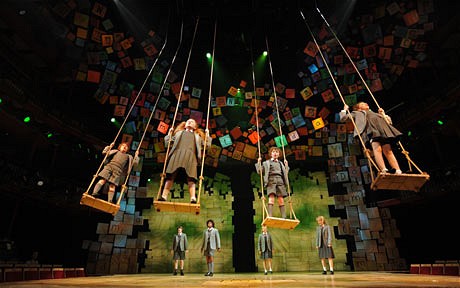
Of course it's going to be all about Geoffrey Rush as he plays Shakespeare's tragic king driven to madness. But the rest of the cast provide perfect foils as the ruthless politics become personal embodied in the actions of the daughters and their consorts; exposed with rueful poignancy by Robyn Nevin's Fool. The Dover Cliff scene is sensational as Edgar (Mark Leonard Winter) leads his beloved father, Gloucester (Max Cullen) to the edge. There's nothing happy in this play, and director Niel Armfield leaves us emotionally exhausted and utterly spent. This is cathartic theatre at its very best. - Matilda the Musical – The Royal Shakespeare Company, Princess
Theatre, Melbourne
For someone who doesn't really like musicals or children (especially singing ones), but who loves Roald Dahl and Tim Minchin, this was always doing to be a close call. I'm happy to report that the pros (and they are most certainly pros in all senses of the word) substantially outweigh the cons. The acting is excellent, with the adults hitting all the comedy notes and the kids bringing the pathos. The songs are great (I was still singing All I Know I Learned from Tele several months later), even if a few of the lyrics are hard to discern in the children's harmonies. And the production values are sublime - that disappearing cake and the school gate/ building blocks sequence are spectacular. - Tales from a City by the Sea – VCE Drama, La Mama Courtyard, Melbourne This powerful and moving drama focusses on love and life in the Gaza Strip. In some ways, with its war-torn lovers and family interventions, this is a modern Romeo and Juliet. It has all the hallmarks of that classic story - duty to family and tribe set against personal fufilfment and hopeless situations - but it is set against the real experiences of people living under occupation. There are tough choices to be made when Jomana, a Palestinian woman living in a Gaza refugee camp, falls in love with Rami, an American-born Palestinian humanitarian doctor. The simple staging of a white sheet is cleverly used to conceal and reveal, while the actors remain on stage watching the action in which they do not participate: when war affects individuals (and it always does) - we are all complicit whether or not we want to be.
- Uncle Vanya – Canberra Repertory Society, Theatre 3
One of the things I dislike most in theatre is when directors take over the text, trying so hard to put their own stamp on the play that they lose the original intent. Geoffrey Borny allows his actors to bring out the nuances in Chekov's great work in such a way that makes them seem fresh and new.The family lead dull and boring lives. They eat and drink and sleep, and follow a rigid routine of sandwiches and samovars, and are immensely unsettled when this banal schedule is interrupted. The aesthetics of this life are beautiful (from the set and staging to the costumes and props) but empty. It is left to the servants to provide the depth, and the richest images are drawn from the land; those who do the physical labour are the true heart of the country. Passing passions are fleeting but solid foundations will endure. As a doctor and an activist, Chekov understood the importance of substance over artifice; as a director, Geoffrey Borny does too.
![]() |
| Matilda, The Musical, Royal Shakespeare Company |
- Miss Bronte - Bravo Theatre, Queenbeyan Performing Arts Centre Mel Dodge embodies the restless spirit of Charlotte Bronte and her struggle with conformity in a sensitive and soulful one-woman play directed by Lyndee-Jane Rutherford.
- Mother - If Theatre, Queenbeyan Performing Arts Centre Noni Hazlehurst controls the stage flawlessly and pleas for empathy in the powerful one-woman poetic drama about an ordinary person who ends up homeless due to set of depressing circumstances.
- Playhouse Creatures – Pigeonhole Theatre, Queenbeyan Performing Arts Centre It's such a pleasure to see this great play about women in the seventeenth-century theatre of the Merry Monarch brought to the stage with energy and conviction.
- Shakespeare's Greatest Hits - Vol. 400 - Remarkable Theatre, Queenstown Botanical Gardens Local actors provide promenade theatre in a beautiful setting for some great excerpts of the bard's best bits, which brings back a lot of memories from previous performances.
Tuesday, 10 May 2016
Shady Russian Dealings
![]() |
| Sonya(Yanina Clifton); Marina (Alice Ferguson); Vanya (Jerry Hearn); Yelena (Lainie Hart) |
Uncle Vanya
Canberra Repertory TheatreTheatre 3
29 April – 14 May, 2016
Director Geoffrey Borny makes much in the programme about the humour in
Chekov. He claims the dark view that the Russian’s plays are gloomy affairs is
a radical misinterpretation. Choosing to work with David Mamet’s fresh
translation, he brings out many shades of light and dark, and subtle nuances
are a relief as the play zips along under his capable stewardship.
The laughs drawn from the audience are often at what might be considered
to be the blackest moments, such as when Sonya (Yanina Clifton) agonises, “We
are all desperately unhappy”, or when Vanya (Sam Hannan-Morrow) is driven so
far to frustration that he attempts to shoot Serebryakov (twice) and misses
(twice). We are amused, rather than touched by people feeling sorry for
themselves and moaning about their plight instead of doing anything about it.
Serebryakov (Jerry Hearn) in particular strikes several Eeyore-like poses, and,
although he is a ghastly old grump, he is a comic one.
Sam Hannan-Morrow works hard to elicit our sympathies in the titular
role. His self-pity is deliberately tedious, but he mines the pathos of his
anger and his feelings of rejection. He falls in love with Yelena (Lainie Hart),
the young wife of Serebryakov, who is his brother-in-law, having previously
married Vanya’s sister. The image of Vanya as an unrequited suitor with a bunch
of winter roses is quite heart-breaking, and his understated depression is
genuinely affecting. The local doctor, Astrov (Jim Adamik) is also in love with
Yelena, and so visits the house much more than his professional capacities
should allow. Meanwhile, Sonya, Vanya’s niece and the daughter of Serebryakov,
is in love with Astrov, but he doesn’t notice her because she is plain,
although she has the proverbial “beautiful hair”.
Astrov attempts to seduce Yelena with his passion for the environment.
When he explains the rampant deforestation and the effects it will have on
future generations it echoes his own behaviour in acting rashly for immediate
gratification with no thought to the consequences. This and his realisation
that he has been a fool at the dénouement are Adamik’s best scenes, as his
passion is much more convincing than his comedy.
Sonya understands his work, because she has hangs on his every word.
Working on the land, she understands that all of nature is connected and that
we are bound by our ecosystems, whereas the vapid Yelena has no interest in anything
that requires thought or philosophy. The men don’t care for brains, however;
they are all in thrall to youth and beauty. Although fresh-faced and dowdily
dressed, Yanina Clifton glows on stage: she may be plain (without make-up) but
her expressions are gorgeous and make her eminently watchable. Her calm
strength and dignity are justly rewarded in the final scene as she delivers the
climactic monologue with resolute conviction.
Yelena is described repeatedly as idle, languid and lazy, yet Lainie
Hart flits across the stage with none of the indolence with which she is
frequently credited. She is dashing and dramatic, flirtatious and restless, and
we feel her pent-up dissatisfaction and irritation with her husband. When Sonya
admits her love for Astrov to Yelena, the confession is more like a daughter to
a mother than an understanding between friends. Similarly, Yelena’s meeting
with Astrov, after being made aware of her step-daughter’s feelings comes
across as spiteful rather than innocent. Youth and its passing is a major
theme, so the miscasting of ages obscures the message. Similarly, Sam
Hannan-Morrow is clearly not the 47 years that are mentioned at least three
times in the play, and his constant references to stagnating in old age are not
credible.
Times are changing and people don’t necessarily like change when it is
forced upon them. Vanya and Sonya look after the estate, which belonged to
Vanya’s sister until her death, when it passed to her husband, Serebryakov. When
he suggests selling up and turning them out, his complete lack of comprehension
at their distress is resonant with absentee landlords everywhere. Serebryakov
stays up all night writing books that regurgitate other people’s opinions –
Vanya tells him, “You know nothing of art because you have no soul.” To add to
his anguish, Vanya’s mother (played with intelligence and restraint by Antonia
Kitzel), adores Serebryakov, respects his pedantry, and herself writes
pamphlets that nobody reads.
The family lead dull and boring lives. They eat and drink and sleep, and
follow a rigid routine of sandwiches and samovars, and are terrifically
unsettled when this banal schedule is interrupted. The aesthetics of this life
are beautiful from the set (Andrew Kay) to the costumes (Heather Spong), but
empty. It is left to the servants to provide the depth, and the richest images
are drawn from the land; when the men fight, the nanny, Marina, refers to them
as a gaggle of cackling geese. Alice Ferguson imbues Marina with a warmth and
assurance, which implies continuity; the delightfully simple Telegin (Neil
McLeod) is happy when he sees a job done well, and even the workman, Yefim
(Jonathan Pearson) has a solidly enduring presence.
Those who do the physical labour are the true heart of the country.
Passing passions are fleeting, but solid foundations will endure. As a doctor
and an activist, Chekov understood the importance of true substance over
superficial artifice; as a director, Geoffrey Borny does too. The basic
humanity of this production is without doubt; it may well be worthy, but it is
also well worth seeing.
Friday, 9 October 2015
Friday Five: Season Launch
Before anyone races to point it out, I know that there are six rather than the usual weekly five, but that's just the way it it goes. Canberra Repertory Society have announced the plays they will be producing for the next season, and I'd like to hear your thoughts. I was on the committee that helped to select the plays, so please don't be too hurtful in your comments.
One factor I would point out is that this is a sub-committee, which recommends a number of plays (15 in this case) to a committee, who decide upon the final plays - nothing is one person's opinion, and I'm sure we all know how committees work. I think each play is a good choice individually.
6 plays in Canberra Rep's 2016-2017 Season:
- Uncle Vanya - Anton Chekov (28 April - 14 May)
- Witness for the Prosecution - Agatha Christie (16 June - 2 July)
- Macbeth - William Shakespeare (4 - 20 August)
- She Stoops to Conquer - Oliver Goldsmith (22 September - 8 October)
- Noises Off - Michael Frayn (17 November - 3 December)
- Wait until Dark - Frederick Knott (23 February - 11 March)
Friday, 28 August 2015
Friday Five: Bad Publicity
Bad Publicity: popular wisdom has it that there's no such thing. Many actors and directors say they never read their reviews. I don't believe either of those things. The thespians I know read every word they can get their hands on, and they read them at least three times.
The first time they scan it quickly, looking for references to themselves; the second time they read the whole thing, being particularly alert to any perceived slight; the third time they agonise over the tiniest critical comment, which will be burnt into their consciousness for the rest of their life.
I am just as guilty. Even though I am a reviewer myself, and I know that a review is only one person's opinion, and that as a performer one should have faith in the art as directed, a hastily written quip (often hurtful remarks are the result of an inexperienced reviewer trying to be clever) can still drive me to distraction, where no one else can see the problem.
Recently I played the role of Bella in Patrick Hamilton's Gaslight for Canberra Repertory Theatre. To even out the balance, here are snippets from reviews of the play, both good and bad:
5 Reviews of Gaslight:
- Bouquet: "Director barb barnett and her cast resist the temptation to lapse into melodrama, choosing to probe for the truth beyond the psychological abuse and strange occurrences." Brickbat: "a thriller in search of greater tension and suspense"
- Bouquet: "Entertaining and spooky, with witty jokes and intense drama"
Brickbat: "The script calls for more paranoia and ambiguity to keep the audience guessing."
Full Review: City News
- Bouquet: "Kate Blackhurst plays the part of Bella Manningham very well."
Brickbat: "The play is rather wordy and is repetitive in parts."
Full Review: Stage Whispers
- Bouquet: "The audience is drawn into a complex and devious plot that maintains interest right up until the very satisfying climax."
Brickbat: "A straight forward production"
Full Review: Canberra Critics Circle
- Bouquet: "The members of the Canberra Repertory Theatre showed their wonderful talent"
Brickbat: "The highlight of the show has to be the curtain"
Full Review: Woroni
Full Review: Canberra Times
Labels:
acting,
Canberra Repertory Theatre,
Gaslight,
review,
theatre
Friday, 19 December 2014
Friday Five: CAT Awards
Not that I want to bang on about Blithe Spirit (okay, so I do), but it has taken up a huge amount of my time and thoughts over the past few months. And we have been nominated for five CAT (Canberra Area Theatre Awards), which is nice.
5 Award Nominations for Blithe Spirit:
- Best Designer for a play (Andrew Kay)
- Best Costume Designer for a play (Anna Senior)
- Technical Achievement (Russell Brown, "ghostly manifestations")
- Best Actress in a leading role in a play (Emma Wood: Ruth Condomine)
- Best Production of a play (Canberra Repertory Theatre)
Friday, 21 November 2014
Friday Five: Opening Night
![]() |
| Edith (Yanina Clifton) and Elvira (Anita Davenport) on our beautiful Blithe Spirit set (Andrew Kay) |
5 things that make our Blithe Spirit great:
- The set - the team who designed and built this set are phenomenal. What we do looks great on it; and then we wreck it every night and do it all over again the next. Special thanks to Andrew Kay, Russell Brown and everyone involved.
- The costumes - Anna Senior has designed a range of sublime and ridiculous outfits to bring our characters to life (or death, as it were), more than ably assisted by a team including Jeanette Brown, Anne Kay and a whole band of others. As someone who can barely sew a button back onto a shirt, I am enormously grateful.
- The technical crew - Jon Pearson on sound and Stephen Still on lights have been brilliant to work with. I said 'Can I have this?' and they said 'How loud/bright do you want it?'. Their designs are subtle and superb, allowing a perfect background to the action without ever threatening to overwhelm it.
- The stage crew - they're very busy; they have a lot to do, and they do it efficiently, quietly and seamlessly. From putting books in and out of bookcases to making cucumber sandwiches, they do jobs every night, which make the front of stage look as good as it does. And they are overseen by our stage manager Dot Russell, who is one of the calmest, most thorough and delightful people I have ever had the pleasure of knowing.
- The actors - The best part of being a director is dealing with this wonderful production without ever having to learn the words. The worst is never being able to perform the play myself. I am honoured to have such fabulous people to do it instead, that I don't regret not being up there for an instant. We have all worked so hard to bring this vision to the stage and I know these actors will ensure it is executed exactly as we wanted.
Friday, 11 April 2014
Friday Five: Shakespeare's Last Words
It's final night of the Canberra Repertory production of Twelfth Night tomorrow, so it seems appropriate to list these versions of the great bard's final remarks as he lay upon his death bed. Obviously, there is no way of knowing if any of them are true, but that hasn't stopped scholars pontificating - it's what they do.
Five Claims for Shakespeare's Last Words:
- "More light!" - spiritual plea or just asking someone to open the curtains?
- "The rest is silence" - unlikely, albeit poetic.
- "I've had 18 straight brandy-wines. I think that's the record." - Allegedly what his wife claims he said.
- "I have had enough." - The most plausible utterance.
- "Now what?" - This would be my favourite, if I had any say in the matter.
Friday, 28 March 2014
Thursday, 27 March 2014
Wednesday, 26 March 2014
Count down quote to 'Twelfth Night': 6
"Be not afraid of greatness. Some are born great, some achieve greatness, and some have greatness thrust upon 'em." - Malvolio (via Maria), II, v
Labels:
Canberra Repertory Theatre,
fear,
greatness,
Malvolio,
Maria,
quote,
Shakespeare,
Twelfth Night
Tuesday, 25 March 2014
Count down quotes to 'Twelfth Night': 5
"If this were played upon a stage now, I could condemn it as an improbable fiction." - Fabian, III, iv
Monday, 24 March 2014
Sunday, 23 March 2014
Count down quotes to 'Twelfth Night': 3
![]() |
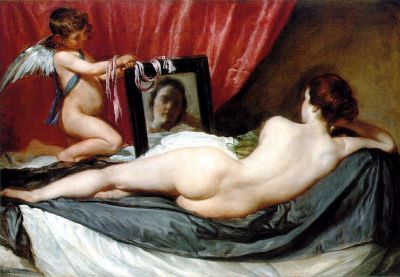
| The Rokeby Venus by Diego Velazquez |
"If I do not gull him into a nayword and make him a common recreation, do not think I have wit enough to lie straight in my bed." - Maria, II, iii
Labels:
bed,
Canberra Repertory Theatre,
Diego Velasquez,
Maria,
quotes,
Shakespeare,
Twelfth Night
Saturday, 22 March 2014
Subscribe to:
Posts (Atom)


.jpg?format=2500w)