Showing posts with label Street Theatre. Show all posts

Friday, 27 February 2026

Friday Five: First Shows of the Year

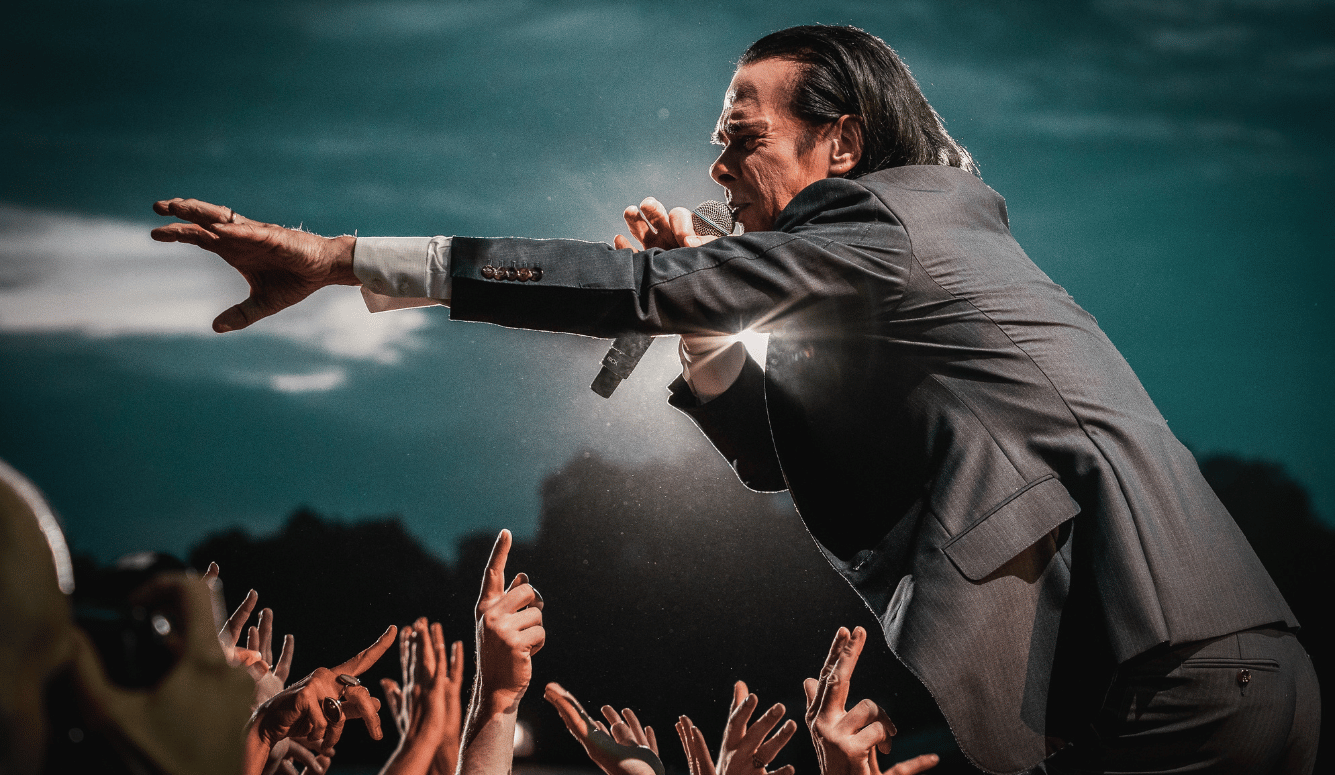
  1. Nick Cave and the Bad Seeds - Supersonic Australia, The Domain, Sydney: As part of the Wild God Tour, the band played two shows in January featuring a messianic performance by Mr Cave, a 17-piece ensemble, some of the best backing vocals I have head in a long time, and a supporting cast of bats flying overhead at dusk (the lack of Release the Bats from the set was the only disappointment). Nick Cave is a consumate performer, whether belting out fan-favourites Tupelo and O Children or baring his soul with tunes about his dead son, I Need You (with the repeated refrain, 'just breathe') and Joy. Warren Ellis does Warren Ellis things at the side of the stage as Cave roams, struts and surfs about the place, equally comfortable pounding the piano or stroking the keys, his energy through two and a half hours is obvious in every gesture and facial expression. Jubilee Street is a deliverance for the ages, while more mainstream hits Red Right Hand and The Weeping Song invite the crowd to sing along until there is barely a dry eye in the domain by the time he finishes (us) off with Into My Arms.
  2. The Book of Mormon - Anne Garfino, Important Musicals and Suzanne Jones, Capitol Theatre, Sydney: A delightful and irreverent pastiche of a show that mocks every genre of musical theatre, cultural hegemony and organised religion while still maintaining a moral code. From the team that brough you South Park comes a musical that skewers itself with outstanding acting, singing, choreography, sets and costumes. From the opening number, Hello! in which we are introduced to a cast of missionaries of the Latter-day Saints, we know there is earnestness up for lampooning. Elders Price (Sean Johnston) and Cunningham (Nick Cox) are paired up and sent to Uganda - not quite the cushy Orlando posting they anticipated. Cue jokes about dictatorship, AIDS, child abuse, blasphemy, and myth making. The songs are memorable and amusing, the sacriligeous Lion-King-inspired Hasa Diga Eebowai and the toe-tapping Turn It Off about supressing unwanted feelings are highlights, and the dream-a-dream ballad Sal Tlay Ka Siti is the version of the song that goes like this (performed by Paris Leveque with wholly convincing naivety in her professional debut). Spooky Mormon Hell Dream is a wonderful excuse to play with props, character and lighting, and the breathtaking audacity of I Am Africa had me wondering how they got away with it. The last word should go to Trey Parker who writes, "There's this line that you can cross all you want as long as you have a reason for doing it. If it has a point and it has a story and it has genuine, real character and emotion, then you can pretty much do whatever you want. There is no line if you're being truthful. We learned that lesson a long time ago."
  3. You Tell My Mum I'm Dead - Sunspot Productions, The Courtyard Studio: This is an interesting new work from a promising young writer (Emily O'Mahoney), focussing on the Australian 'schoolies' phenomenom where hoards of 18-year-old school leavers descend on beach towns (particularly the Gold Coast and, in this instance, Bateman's Bay) to celebrate their new-found freedom. Gangs of youths, many of whom are away from parental control and experimenting with excessive drugs and alcohol for the first time, flirt, fight and try to figure out who they want to be as they emerge blinking from the confines of adolesence into the bright lights of adulthood. What could possibly go wrong? Director, Kathleen Dunkerley makes some bold choices in their use of space, light and sound effects, accompanied by straightforward acting decisions as they play to the cast's strengths. We spend time in the company of three young women: Cara (Emily O'Mahoney), whose natural performance and final decisive monolgue capture the insecurity of being on the cusp of womanhood; Max (Breanna Kelly), who brings energy and sincerity to an assured performance with unexpectedly emotional anguish; and Layla (Ainslie Bull), with a metaphoric speech about lambs being led to slaughter which could be the crux of the play if delivered with more power. The commitment and engagement from all involved make this an exciting ensemble to watch in future.
  4. La Souris Blanche - ReAction Theatre, Street 2: Nancy Wake was a New-Zealand born Australian nurse and journalist who joined the French Resistance and later the Special Operations Executive during World War II and briefly pursued a postwar career as an intelligence officer in the Air Ministry. Known as the White Mouse, part of her legendary appeal is due to her insistence on maintaining her femininity amidst guerilla warfare, often taking silk nightgowns, Chanel lipstick and red satin pillows on spying missions in the French mountains. This production, written by Christine Croyden and translated by Véronique Duché is performed entirely in French, to immerse the audience in the language and the atmosphere of the resistance. Surtitles as well as wartime images are projected onto sheets hanging from the top of the stage, ripped and layered to provide entrances and exits, suggesting forests, apartments and nightclubs, all while evoking torn parachutes of downed airmen - both practical and imaginative. Nancy herself is performed by Ionna Gagani and Natalia Nour (as young Nancy) as the agent provocateur prepares to receive a belated award from the Australian government and reflects on her life and the choices that led her here. Flashbacks of her training and actions, including learning to kill silently and the consequences of that ability, are executed with passion, wit and candour. Director Louise Howlett doesn't shy away from the violence, while incorporating the romance and an artistic element through song and dance. There is a lot to the story, and this 80-minute play only peels back a partial couche d'oignon, leaving audience members craving more information, which is surely one of the purposes of drama, n'est-ce pas?
  5. Bedroom Farce - Canberra Repertory Society, Theatre 3: The play can be pretty dated with its casual references to domestic violence and defined gender roles, as four couples talk about the things that happen behind closed doors. The title is misleading as it is not a farce so much as a sit-com where character interplay matters as much as precision timing. In this, the older couple, Ernest (Pat Gallagher) and Delia (Sally Rynveld) are perfect as the slightly stuffy and bewildered moral compass (think Richard Briers and Penelope Wilton in Ever Decreasing Circles). Their son, Trevor (played with too much posturing and insufficient presence by James Grundoff) has a combative relationship with Susannah (Lara Connolly whose histronics elicit ridicule rather than empathy), who crash the house warming party of practical jokers Malcolm (well-executed bonhomie from Lachlan Abrahams) and Kate (Antonia Kitzel as the centrepiece of the play with a fun and thoughtful performance). Making up the octet are Nick (Rob de Fries has a good line in physical theatre and condescending disdain but is way too old for the role which makes it ick) and Jan (Azerie Cromhout), Trevor's former girlfriend. Although the script frequently mentions her strength and how she would have been a better match for the tempestuous Nick, this is not evident on stage. All the action occurs across a series of bedrooms, delightfully designed by Andrew Kay, showing the character of the couples and allowing continous sightlines and theatrical flow. Despite some good acting and technical elements, the zeitgeist-blind casting of a couple where the man is old anough to be the woman's grandfather and the tone-deaf approach to domestic violence are insurmountable issues.
Ionna Gagani and Natalia Nour as Nancy Wake in La Souris Blanche

Friday, 14 December 2018

Friday Five: Top Theatre Picks of 2018

P.J. Williams as Poprishchin in Diary of a Madman
I saw 23 works of theatre this year across four cities. I saw a lot of comedy too, but I'm not including that in my reviews (apart from the one that was performed at the Comedy Festival and is, therefore, a cross-over). Obviously, we all know that a review is one person's opinion so my favourites may well be different from others' - that doesn't mean that anyone is right or wrong; just that we are different. For the record, my top five productions this year are (in alphabetical order):
  1. Diary of a Madman (produced by The Street at Street 2) - With an excellent set, technical design (Imogen Keen), controlled direction (Caroline Stacey) and superb acting (P.J. Williams and Lily Constantine), this brilliant piece of theatre is both claustrophobic and expansive. The two actors occupy the entire space and their own minuscule territory, while the issues raised are both intimate and universal. Nikolai Gogol's bleak commentary on the madness within bureaucracy is sharply tuned by David Holman's stage adaptation. As an exploration of the way we mentally process mundanity and turn the monotonous into the momentous, this is scintillating drama. It deserves to be seen and discussed at length.
  2. Exclusion (produced by David Atfield at The Street Theatre) - Imagine Closer meets Macbeth drenched in politics and The Pet Shop Boys, and you'll be somewhere near an appreciation of this play. It's a privilege to see new, local work of this calibre on stage. Well-written and sharply executed (David Atfield is the writer and director), it focuses on the big issues of honesty, ambition, integrity, sexuality, self-awareness and motivation; whether in the personal or public sphere, being true to oneself is often the hardest thing to face. And if these sound like weighty issues, don't worry; the cast carries them with passion and empathy. With searingly honest performances from Craig Alexander, Tracy Bourne, Ethan Gibson, Fiona Victoria Hopkins and Michael Sparks, we are in safe hands.
  3. Proof (produced by FREEFALL Productions at The Q, Queanbeyan) - Ylaria Rogers excels as Catherine, exhibiting all the vulnerability of a young woman with a brilliant mathematical mind whose father, Robert, has just died after she has cared for him in his latter years. Julia Christensen portrays the other daughter, Claire, as the one who got away, returning now to sell the family home and try and force Catherine to move on, even if she doesn't want to. Alexander Brown as one of Robert's students deftly walks the line between social awkwardness and competitive manipulation, and Gerard Carroll as Robert puts in a controlled and controlling performance. Bluntly addressing the nature of genius, academia, sexism, sibling rivalry, grief and insanity, this production manages to be amazing, moving, and overwhelming: I loved it.
  4. Shit-Faced Shakespeare: Romeo & Juliet (produced by A-List Entertainment, UK at The Street Theatre) - This was presented as part of the Canberra Comedy Festival, so it was always going to be a riot or a write-off. Fortunately, it is very much in the former camp. The troupe consists of six classically-trained actors who perform the Shakespearean play, one of whom is plied with alcohol before the show - it is a different actor each night who interrupts the performance of the others by missing lines, skipping ahead, changing the plot, tripping over and basically behaving as an inebriated person does. On stage. One cast member acts the stage manager/ MC to manage the risk, and has to ensure that the actor does no harm to himself or anyone else. It could be completely irresponsible, but it is instead clever and very funny i'faith. These guys know their shit as inspired improvisation leads to excellent entertainment. 'So raise your glass and have a drink/ Cos it's much better shitfaced, don't you think?'
  5. Wild (produced by Melbourne Theatre Company at The Southbank Theatre, Melbourne) - Described as a psychological thriller for the digital age, this is a brilliant piece of theatre. Mike Bartlett's dark and comic twist on the Edward Snowden story literally turns the world upside down. A whistle-blower, Andrew (Nicholas Denton) hides out in a hotel room, terrified of the consequences of his actions, while believing in his convictions. He is teased and taunted by a characters known only as Woman (Anna Lise Phillips) and Man (Toby Schmitz) until he is no longer sure of the truth and the nature of reality. The acting and direction (Dean Bryant) are totally solid, while the set is artfully deconstructed as the blinds are drawn and walls removed in more than just metaphorical ways. It is creatively stunning and a mind-blowing exercise in bringing the truth to light.
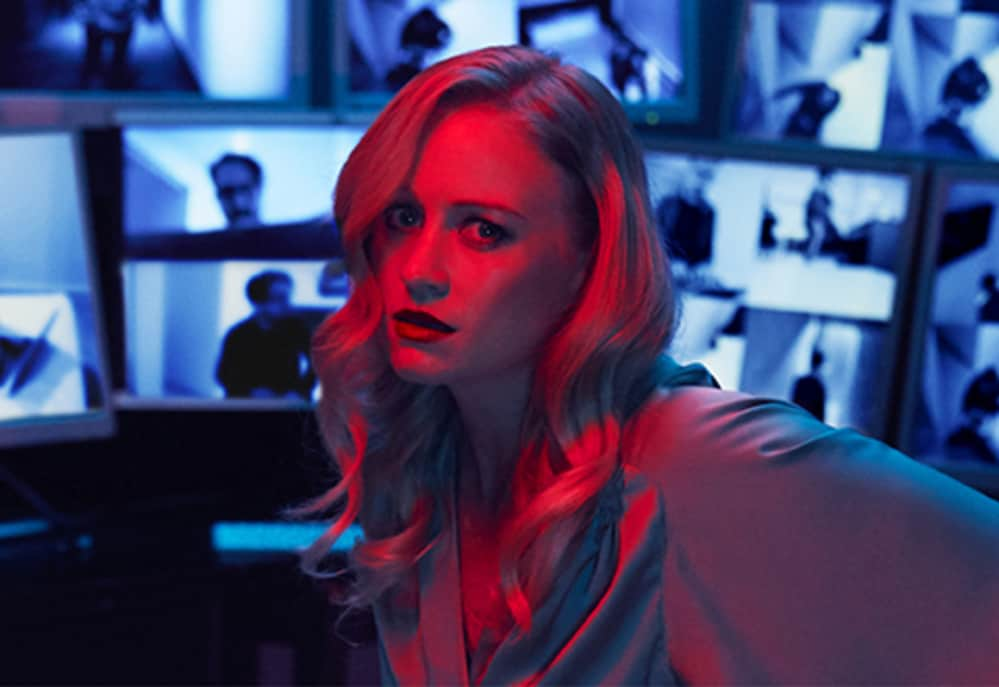
Anna Lise Phillips as Woman in Wild
Honourable mentions for:
  • The Aspirations of Daisie Morrow (produced by Brink Productions at The Playhouse, Canberra Theatre Centre) - Four actors (Paul Blackwell, Lucy Lehman, Genevieve Picot and James Smith) play a number of characters and narrate events in this adaptation of a Patrick White story. The physical shifts and slight changes of costume, props and vocals, make it beautiful, moving and touching in its simplicity. With an innovative setting, fantastic design elements, consummate acting and a gorgeous musical accompaniment, this is a spectacularly engaging production.
  • Henry V (produced by Oregon Shakespeare Festival at Thomas Theatre, Oregon, USA) - in which director Rosa Joshi incorporates innovative costume and set design to keep the pace moving briskly and precisely. The lead performance from Daniel Jose Molina is supremely confident (verging on psychotic) and the American accent and modern delivery ruins the rhythm but it sharpens the humour and militancy.
  • Venus in Fur (produced by The Street at The Street Theatre) - I've read the book; bought the single; now I've seen the play. Perhaps I should get the T-shirt: mink or sable? Faux, obviously. The post-modern play by David Ives explores the sexual politics of the original novel by Leopold von Sacher-Masoch as a director, Thomas Novachek (Craig Alexander), has adapted it to the stage. As he attempts to cast the part of Wanda von Dunajew, he auditions a young actress, Vanda (Joanna Richards), in a disturbingly contemporary power play. His dominance is questioned by the performance of Vanda who subverts his expectations by presenting a variety of versions of the play within a play within a play. It's challenging and immediate, and director Caroline Stacey is always in control of the audience and the text. 
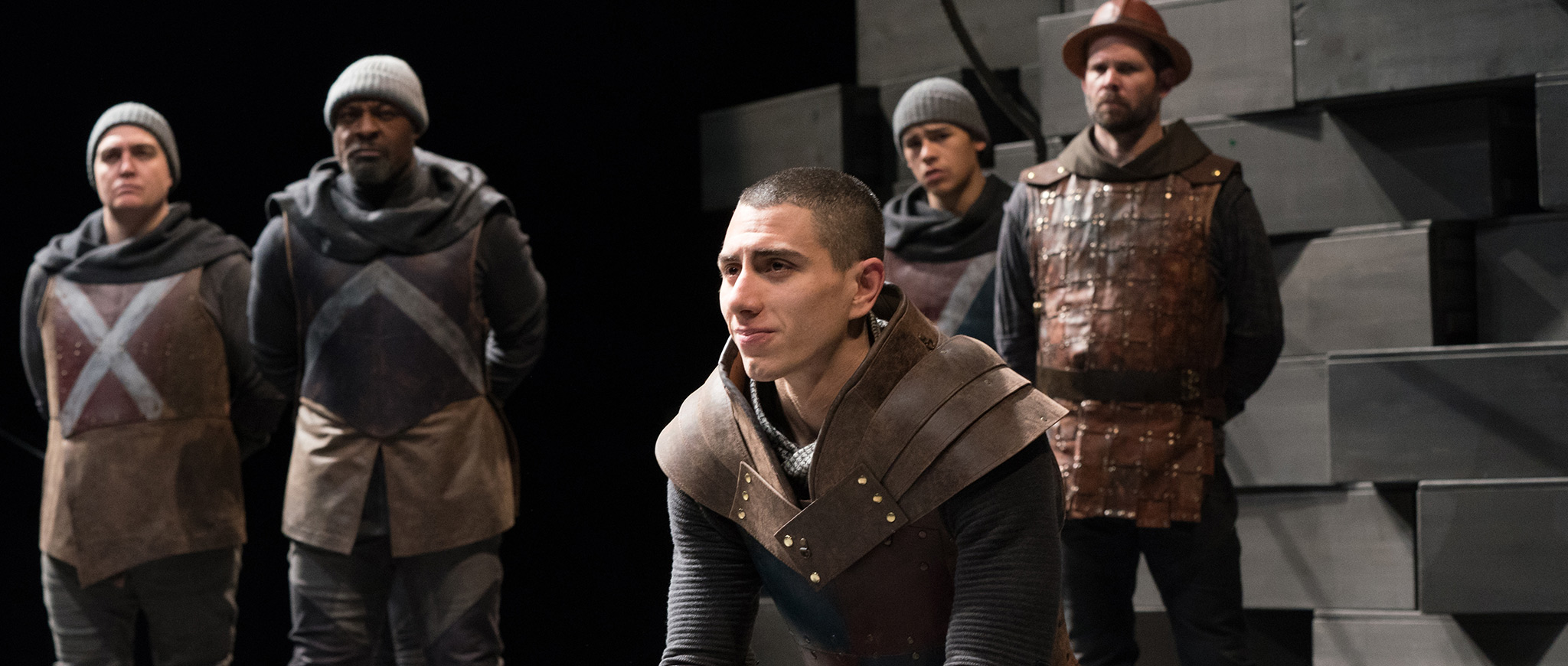
Daniel Jose Molina as the titular role in Henry V at The Oregon Shakespeare Festival

Friday, 11 May 2018

Friday Five: Comedy Festival


About a month ago Canberra had a comedy festival. It's sort of a warm-up for the Melbourne Comedy Festival, which is bigger and has more acts. But I like this one as it is fairly low key and the laughs seem more heart felt.

5 Comedy Acts at the Festival:
  1. Oedipus Schmoedipus - Canberra Theatre Centre
  2. Although not strictly part of the Comedy Festival, I feel that Oedipus Schmoedipus belongs here. Written by post (Zoe Coombs Marr, Mish Grigor and Natalie Rose), the premise is to look at death on stage, and there has been an awful lot of it over the years. From the drama of the Greeks to the tragedies of the bard, people have been theatrically dispatched in a myriad of ways. Performers Mish Grigor and Shelly Lauman take us on a quick trip through death's door, and include 25 local volunteers (who have rehearsed for a few hours and are different for each performance) to portray the profound and sometimes ridiculous shufflings off this mortal coil. Most of these dramatic deaths have been written by men, but this female duo introduces the notion that men do not hold a monopoly on the moribund. 'The great whites' tell us that death is a lot of things (an island; nothing; an open door; an illusion; a lonely business; a friend; welcome), but who knew it was fun too?
  3. Rich Hall - The Street Theatre
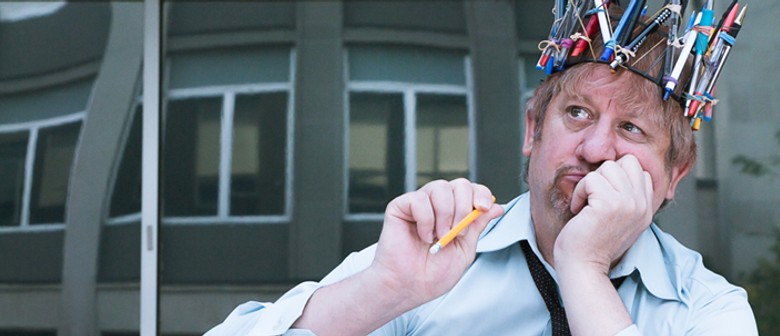
  4. One of the funniest Americans around, he's as baffled by the antipodean tendency to go barefoot in public indoor spaces as I am. His drôle delivery lampoons everything and everyone, including himself. Witty without being acerbic, he seems to find the world a laughable place, which is comforting in the face in current global politics. He does riff on the US Healthcare system and gun laws, but he also talks about long-term relationships and new babies. With his hat and guitar he resembles the poetic side of Bob Dylan, but he doesn't take himself nearly as seriously. Rich Hall's improvised songs based on audience conversations are less about the great social inequalities and injustices of life and more about picking up girls or stepping on pieces of Lego.
  5. Sh*t-Faced Shakespeare, Romeo and Juliet - The Street Theatre
  6. Imagine a Shakespeare play (in this instance Romeo and Juliet) acted with sharp wit and deep understanding of the text. Then imagine one of the actors is inebriated. Yes, they will forget their lines; yes, they will skip ahead and back in the script leaving the other actors bewildered and desperately trying to catch up and/or fill in the blanks; yes, they will change the plot lines entirely with a complete disregard for the character arcs and structure; and yes they will milk certain parts and reduce others to mere footnotes. If they are as entertaining and inspired as this lot, however, the improvisation will be excellent. It's basically the difference between knowing they're shit, and knowing their shit. Clever and funny i'faith; verily 'twas most amusing. ,
  7. Stephen K Amos, Bread and Circuses - Canberra Theatre Centre
  8. Stephen K Amos is a wise and funny man. Whether he is launching into established routines or trying out new material to see how it is received, he is always alert to the nuances of the audience. Of course we all see the world as it filtered through our own perspective of privilege or diversity. While he is keenly aware of racist and homophobic bias, he occasionally strayed into stereotypical casual sexism territory, which was a little disappointing. He recovers well because he is confident and charming and knows how to command the stage, but he did appear a little tired, as if this isn't his best work and he knows it.
  9. Ross Noble, El Hablador - Canberra Theatre Centre
  10. What an incredible mind this man has: bewildering; bonkers and brilliant. I could listen to him all night, which is fortunate, because he artfully rambles his way through a couple of hours of stand-up. Tangents are Ross Noble's friend, but although he appears shambolic in his breakneck delivery and chaotic appearance, he is anything but. Every loose end becomes a loop as he returns to the subject with peripatetic aplomb. It's always hard to know whether the the ad-libs really are off-the-cuff, but they are certainly head and shoulders above most comedy. What the name of the tour and the Mexican Day of the Dead inspired inflatable set has to do with the material itself, I couldn't tell you, but I was laughing too much to care - and isn't that the point of comedy?

Friday, 28 April 2017

Friday Five (Seven Actually): Recent Theatre Excursions

I have seen a fair bit of theatre recently but have not had time to write full reviews, so here are some edited highlights:

Pip Utton as Winston Churchill
  1. Churchill & Maggie by Pip Utton, produced by Imagination Workshop and Street Contemporary Drama at Street 2 - Pip Utton performs solo shows on consecutive nights, portraying political giants Winston Churchill and Margaret Thatcher. He weaves anecdotes, musings and facts into his 70-minute monologue on Churchill, a colossus of his time: "History will be kind to me for I intend to write it." During his embodiment of That Woman he invites questions from the audience, while achieving the voice, mannerisms and dismissive tone so successfully it made my skin crawl. His enthusiasm is boundless and his knowledge equally indefatigable.  
  2. Wait Until Dark by Frederick Knott, produced by Canberra Repertory Society at Theatre 3 - Jordan Best directs this classic thriller with attention to detail on a meticulous set (designed by Michael Sparks) as a blind woman (Jenna Roberts as Susie) comes under threat from unscrupulous criminals looking for drugs they believe are stashed in her apartment. The tension was lacking from previous productions I've seen perhaps because I knew the story so well, perhaps because Roberts never displayed any vulnerability or uncertainty, or perhaps because the villains were neither as charming or as threatening as they might have been.
  3. Cold Light adapted by Alana Valentine based on the novel Cold Light by Frank Moorhouse produced by Street Contemporary Drama at The Street - Trying to personalise politics in the most bureaucratic town in Australia is tricky. Sonia Todd plays Edith Campbell Barry, a (fictional - although many people are deceived) woman who tries to make her mark in international relations. It packs a great deal of history into a lengthy piece with multiple threads and tangents. The ensemble cast perform multiple roles with varying degrees of aplomb, but almost mimicing the projection of Canberra's street design, there is a feeling that we are being driven around in circles and getting lost in cul-de-sacs.

  4. The Age of Bones

  5. The Age of Bones produced by Satu Bulan, Teater Satu, Performing Lines and Ainslie and Gorman Arts Centres at Gorman Arts Centre - A mixture of Indonesian shadow puppetry, music, digital projections and contemporary satire tells the story of Ikan, an Indonesian boy who goes fishing one day and fails to return. He is imprisoned 'down under' in an oceanic world where he is befriended, pursued and judged by fantastical creatures (bubble-headed deep sea divers, a shark and an octopus). We are clearly meant to draw parallels with the plight of Indonesian boys incarcerated in adult jails throughout Australia for their involvement in human trafficking. While this is an original and commendable approach, certain technical aspects (such as the English surtitles failing to coincide with the spoken words) hamper the production, while the attempt to appeal to all ages (childlike repetitive motions alongside hard-hitting issues of abuse) means the production overall fails to connect with any particular audience.
  6. Chicago produced by Canberra Philharmonic Society at Erindale Theatre - Interesting staging and directorial choices (by Jim McMullen) highlight different aspects of the play to usual - including the fact that the characters really are all horrifically unpleasant. Vanessa de Jager and Kelly Roberts as Roxie and Velma are both excellent in isolation but their dancing duets remain individual; Shell Tully has a great voice but no depth as Mama Morton; Will Huang presents a lawyer who seems merely slightly smarmy rather than truly repulsive; and Miss Mary Sunshine (Ben WIlson) is utterly peripheral. Most of the songs are still good (although Class was especially disappointing) but other facets, such as the sloppy follow spots, are mediocre. Curious staging makes us question whether we are in a gaol at all, as the protagonists pop out to the lawyer's office in their underwear. The fact that there are far too many people unnecessarily on stage literally jumping through hoops spoils what should be tight choreography, and the hanging scene is hugely underwhelming. The menace and terror of being locked up and possibly awaiting the death sentence is entirely absent: it's more like a circus in which everyone gets to run around and show off how good they look in a corset. 
  7. Trelawny of the Wells by Arthur Wing Pinero produced by Canberra Repertory Society at Theatre 3 - Tony Turner directs a spirited cast in this touching and amusing late-nineteenth-century drama. The revolving set (designed by Ian Croker) allows for all the scenes to be played in the balance of affectation and naturalism which was becoming popular at the time and which is crucial to the play's ethos. Deliberately bombastic performances from the flamboyant characters such as Sir William Gower (Jerry Hearn), Mrs Mossop (Elaine Noon) and  Avonia Bunn (Jess Waterhouse) provide a delightful counterpoint to the more subtle sentimentality of Rose Trelawny (Alessandra Kron) and Tom Wrench (Robert de Fries). Slapstick extremes are tempered with emotional speeches, and the entire effect is a beautiful piece about acting and performance. 
  8. Richard III by William Shakespeare, produced by Bell Shakespeare at the Playhouse (Canberra Theatre Centre) - Bell Shakespeare have taken the history out of the history play and turned it into a tragedy, in which the lead performer (Kate Mulvany as RIII) hams it up deliciously as Tricky Dicky, and the rest of the cast frolic about in a drawing room, like one of those frightful parties where you don't really like the host. As the actors do not leave the stage, there is no difference between intimate and group scenes, leading to a lack of tension and confusion as to the identity of many of the characters. The political is no longer important; it's all about the personal. This is the modern world, where I fear we have lost more than we have gained.
Kate Mulvany as Richard III

Saturday, 22 April 2017

Politics and Parenthood


Dad Joke written and performed by Mark Swivel
The Street, 21-23 April

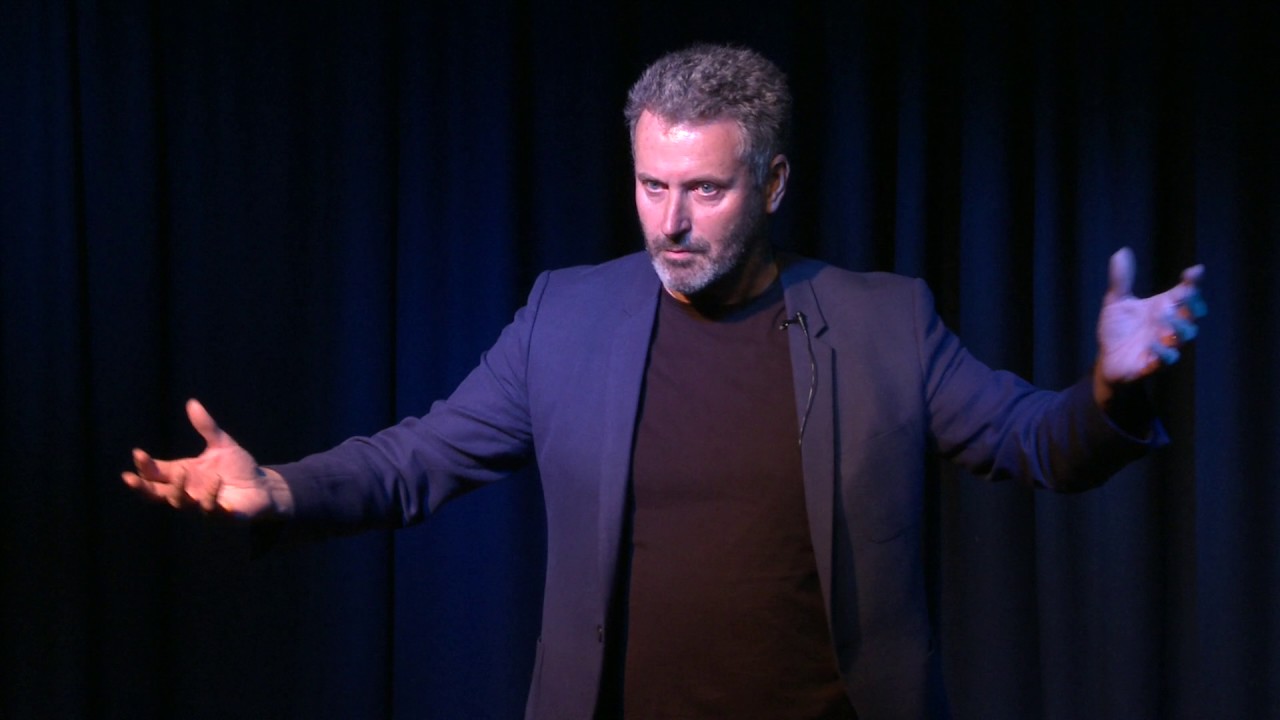
Describing himself as something between a storyteller and a stand-up comic, Mark Swivel commands the small stage of The Street 2. His premise is that he has to deliver a speech on the event of his son's 21st birthday and he is a little nervous. They have a perfectly fine relationship (about as good as a father can have with his son who lives on the other side of the world), but he claims to be struggling with the fine line between proud dad and aged embarrassment. He asks the audience to help as he runs through his rough draft, and he is so personable and charming that we all comply with his request.

Of course this is all a ruse, designed for Swivel to show off his intelligence, humour, range of subjects, and even a pretty decent singing voice. His renditions of Russian folk songs - "we have no idea what the words mean, but they sound good" - segue seamlessly into musings of political icons both Australian and British - "Anyone remember David Cameron?" He regales us with tales of his own upbringing in the days before one had to engage with one's children, and during which his dad used to drop cryptic one-liners when he came in from removing leaves from the pool "like a wistful gondolier". His reminisces are touching and remarkably poignant, especially when he talks about dealing with a parent toward the end of their life. 

There are many different styles of parenting these days: snow-plough; free-range; helicopter; attachment; cotton wool; combine-harvester... okay, I admit I made that last one up. Although the first recorded use of the word in this sense comes from the 1660s, the word 'parent' was not widely recognised as a verb until recently. It stopped being a thing one just was, and became a thing one had to do, and at which one could be judged. And boy, how we love to judge! There is so much expectation and pressure involved that the whole business (and it is increasingly a business - isn't everything?) becomes quite stressful. One of the best ways to deal with pressure and stress is to laugh at it, and ourselves, and Swivel does that expertly.

At the end of the evening we have learned a lot about Mark Swivel and his family. He cleverly polishes the poignant memories and anecdotes, mining them for the humour without discarding the essence. But this is more than just personal, or political, or even social (and there is a social justice warrior lying very close to the surface). It is an engaging evening such as you might have with your mates down the pub as they confide their hopes and fears to you. I haven't got kids; I didn't grow up in Australia and I haven't had to bury my parents (although even thinking about it brings a lump to my throat), but I was fully engaged throughout the hour-long "slightly inebriated TED talk". Mark Swivel's riffing on parenthood and politics crosses continents and generations - it's a great night out and highly recommended.

Tuesday, 26 November 2013

Two Gents: Many Parts


Two Gentlemen of Verona (Vakomana Vaviri ve Zimbabwe)
Street Theatre, 19, 21, 23 March 2013

Shakespeare’s comedies can be very confusing for a modern audience, with mistaken identity, cross dressing, clownish characters, exalted romance, and outdated themes of filial loyalty and banishment. This South African township theatre version, featuring only two actors, Denton Chikura and Tonderai Munyebvu, has the potential to be even more baffling, yet their adaptation (along with Arne Pohlmeier, who also directed) is simply sublime. To paraphrase from another Shakespearean play, they have into a thousand parts divided two men.

In the beginning, Munyebvu (arguably the more cerebral of the pair) appears through the emergency exit door carrying a suitcase. Is he part of the play? Is he meant to be here? He is shortly joined by Munyebvu (a master of physical comedy), and the wondrous aspect is set. Immediately the audience is directly involved in the production as the actors include them – literally in the case of fleshing out the outlaws in one scene where audience members are ushered on stage and then moved and manipulated by Chikura and Munyebvu as they speak from behind them, putting words into their mouths.


The actors embody all of the characters of the play, changing between them with just a twist of a shawl, a flourish of a cloak, or a flick of a glove. These costume items emerge from the suitcase, which also features as the only prop and doubles as, among other things, a bath a boat, and a table. The diligent duo play everyone from Julia disguised as a page boy to follow her lover, Proteus, to Crab the dog with rolling eyes and panting tongue. A man playing a woman playing a man seems authentically Shakespearean, while a man playing an anthropomorphosised dog takes the drama to another level entirely.

Just as there is no divide between the actors and the audience, there is no class barrier between the masters (Proteus and Valentine) and the servants (Launce and Speed). The actors respect the language – Proteus and Valentine speak in blank verse – but they are not above making asides to the audience to ensure that they understand and are participating. When Chikura complains that Munyebvu has spat on him, Munyebvu explains, “It’s all these plosives you can see – when you get plosives, you can do it too.” When Munyebvu appears to be distracted, Chikura complains, “He always makes this noise during my monologue”.

As Valentine writing a letter to Sylvia’s lover, Thurio, Chikura exhorts the audience, “keep up; there’s only two of us.” Letters play a major role in the plot and are read out on palms and traded with high fives. Similarly rings are exchanged with a clicking of fingers. The pared-back performance is pieced out by delicious African rhythms played upon the suitcase, and an instrument that may be a balafon, while the harmonious voices of the actors swell the scene.


It’s not all a laugh a minute, however, as the play touches upon some dark and serious themes. When Valentine first sets out for Milan from Verona, he wants his friend Proteus to accompany him, but Proteus wishes to remain behind with his love, Julia. Proteus’ father orders him to follow Valentine, which he does, after many fond farewells to his Julia. In Milan, Valentine falls in love with Sylvia, the Duke’s daughter, but when Proteus spies Sylvia, he forgets his promised love for Julia and vows to win Sylvia for himself. The bonds of love and friendship are sorely tested. In an interview Munyevbu reveals that when he plays Proteus betraying Valentine, he has had audience members interjecting to tell him he is a ‘bad man’.

The most problematic and ugly aspect of the play is the ending in which Proteus, learning that Sylvia is not in love with him pursues her into the woods and threatens, “I’ll force thee to yield to my desire.” Valentine encounters this scene and is disgusted with Proteus but forgives him after Proteus demonstrates what he considers to be true repentance, while Julia, still disguised as a boy has also witnessed the attempted rape. This tragic scene becomes desperately serious as the character of Sylvia becomes a discarded glove.

It is tricky to reinstate the comic closure where the original couples are reunited and the production does not gloss over the dichotomy. The final scene is left to Sylvia and Julia to share an overwhelmingly tender and emotional moment without words but where looks convey action and thought in the most profound interpretation. Many plot devices are sacrificed to the development of character and comedy but the truth of the sentiments – love, friendship, constancy, repentance, forgiveness, and devotion (including the master and his dog) – are all emphasised.


For a Zimbabwean company living in Britain in exile from the Mugabe regime, the themes of displacement and enforced travel are powerful. The company are between boundaries and cultures with their individual experience of Diaspora. For four years they have travelled globally, including performing this play in the African language of Shona as part of the Globe to Globe festival.

The vibrant production of Shakespeare’s earliest and possibly least performed play is a triumph. The hour and a half flies by in the capable hands, mouths and bodies of one of the most engaging double acts I have ever seen.