Showing posts with label Canberra Repertory Society. Show all posts

Friday, 27 February 2026

Friday Five: First Shows of the Year

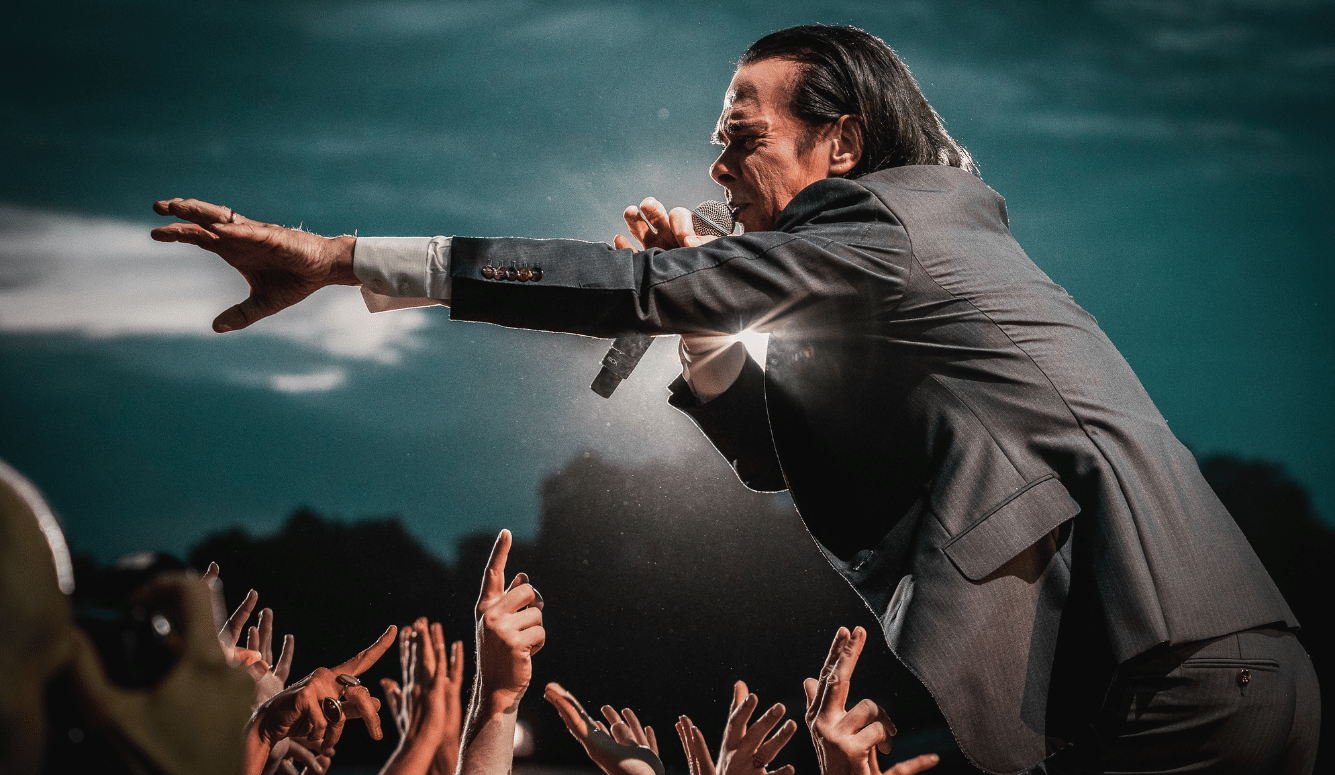
  1. Nick Cave and the Bad Seeds - Supersonic Australia, The Domain, Sydney: As part of the Wild God Tour, the band played two shows in January featuring a messianic performance by Mr Cave, a 17-piece ensemble, some of the best backing vocals I have head in a long time, and a supporting cast of bats flying overhead at dusk (the lack of Release the Bats from the set was the only disappointment). Nick Cave is a consumate performer, whether belting out fan-favourites Tupelo and O Children or baring his soul with tunes about his dead son, I Need You (with the repeated refrain, 'just breathe') and Joy. Warren Ellis does Warren Ellis things at the side of the stage as Cave roams, struts and surfs about the place, equally comfortable pounding the piano or stroking the keys, his energy through two and a half hours is obvious in every gesture and facial expression. Jubilee Street is a deliverance for the ages, while more mainstream hits Red Right Hand and The Weeping Song invite the crowd to sing along until there is barely a dry eye in the domain by the time he finishes (us) off with Into My Arms.
  2. The Book of Mormon - Anne Garfino, Important Musicals and Suzanne Jones, Capitol Theatre, Sydney: A delightful and irreverent pastiche of a show that mocks every genre of musical theatre, cultural hegemony and organised religion while still maintaining a moral code. From the team that brough you South Park comes a musical that skewers itself with outstanding acting, singing, choreography, sets and costumes. From the opening number, Hello! in which we are introduced to a cast of missionaries of the Latter-day Saints, we know there is earnestness up for lampooning. Elders Price (Sean Johnston) and Cunningham (Nick Cox) are paired up and sent to Uganda - not quite the cushy Orlando posting they anticipated. Cue jokes about dictatorship, AIDS, child abuse, blasphemy, and myth making. The songs are memorable and amusing, the sacriligeous Lion-King-inspired Hasa Diga Eebowai and the toe-tapping Turn It Off about supressing unwanted feelings are highlights, and the dream-a-dream ballad Sal Tlay Ka Siti is the version of the song that goes like this (performed by Paris Leveque with wholly convincing naivety in her professional debut). Spooky Mormon Hell Dream is a wonderful excuse to play with props, character and lighting, and the breathtaking audacity of I Am Africa had me wondering how they got away with it. The last word should go to Trey Parker who writes, "There's this line that you can cross all you want as long as you have a reason for doing it. If it has a point and it has a story and it has genuine, real character and emotion, then you can pretty much do whatever you want. There is no line if you're being truthful. We learned that lesson a long time ago."
  3. You Tell My Mum I'm Dead - Sunspot Productions, The Courtyard Studio: This is an interesting new work from a promising young writer (Emily O'Mahoney), focussing on the Australian 'schoolies' phenomenom where hoards of 18-year-old school leavers descend on beach towns (particularly the Gold Coast and, in this instance, Bateman's Bay) to celebrate their new-found freedom. Gangs of youths, many of whom are away from parental control and experimenting with excessive drugs and alcohol for the first time, flirt, fight and try to figure out who they want to be as they emerge blinking from the confines of adolesence into the bright lights of adulthood. What could possibly go wrong? Director, Kathleen Dunkerley makes some bold choices in their use of space, light and sound effects, accompanied by straightforward acting decisions as they play to the cast's strengths. We spend time in the company of three young women: Cara (Emily O'Mahoney), whose natural performance and final decisive monolgue capture the insecurity of being on the cusp of womanhood; Max (Breanna Kelly), who brings energy and sincerity to an assured performance with unexpectedly emotional anguish; and Layla (Ainslie Bull), with a metaphoric speech about lambs being led to slaughter which could be the crux of the play if delivered with more power. The commitment and engagement from all involved make this an exciting ensemble to watch in future.
  4. La Souris Blanche - ReAction Theatre, Street 2: Nancy Wake was a New-Zealand born Australian nurse and journalist who joined the French Resistance and later the Special Operations Executive during World War II and briefly pursued a postwar career as an intelligence officer in the Air Ministry. Known as the White Mouse, part of her legendary appeal is due to her insistence on maintaining her femininity amidst guerilla warfare, often taking silk nightgowns, Chanel lipstick and red satin pillows on spying missions in the French mountains. This production, written by Christine Croyden and translated by Véronique Duché is performed entirely in French, to immerse the audience in the language and the atmosphere of the resistance. Surtitles as well as wartime images are projected onto sheets hanging from the top of the stage, ripped and layered to provide entrances and exits, suggesting forests, apartments and nightclubs, all while evoking torn parachutes of downed airmen - both practical and imaginative. Nancy herself is performed by Ionna Gagani and Natalia Nour (as young Nancy) as the agent provocateur prepares to receive a belated award from the Australian government and reflects on her life and the choices that led her here. Flashbacks of her training and actions, including learning to kill silently and the consequences of that ability, are executed with passion, wit and candour. Director Louise Howlett doesn't shy away from the violence, while incorporating the romance and an artistic element through song and dance. There is a lot to the story, and this 80-minute play only peels back a partial couche d'oignon, leaving audience members craving more information, which is surely one of the purposes of drama, n'est-ce pas?
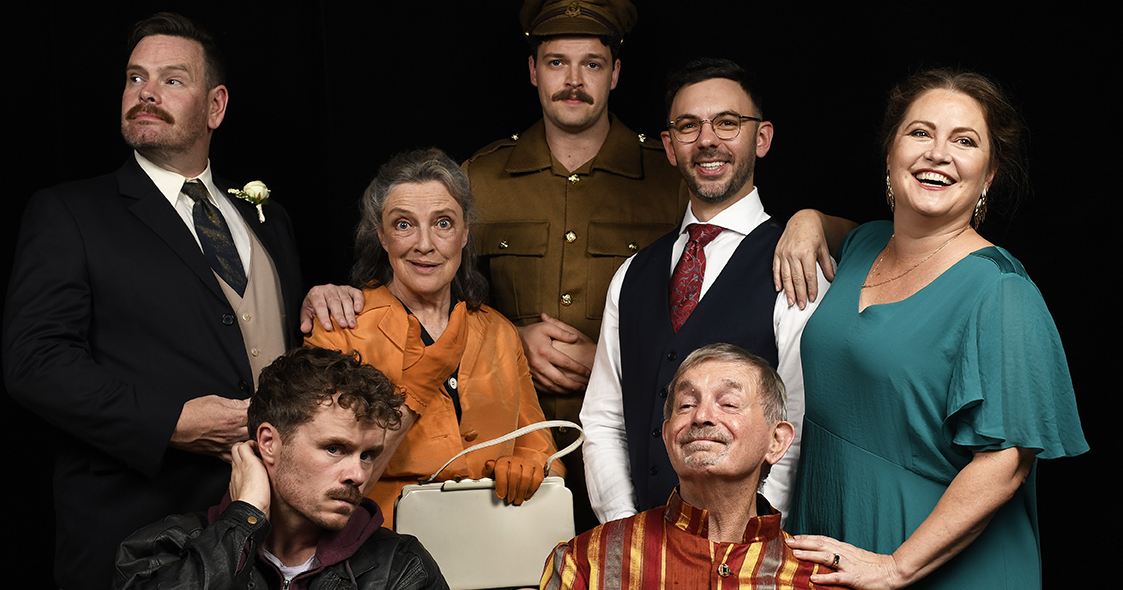
  5. Bedroom Farce - Canberra Repertory Society, Theatre 3: The play can be pretty dated with its casual references to domestic violence and defined gender roles, as four couples talk about the things that happen behind closed doors. The title is misleading as it is not a farce so much as a sit-com where character interplay matters as much as precision timing. In this, the older couple, Ernest (Pat Gallagher) and Delia (Sally Rynveld) are perfect as the slightly stuffy and bewildered moral compass (think Richard Briers and Penelope Wilton in Ever Decreasing Circles). Their son, Trevor (played with too much posturing and insufficient presence by James Grundoff) has a combative relationship with Susannah (Lara Connolly whose histronics elicit ridicule rather than empathy), who crash the house warming party of practical jokers Malcolm (well-executed bonhomie from Lachlan Abrahams) and Kate (Antonia Kitzel as the centrepiece of the play with a fun and thoughtful performance). Making up the octet are Nick (Rob de Fries has a good line in physical theatre and condescending disdain but is way too old for the role which makes it ick) and Jan (Azerie Cromhout), Trevor's former girlfriend. Although the script frequently mentions her strength and how she would have been a better match for the tempestuous Nick, this is not evident on stage. All the action occurs across a series of bedrooms, delightfully designed by Andrew Kay, showing the character of the couples and allowing continous sightlines and theatrical flow. Despite some good acting and technical elements, the zeitgeist-blind casting of a couple where the man is old anough to be the woman's grandfather and the tone-deaf approach to domestic violence are insurmountable issues.
Ionna Gagani and Natalia Nour as Nancy Wake in La Souris Blanche

Friday, 13 September 2024

Friday Five: Theatre reviews

  1. Bombshells - Echo Theatre, The Q: A great night out at the theatre is presented by six women delivering monologues that encompass the highs and lows of their lives. Director Jordan Best has them remain on stage throughout, whether they are having their moment in the spotlight or not, and the interactions between them as they segue between scenes are as sharp as the main content. There is no question that Joanna Murray-Smith writes incisive pieces for women, and these explorations of what it means to be a woman of any age in this strange, competitive world of ours are equally sharp and sparkling. Lainie Hart plays the ageing cabaret singer who can't quite move on from the end of her career; Ella Buckley is the blushing bride-to-be who isn't sure this is what she wants after all; Amy Kowalczuk portrays the exhausted young mother, desperate for reassurance that she's doing something right; Sally Taylor is hilarious as the precocious teenager with a talent routine that falls woefully short; Kate Harris bites back her anguish as she tries to hold her life together while delivering a TED talk on cacti; and Alice Ferguson brings the house down with some old lady wish fulfilment fantasy. At ninety minutes with no interval, this play delivers a lot of laughter and a range of emotions. I just wish that togetherness was one of them.  
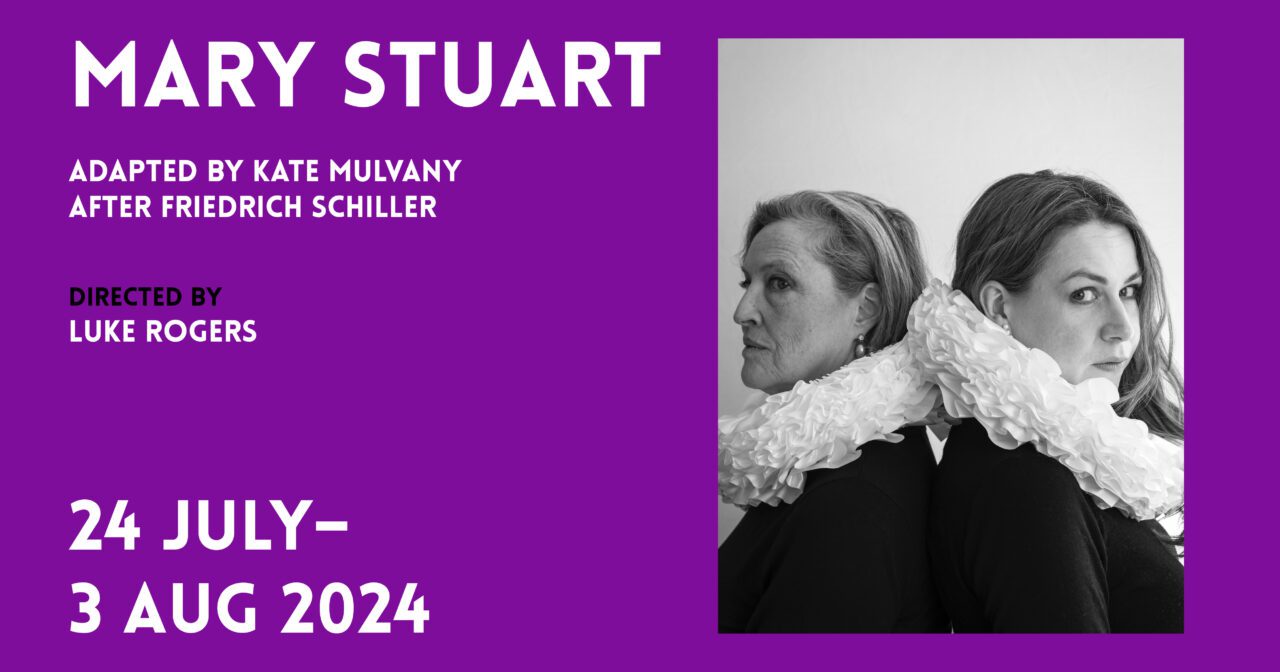
  2. Mary Stuart - Chaika Theatre, ACT Hub: There is some interesting staging with a crucifix formation, and a bold interpretation of the dance/ meeting scene as the two queens, Mary Queen of Scots and Elizabeth I meet in an encounter that never actually happened. Steph Roberts is strong in the titular role, playing the likeable aspects of the character with humour and sensitivity. Karen Vickery also displays strength as Elizabeth I, but comes over as bold rather than regal, and the fear and vulnerability inherent in the role are also lacking. The dynamic relationship she shares with Leicester is given a manipulative and conniving presence by Jarrad West, playful and/ or pragmatic as required. Of the supporting cast, Cameron Thomas stands out as Paulet with great dramatic energy, exquisitely embodying the conflicting emotions between the personal and political. Kathleen Kershaw's set design provides obvious points of strength, hierarchy and balance, and the execution block/ stone is a provocative dichotomy. More light and shade from Disa Swifte's lighting design would have better highlighted the fear and paranoia. Contemporary costumes (Kathleen Kershaw again) are a bold stylistic choice, which works better in concept than performance (whereas the masquerade outfits are striking, some costumes hamper movement). Overall, some curious actor choices result in one-sided presentation, and, despite the very strong leads, there is a lack of intensity, and the stakes don't appear to be played high enough.
  3. The Lord of the Flies - Canberra Repertory Society, Theatre 3: There is a theatre adage that states if you put on plays featuring lots of young people, you will get large audiences, as all the parents, friends and family are strongly encouraged to see it. This may be the case, but it does generally mean the production will be full of youngsters of greatly varying acting abilities. This production is action-packed, but lacking in shade or nuance; it hits a high intensity early that it struggles to sustain. While there are some excellent creative design and production elements (the set by Michael Sparks evokes atmosphere and location differentiation, and the lighting by Chris Ellyard conjures mood with shifts in tone and a sense of dread), but there are issues with the actors - too much shouting loses clarity and the young directors (Caitlin Baker and Lachlan Houen) have no understanding of class distinctions. The schoolkids cut adrift on an island, having to organise themselves to collectively survive is a metaphor for life, and this concept seems to be beyond some of the cast. Robert Kjellgren is disturbingly calm and direct in his convincing portrayal of the psychopath, Roger and Ty MaKenzie as Jack has great energy, indulging in totalitarian bully tactics to disguise deep insecurities. The gender blind casting is essential to both modernise the play and accommodate the auditionees, but the necessary machismo is missing from some actors, who come across as whiny and irritating rather than empathetic. 
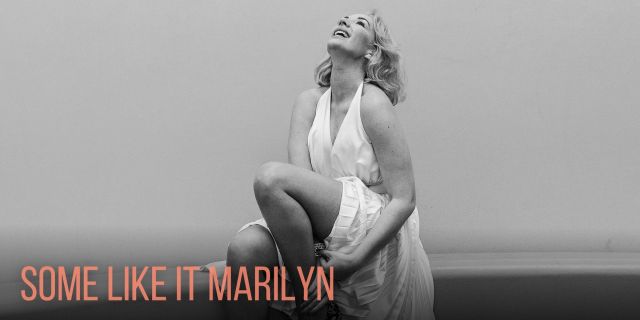
  4. Some Like It Marilyn - Lexi Sekuless Productions, The Mill Theatre: The Mill Theatre presents plays with previews attached. The preview may be paused while technical elements are adjusted, and at the end the audience feedback is ploughed back into the next night's performance as it is tweaked and enhanced. There is very little to perfect in this production in which Lexi Sekuless embodies one of the most iconic figures of the twentieth century in a sort of cabaret, highlighting moments from her career ranging from singing to interviews, to photo-shoots and letters. Helen McFarlane as Jane Russell pairs with Sekuless in impressive duets, while other characters (managers; beaux; fellow actors; media; stalkers) are played by Tim Sekuless and Mark Lee. Music (Leisa Keen) is wonderfully harmonious - the night I saw it backing tracks were employed, but I think they will be ditched for the true performances - and the choreography (Annette Sharpe) is eminently suited to each performer. The set by Sam Thomas is simple but effective, including a grille to recreate the iconic skirt lift scene from The Seven Year Itch, and the costumes are a delight, as Tania Jobson has designed everything from the pink satin sheath gown in which Marilyn sings Diamonds are a Girl's Best Friend, to the sexy bed sheet in which she was famously interviewed. The show portrays Marilyn as fun, charming, glamorous and smart; not just a 'dumb blonde', she was the first woman (since silent film star, Mary Pickford), to found her own production company, Marilyn Monroe Productions, in 1955. Who wouldn't like it Marilyn?
  5. August Osage Country - Free-Rain Theatre Company, ACT Hub: I also saw Free-Rain's production 2014 production, but the power of this one is that it swiftly eradicated that one from my mind. It may be inevitable with this play but it feels a little 'stagey' and disjointed - the scenes where everyone is talking at once are the best, as the audience can make up their own mind where to look. Some things are staged in less prominent areas, and it would be itneresting to know where the director feels the focus of this play is. Violet, the matriarch of the dysfunctional family, is a vehicle for a strong actor and Karen Vickery fits that definition with aplomb. It's hard not to feel sorry for someone living with cancer, but she made me do it. The supporting cast all excel in their roles either as family members, in-laws or additional characters, and fortunately the Native American role is for once played by a Native American (Andrea Garcia who holds an impressive stillness at the centre of the cyclone). Director Cate Clelland demonstrates great focus on character, and the shifts between scenes work well. She plays the humour  where possible (the audience on the night I saw it were in stitches) but some of the darker moments (the creepy Steve; the powerplay between mother and daughter; the brutality of Charles) are toned down. The set and costumes are effective, but some of the props (such as the notebook of poems and the bouncing plates) are distracting. One comment on the lighting (Craig Muller) - we can see all the bits we are meant to when we are meant to see them, which is no mean feat considering the width of the stage. However, sometimes the audience is lit more than the stage - this may be due to limited equipment or placement options, but it is very distracting.

Friday, 17 May 2024

Friday Five: Theatre Since Then


  1. Seagull - Chaika Theatre, ACT Hub: A bright and witty adaptation by Karen Vickery with some fine performances, particularly from Natasha Vickery as Nina (a divine portrayal of a broken spirit without mawkish sentimentality), Joel Horwood as Kostya, and Amy Kowalczuk as Polina (calmy understated with a stillness and depth that is very moving). The outood to indoor setting works well and overall the production manages to be fresh and original while maintaining the humour and pathos, although there are slight distractions in some curious staging and costume choices, and some excess faffing with props. 
  2. The Shoe-Horn Sonata - Lexi Sekuless Productions, Mill Theatre: This is an exquisite production of a challenging script. Two women, Bridie (Andrea Close) and Sheila (Zsuzsi Soboslay), meet again 50 years after they were released from a concentration camp where they were taken in the fall of Singapore. Close is a non-nonsense Aussie and Soboslay is a more subdued Brit, and they complement and contrast each other equally. They say you should never ask what someone in these circumstances has done to survive, and these women, who were forced to be the best of friends, have kept secrets from each other for half a century. Now they are exposed in a hotel bedroom and a television studio as their histories are probed and dissected. Lexi Sekuless' direction and setting aloow us to feel their emotions as we intrude upon their privacy. War robs humans of their dignity - the very least we owe the survivors is respect. This is essential viewing.
  3. Gaslight - Gas Theatricals, Canberra Theatre Centre: The play that launched the term for someone (usually a man) persuading another (usually a woman) that they are going mad due to a series of seemingly insignificant but carefully planned incidents is often considered old-fashioned. Patrick Hamilton wrote it in 1938, and now Canadian playwrights Johanna Wright and Patty Jamieson have given it a sensitive remodelling, while maintaing its Edwardian essence. The story remains basically the same as an utter arse of a man, Jack (played with casual indifference by Toby Schmidt) toys with the mental health of his wife Bella (a superb study in character development by Geraldine Hakewill). In trying to discover hidden gems, he turns down the lights, hides her personal affects and removes paitings, all while administering laudanum and telling her she is frail and over-imaginative. ithout spoiling the plaot, it will suffice to say that the character of Inspector Ruff has been excised from the stage allowing Bella more agency over her discories and the thoroughly satisfying denoument.

  4. Five Women Wearing the Same Dress - Everyman Theatre, ACT Hub: For a play that is supposedly about five women (bridesmaids at a wedding), it still manages to fail the Bechdel Test, and it introduces the concept of child sexual abuse as an 'amusing' 10-minute diversion. The setting in the round with a railing effectively screening the bedroom (as if the bridesmaids are in an MMA cage) leads to some poor blocking and limited interaction between characters. The same dress is obviously the bridesmaids' gown and, as is often the case when supposed to suit all, it looks equally horrendous on everyone - fantastically well designed by Fiona Leach.The level of acting is variable, with Kelly Roberts providing a focal point as Trisha, the strongest of the women in a poorly-written role.  Billed as a 'fun night out', it is dicordant at best.
  5. The Actress - Canberra Repertory Society, Theatre 3: With a great vision for the set and staging, the production elements are strong but the limited range in acting and pace hampers this production. It is slow on cues with a lack of engagement between characters. Kate Harris as Nicole, the daughter, has clear diction and a warm presence that felt more natural than everyone involved in the dramatic sphere. Rob de Fries as Paul, her father and ex-husband of the main character, played his part on the same plane, which worked well for their relationship, and displayed unctous charm and amusing confidence without being creepy por aggressive, whihc is hard to do with that script. As the eponymous Lydia Martin, Liz St Clair-Long is obviously theatrical without any doftening or expression of character that encourages audience empathy. This is far from her best work and, if this really were the last performace from an actress, it would be disappointing.

Friday, 19 April 2024

Friday Five: Theatre in 2024 So Far...

The cast of Queers at ACT Hub
  1. Queers - Everyman Theatre, ACT Hub: A evening of well-performed entertainment that sits more under cabaret than theatre. It is a series of eight monologues performed by indiviual actors with no interaction between them. The direction (Jarrad West and Steph Roberts) is solid as each seperate monolgue takes us through various decades and gives some insight into the main concerns of the gay 'scene', which (according to the publisher of the works curated by Mark Gatiss) 'celebrate a century of evolving social attitudes and political milestones in British gay history. Here, the pub setting and musical interludes provided extra interest and atmosphere, with a special mention for Steph Roberts who played the bartender interracting with actors and adience alike.  
  2. Last of the Red Hot Lovers - Canberra Repertory Society, Theatre 3: A fine production of a not-particularly outstanding play. Barney Cashman (David Cannell) decides he wants to have lots of sex with different women so he invites three of them individually to his appartment and fails to get intimate with any of them, possibly due to a disturbing and extremely unpleasant habit of constantly sniffing his fingers. As usual with a Neil Simon play, the self-indulgent, over-entitled, middle-aged, middle-class, mediocre white man is centre stage while the women are left to act in supporting roles. Victoria Tyrrell Dixon played the wisecracking Elaine Navazio with the perfect blend of cool confidence and comic timing, Stephanie Bailey as Bobbi Michelle played a demanding role with a lightness of touch, gradually and sensitively revealing the truth of her fantasist behaviour, and Janie Lawson as Jeanette Fisher handled existentialist dread well, although was a little stilted and uncertain of her cues.
  3. After Rebecca - The Miscellany Co-operative, ACT Hub: Michelle Cooper is a tour de force in action as she delivers this one-person, seventy-five-minute mologue, which tackles themes of abuse and co-ercive control. She also co-directs with Emma Fibson, who wrote the work which transposes the story Daphne du Maurier's Rebecca to a remote outback farm. The idea of a young impressionable woman being swept off her feet by the star of a reality show only to discover when she is alone and isolated that he is more than the handsome heart-throb portrayed on television and that she is expected to be much less than the talented production assistant he met and seduced, is horrendously relevant and contemporary. It starts with a confidence which seems attractive. He takes charge, he promises adventure, he removes you from your support network, he shapes you to fit his mould, he snaps in anger, he denies everything, he will never ever stop. And you say sorry. Sixteen women have been killed in Australia this year due to ‘gender-based violence’. That’s more than one a week. It's only March. You need to see this.  
  4. Sh*t-Faced Shakespeare, Macbeth - Canberra Comedy Festival, The Playhouse, Canberra Theatre Centre: Six years ago I saw Shit-Faced Shakespeare do their version of Romeo and Juliet at the Canberra Comedy Festival and I loved it. This interpretation of Macbeth is just as fun, sharp and witty, and as there is a different inebriated actor/ character each night, it has a wide range of appeal and bears repeat viewing. I also think the more you know the play; the funnier it is, and I have seen and performed in this play more times than any other of Shakespeare's canon. It's very well-crafted entertainment.
  5. RBG: Of Many, One - Canberra Theatre and Sydney Theatre Company, The Playhouse, Canberra Theatre Centre: FOr anyone who saw and loved Julia and Prima Facie, this new work by Suzie Miller will be a welcome delight. Heather Mitchell portrays the titular character, Ruth Bader Ginsberg from her budding legal awakening through her appointment as a Supreme Court Justice of the USA, and her cult status that saw her labelled as Notorious RBG. I have been interested in her career so I couldn't say if prior knowledge is necessary to the enjoyment of the play, but what I can say is that Mitchell is quite brilliant in embodying the woman as she ages and develops, learning and encountering all the highs and lows of her experience. The script is spectacular as Miller blends primary source material with directorial imagination, and the performance, directed by Priscilla Jackman, is nothing short of remarkable. Theatre that tells us stories of outstanding people and their effect on their surroundings is theatre worth watching. 

Friday, 24 March 2023

Friday Five: Even More Theatre

These are the latest brief reviews of five theatre productions I have seen recently (ish).

Karen Vickery and Natasha Vickery in Collected Stories

  1. Collected Stories, Chaika Theatre Company, ACT Hub - This is sensational theatre: a great production of a great play, with superb acting by Karen Vickery and Natasha Vickery, and direction by Luke Rogers. Famous writer and teacher Ruth Steiner (Karen Vickery) takes on aspiring author Lisa Morrison (Natasha Vickery) as a protégé, and their power dynamic shifts subtly throughout the play as the student learns all they can from their tutor, eventually surpassing them in certain ways. Written by Donald Margulies, the play questions who has the right to tell someone else's story and what emotional events can be manipulated for creative and commercial gain. Plays featuring women can be amazing when the protagonists get to talk about something other than having (or not having) babies. Who knew we could actually be imaginative and interesting… 
  2. An Evening with Richard E Grant, The Playhouse, Canberra Theatre Centre - The man is charming and knows how to tell a good story. His life is rich with incident, from his childhood in former Swaziland - now Eswatini - (told in his diaries and Wah-Wah, the film he wrote and directed) to being picked to play Whitnail in his breakout role in Whitnail and I, to his relationships with famous celebrities and the death of his beloved wife, voice coach Joan Washington. He talks candidly and refreshingly about it all, saving his dearest love for Barbara Streisand and of course, Joan, whom he clearly loves and cherishes every day. He has a remarkable optimism, which is moving and infectious, and it is a delight to spend an hour or two in his upbeat company. 
  3. Nick Cave & Warren Ellis Carnage Tour, Canberra Theatre -  I have not seen Nick Cave perform live before, so this was a real treat as I thought I knew what to anticipate, but this still exceeded all expectations. With banter that alluded to their years-long friendship, the pair moved through a repertoire  repertoire of slow, melancholic numbers, to upbeat anthems chanted with passion by the loving crowd.  Ellis showcased his incredible musical versatility, playing the violin, flute and keyboard all with remarkable aplomb and charisma. Lying on a stool with his legs in the air and punctuating the beats with the bow held aloft, his physicality with the violin is not to be surpassed. Nick Cave's voice is distinctive and soulful, and he smashes out those songs with passion and commitment. The gig was breathtaking, heartbreakingly beautiful, bewitching and spellbinding; two and a half hours of solid evangelistic genius.
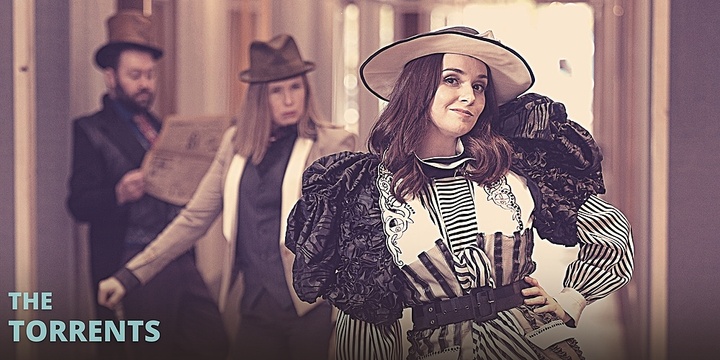
  4. The Torrents, Mill Theatre at Dairy Road - For their inaugural production, Mill Theatre deliver a sharp and affecting piece of social commentary. A young woman, J. (Jenny) G. Millthorpe (played with calm assurance by Lexi Sekuless, who also directs), in a late 19th-century small gold-mining town tries to get a job at a newspaper where only men are employed. She argues her merits and her value so well that she persuades the old blusterers (including Elaine Noon rising to the challenge of playing the gruff Scot Macdonald and Heidi Silberman as the spectacularly unctuous John Manson), the young braggarts (Kat Smally excelling as Ben Torrent) and eventually the owner (Rachel Howard with measured nuance as Rufus Torrent). Meanwhile there are schemes for agricultural irrigation which are opposed by the proponents of mining in an environmental battle that would have been powerfully prescient when Oriel Gray wrote the play in 1955. The examination of the roles of women in a male-dominated industry are highlighted as all the male roles are gender-swapped spotlighting the absurdity (and depressing persistence) of such outmoded ideas. Costumes and props are meticulously of their time, while the scene changes are set to exquisite musical arrangements of contemporary pop classics by prominent female artists - Material Girl by Madonna is a particularly fine choice. There is much to like and much to ponder in this play and it's a great start for what promises to be an exciting new company.
  5. Sense and Sensibility, Canberra Repertory Society, Theatre 3 - The current vogue for Austen adaptations is to make them all light and frothy and faintly ridiculous. Director Cate Clelland's version of Kate Hamill's script does exactly that on a fabulous set (also designed by Clelland) which keeps the pace of the action, across multiple times and venues, racing along. The older Dashwwod sisters Elinor and Marianne are in the marriage market because their inheritance is sold out from under them by dint of them being female. The new possessor of their former house, Fanny Dashwood (played with bombastic glee by Kayla Cicerna) treats them with disdain, and they resort to stumbling about in the rain and spraining their ankles in an attempt to ensnare husbands to take them away from all this. If there are subtleties and nuances in the novel (and I am assured there are), they are excised from this madcap mayhem. The cast of gossips remain on stage throughout highlighting the lack of privacy and the fact that these would-be suitors and conquests have to conduct their intimate games (and courtship is definitely a spectator sport) in public with dignity, which is missing in action in this production. Elinor (Karina Hudson) is giddy and deliberately irritating rather the sense which is usually a counterpoint to Marianne's (Annabelle Segler) sensibility.  The Missus Steel (Kate Garrow as Lucy and Sienna Curnow as Anne) make the more appealing double act, as their more minor roles suit the cartoonish characterisation the script bestows upon them. The costumes, designed by Anna Senior are sumptuous and draw the eye almost to the detraction of the main event - for example, when Jack Shanahan stands in the background as a gossip and eavesdropper, the wearing of his fabulous military attire make it confusing as to whether he is still playing the cad John Willoughby, and if so, how this will affect the plot. The point is that it doesn't, because that seems to have been discarded in all the fun and frivolity.  
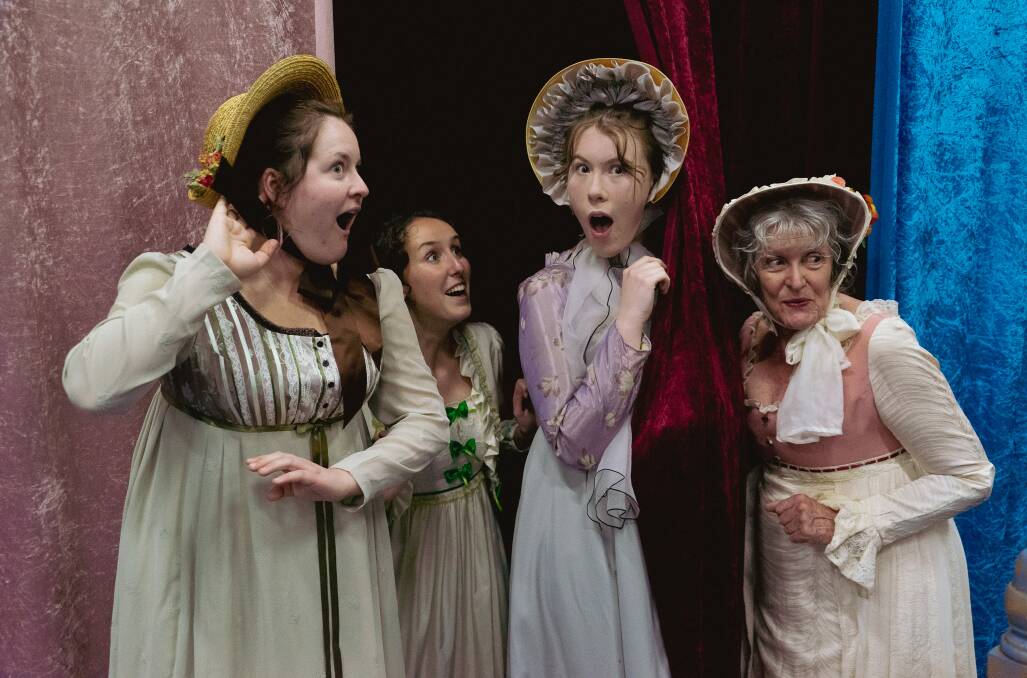
The gossips in Sense and Sensibility

Friday, 11 November 2022

Friday Five: The Latest Theatre

  1. This Changes Everything - Echo Youth, The Q: In a dystopian future, a group of young adults try to set up their own society, called The Community, on a platform out in the sea - the set with hierarchical levels and isolated pods works well for symbolism and lighting opportunities (Direction by Jordan Best; Lighting design by Jacob Aquilina). Written by Joel Horwood, it's not necessarily a novel idea (I wouldn't be the first to call it Animal Farm meets Lord of the Flies) and many of the motifs of a disingenuous leadership model are familiar - rules written on the wall are altered to suit and the founder of the group mysteriously vanishes, said to have fled and abandoned the remainers. As a British viewer, it's impossible not to think of Brexit, but there are many other issues and themes ('the negatives of Capitalism; the inequalities bred by exponential growth; a culture failing to engage with causes or impact of climate change') which are all generally well-handled, although the 'abuse trope' seems glib and unnecessary. The play also explores the fine line between Socialism (in which each works according to their talents) and Communism ruled by a totalitarian dictator, in which the level of violence and oppression are well-pitched at an adolescence; they can all be aware and concerned, but not still safe and not traumatised. Jade Breen has solid conviction as the Stalinist overlord, Maja; Tara Rose Blake as Kim, the one who switches sides to become the enforcer is believable and nuanced, and Will Best also stands out as Basic Jane, the cynical one trying to keep their head down and avoid being noticed (Animal Farm's Benjamin, if you will). There are the usual awkward moments and projection issues seen in junior casts, but generally this is a respectable piece of theatre that should be encouraged. 
  2. First Seen: Barren Ground by Helen Machalias - The Street, Street Theatre: Helen Machalias is such a great talent and I was intrigued to see what she would do next. This rehearsed read did not disappoint. I loved the exploration of the liminal spaces between life and death; myth and relaity; advertising dreams and political realities. Refugee's stories at an off-shore detention centre (on Christmas Island between 2010 and the closure of the centre in 2018) are told against a supporting framework of The Tempest where 'brave new world' poetry collides with 'stop the boats' rhetoric. When this returns as a full production, I will be first in line.
  3. Hand to God - Everyman Theatre, ACT HUB: I've not seen this play before, but I read that it won the Off Broadway Alliance Award for Best New Play and received five Tony Award nominations in 2015, although it closed early when it transferred to London and didn't garner such glowing reviews. I'm not surprised. It's crude, crass, blindingly obvious, and, according to the original playbill, an 'irreverent puppet comedy... about a possessed Christian-ministry puppet'. The widowed Margery (Steph Roberts) runs a Bible-promoting puppet-class attended by her son Jason (Michael Cooper), the sleazy teenager Tim (Joshua Wiseman), and quirky girl next-door, Jessica (Holly Ross). Men expect respect for no apparent reason, and women exist to give it to them - Steph Roberts deserves better than the demeaning cougar-seduction role she's given. Sure, she does it well - she does everything well - but this borders on hot-for-teacher-soft-porn fantasy.  To make this message more palatable (and supposedly satirical), Jason becomes fused with his demonic puppet, Tyrone, and Pastor Greg (Jarrad West filling in for Arran McKenna) has to perform an exorcism, while also trying to woo Margery despite the fact that her husband has only just died. Michael Cooper is quite brilliant at physical comedy and the combination of his acting skills and Jarrad West's slick slapstick direction make this less than just a repulsive piece of low-brow misogyny (mocking organised religion is hardly cutting-edge). In its favour, at least the entitled incel released his toxic masculinity with his hand up a puppet, not on a gun.  
  4. Romeo and Juliet - Canberra Repertory Society, Theatre 3: Co-directors Kelly Roberts and Chris Zuber use a young cast who display energy and enthusiasm, although many lost the poetry with the pace of their delivery, rushing the words and trying too hard to put their own stamp on this classic. Annabelle Hanson plays Juliet as a determined teenager who decides what she wants and goes for it, although it appears to be more independence from her parents (Richard Manning and Crystal Mahon) rather than love for Romeo (Pippin Carroll).Through her strong stance, balled fists and rigid posture, she radiates power and poetry with no need of any love interest - indeed she convinces more in her individual scenes than in those with Romeo, which lack chemistry or passion - this is not helped by the setting of their intimate scenes (the meeting; the balcony scene the bed scene) on distant parts of the stage. Carroll works hard on diction and projection but sacrifices passion and feeling, leaving the audience to rather engage with Mercutio (a fine performance by Anneka van der Velde whose restless movements imply there are hidden depths to the character hidden behind a facade of bravado) and the Nurse (Tracy Noble), who both bring the necessary energy and choric interpretation. 
  5. Ngadjung - Belco Arts, Belconnen Arts Centre: If you get a chance to see any work by Dylan Van Den Berg, see it. He is an original and incredible young talent who makes theatre that moves, inspires, connects, provokes and questions. In his director's notes, Van Den Berg explains that 'Ngadjung emerged from an original provocation to write a play about water - First Nations connection to water, human connection to water.' His play casts two women in a futuristic (and dry) environment, controlled by corporations who have privatised, monetised and politicised water to make it a commodity to which only the wealthy have ready access. Lisa Maza plays Flick, the elder who is desperately trying to maintain her connection to Country in a landscape that is irrevocably changing, and Kylah Day is Cass, the young interloper who stumbles across her patch, hiding from pursuers determined to repossess the secrets she stole. The relationship between these two actors is superb as their stories collide, mingle and separate like tributaries in a river. Production standards are also outstanding from the evocative set (designed by Imogen Keen) to the sound (Peter Bailey) and lighting (Linda Buck) design which create tension and atmosphere. In an extraordinary coup, Belco Arts commissioned this work from Van Den Berg, and it can only serve to enhance the significant reputations of all concerned. As with the inherent call to action against ignorance of climate change, this is one that demands to be seen and heard. 
Kylah Day and Lisa Maza in Ngadjung