Showing posts with label ACT Hub. Show all posts

Friday, 14 August 2026

Friday Five: Shattering Drama and Comforting Comedy

  1. Caligula - Performative Theatre Company, ACT Hub: Albert Camus' absurdist 1944 play explores the existential crisis of the Roman Emperor Caligula following the death of his sister and lover, Drusilla. Convinced that all life is meaningless, he determines to behave exactly how he wants, which is with hedonism that inspires terror, treating those around him as playthings and becoming a conspirator in the plot to end his life (and reign) through a journey into insanity. Mischa Rippon delivers a magnificent performance in the titular role commanding the stage and demonstrating a great rapport with the audience and other characters, managing to portray the switches between charming and chilling that the pyschotic Roman Emperor demands. The fantastically creative use of the space (another triumphant set design by Kathleen Kershaw) - soft benches/tables, shiny screens, and the all-imposing cracked marble bust - hint towards an asylum-esque atmosphere, while the superbly developed costumes (Alex Elwood) are adapted to suit character and tone. Likewise the lighting design (Euan Tregurtha) is an innovative mix of front, back and side lighting with judicious and effective black outs, while the underlying sound (Paris Scharkie) creates tension and segues from external to internal, so the audience feel the constant anguish of the 'mad' protagonist. Despite a couple of technical set issues, this is a sublime performance of a production that can be desperately dull and ponderous. Director Isaiah Pritchard is to be celebrated for the creative vision evident in the cohesion of elements and design from acting, sound, lights, set and costumes. There is evident method in this madness.
  2. Kerosene - Off the Ledge Theatre, The Courtyard: This 50-minute solo monodrama (didn't we use to call it a one-person play?) by Benjamin Nichol is a great vehicle for a performer, as they explore themes of love, loneliness, obsession, abuse, and revenge. Winsome Ogilvie has great energy playing Millie as she narrates the events of her deteriorating relationship with her best friend that culminate in a catastrophic cathartic event (the clue is in the title). Her diction and delivery are accomplished and her rapport with the audience is similarly impressive, although there are elements of stasis in which the highs and lows weren't quite high or low enough, leaving the performer with nowhere to go, and a few more pauses would have assisted tension. It is difficult to tell if the limited variation is due to performer or direction. Director Lachlan Houen has set it on a completely bare stage with no props, meaning the lights (Lachlan Houen and Liah Naidoo) and sound have to do a lot of heavy lifting. The lights do indeed highlight mood and intensity through innonative positioning, and there is some astute use of sound (Fergus Mashman), although bearing in mind the lack of other elements, more would have added contrast and points of interest. In general, this is a bold presentation of emotion and storytelling but it is not entirely engaging and drags in places. 
  3. 5 Lesbians Eating a Quiche - Everyman Theatre, ACT Hub: In another great vehicle for five female presenting actors to enjoy some solid characterisation, the play centres around the members of the Susan B. Anthony Society for the Sisters of Gertrude Stein - an all-female community group that deeply worships quiche and promotes strict, wholesome 1950s domesticity; trad wives of the middle American kind. During their annual breakfast and quiche-judging competition, atomic sirens sound causing the women to barricade themselves in their basement fallout shelter, where secrets and hidden desires can't help but surface. It's improbable and ridiculous but works, as comedy always does, because the actors are committed to their roles and play the laughs straight, allowing the audience to discover the fun themselves. All of the actors bring strong performances, especially Sian Harrington as Ginny, the newcomer to the group, with intelligent choice of accent (Geordie), expressions and genstures providing excellent individual and ensemble work which is a delight to watch. The others are skilled at the comedy as Steph Roberts plays Wren with just the right level of restraint (although her accent is all over the shop), Ylaria Rogers is brittle and charming as Dale in a fun role for her with an innocent conviction that is almost poignant, and Meaghan Stewart bravely delivers a 'New Yoik' gangster accent (which also wavers a lot) and a can't-go-wrong-with-it Rosie the Riveter stance. As the ostensible leader, Crystal Mahon is slightly overshadowed as Lulie by the other big performances, and appears reluctant to leave the actor behind to become the character, resulting in a relatively monotonous performance. The costumes (Fiona Leach) are a visual treat, being wonderfully evocative of time and character, practically telling a story of their own and Nikki Fitzgerald does solid work with the sound and light gags, as highlighted per script. Director Jarrad West also designed the set, which is well-suited to the piece - functional and aesthetically engaging. He brings out the best in his cast and creatives to honour the intent of the piece without heavy-handed intrustion. Having said that, this is designed as a 75-minute one-act comedy (beloved of fringe festivals), and while I understand the need for bar sales, the introduction of an interval meant the second half drags - the play loses its way a little after the metaphorical bombshell, and the first-half fun, frivolty and engagement seems a little distant towards the end.

  4. Izzard: The Tragedy of Hamlet - Bohm Presents, The Playhouse: Eddie Izzard presents a one-person take on Hamlet, with no set or costume changes and very few lighting or sound effects (except for the ghostly battlements and the playing of the ghost of Hamlet's father). As a lover of Shakespeare, I found it intriguing to see how she portrays all the different characters with moderations to voice and expression, drawing on her experience as a street performer. Others, less familiar with the tragedy of the Great Dane, found it extremely difficult to follow. Ophelia's scene of betrayal and bemusement and her bestowing of flowers and herbs is touching, and the fights that Hamlet has with Laertes are amusing as the sight of a person best known for their comedy fighting with themself will by necessity be played for laughs. Rosencrantz and Guildenstern are presented as hand puppets, which also adds an element of levity to the drama, although it must be confusing to comprehend Claudius' reaction to the play within the play that Hamlet devises to 'catch the King' without prior knowledge of the plot. It is delighfully restrained and not at all hammy, which would be easier and tempting to produce. I would not recommend this for a newcomer to the play, but for officionados who wish to concentrate on the delivery of the text, there can be few better exercises.
  5. The Glass Menagerie - Canberra Repertory Society, Canberra REP Theatre: It is an interesting choice to produce this lesser-known version, which pays off in an engaging production in which the characters feel believable rather than the museum pieces they so often are. The technical aspects add to the vision in a cohesive production which is a pleasure to watch. Rob de Fries plays Tom as an older man looking back on his past, with believable cynicism and superciliousness, although the spell is broke occasionally when the accent drops out. As his mother, Victoria Tyrrell Dixon plays Amanda with a fierce delusion that powers the production, and his sister, Laura, is given a fine portrayal of innocence and lack of ambition by Jamie Johnstone. As Amanda attempts to force her daughter into society (where her sole job is to get a husband and a means of financial support), she cringes back into her fantasy world of glass animals with a hint of guile that makes her intriguingly irritating rather than the simple victim often depicted. Shattering this far-from-peaceful idyll comes Jim (John Whinfield), Tom's work colleague who is set up as a beau for Laura on very little evidence other than that he has a penis and a pulse. Whinfield delivers a strong performance with a loathsome sense of entitlement and mansplaining that makes one want to wipe the smirk off his face. Tennessee Williams is so specific about his lighting that this is often tiresome, but here it heightens the falsity of memory aspect. The highlighting of the menagerie and the portrait of the departed father figure are perfect, and I am a sucker for a mirror ball. I have seen this play many times, but not this version as a 'memory play'. I think this works admirably and is one of the few times I have ever seen the technical specifications of Williams interpreted so well.

Friday, 19 April 2024

Friday Five: Theatre in 2024 So Far...

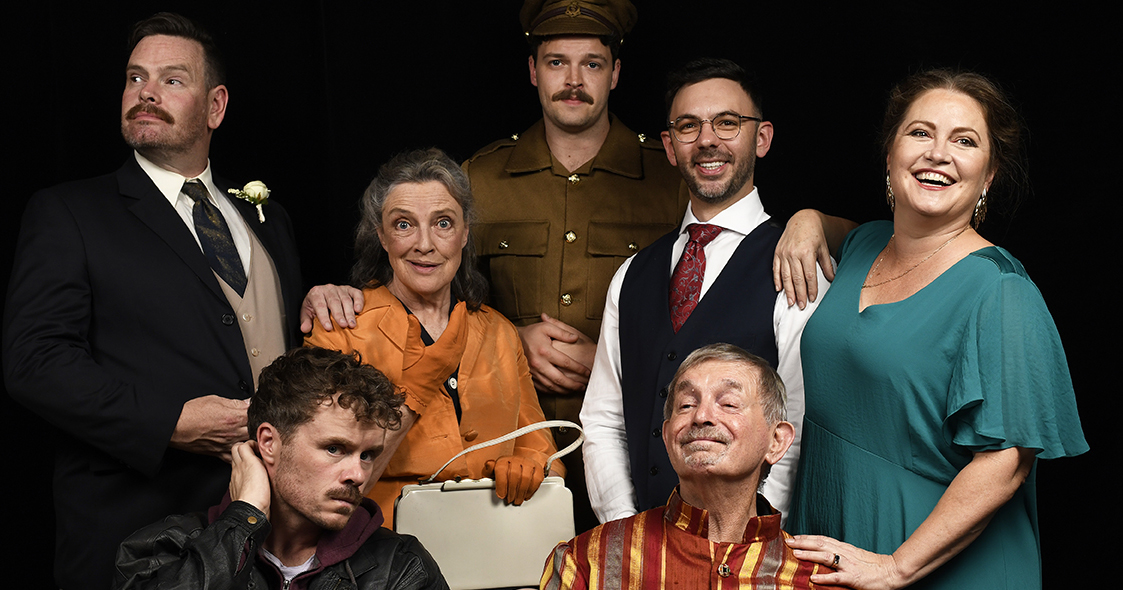
The cast of Queers at ACT Hub
  1. Queers - Everyman Theatre, ACT Hub: A evening of well-performed entertainment that sits more under cabaret than theatre. It is a series of eight monologues performed by indiviual actors with no interaction between them. The direction (Jarrad West and Steph Roberts) is solid as each seperate monolgue takes us through various decades and gives some insight into the main concerns of the gay 'scene', which (according to the publisher of the works curated by Mark Gatiss) 'celebrate a century of evolving social attitudes and political milestones in British gay history. Here, the pub setting and musical interludes provided extra interest and atmosphere, with a special mention for Steph Roberts who played the bartender interracting with actors and adience alike.  
  2. Last of the Red Hot Lovers - Canberra Repertory Society, Theatre 3: A fine production of a not-particularly outstanding play. Barney Cashman (David Cannell) decides he wants to have lots of sex with different women so he invites three of them individually to his appartment and fails to get intimate with any of them, possibly due to a disturbing and extremely unpleasant habit of constantly sniffing his fingers. As usual with a Neil Simon play, the self-indulgent, over-entitled, middle-aged, middle-class, mediocre white man is centre stage while the women are left to act in supporting roles. Victoria Tyrrell Dixon played the wisecracking Elaine Navazio with the perfect blend of cool confidence and comic timing, Stephanie Bailey as Bobbi Michelle played a demanding role with a lightness of touch, gradually and sensitively revealing the truth of her fantasist behaviour, and Janie Lawson as Jeanette Fisher handled existentialist dread well, although was a little stilted and uncertain of her cues.
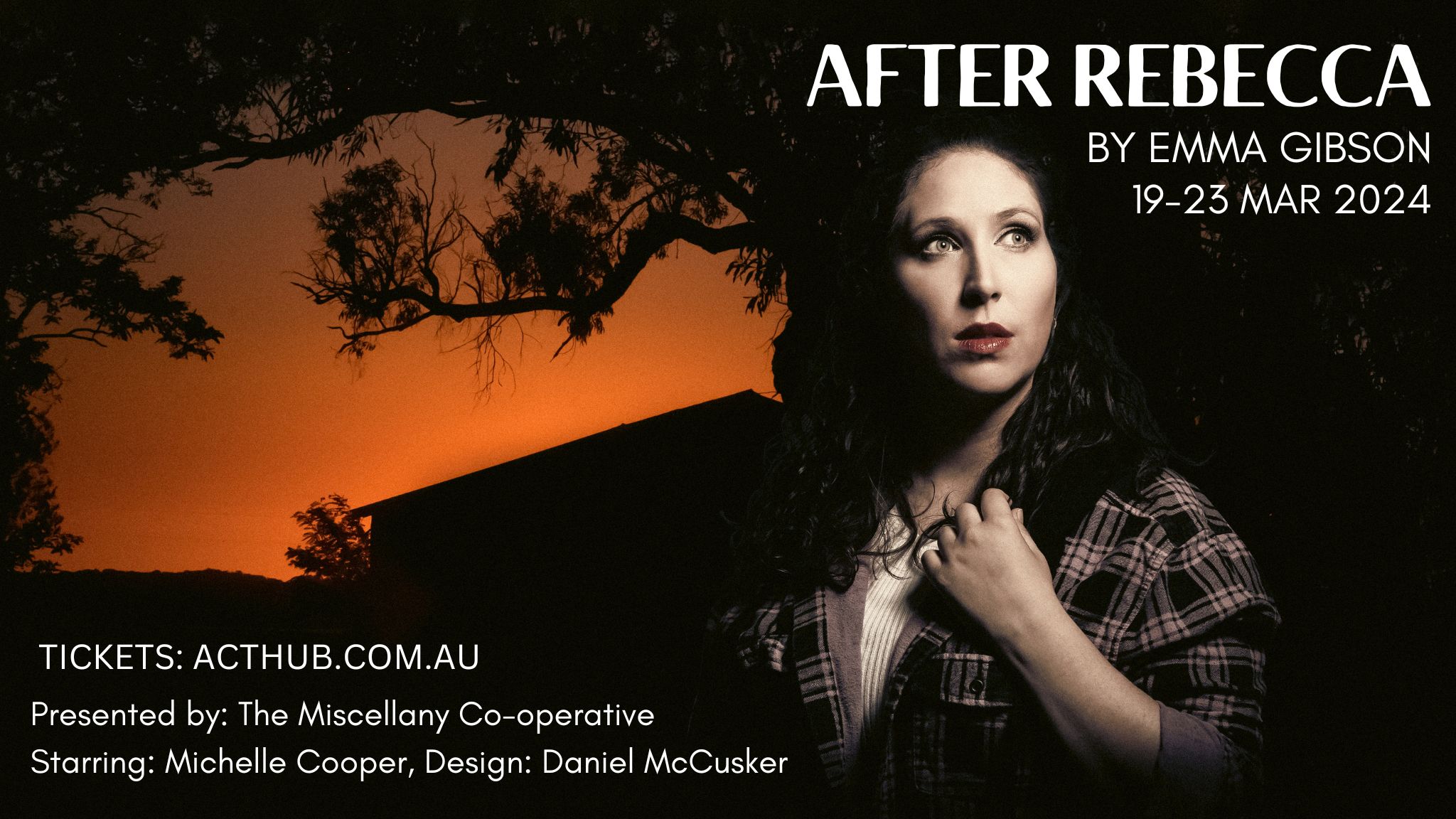
  3. After Rebecca - The Miscellany Co-operative, ACT Hub: Michelle Cooper is a tour de force in action as she delivers this one-person, seventy-five-minute mologue, which tackles themes of abuse and co-ercive control. She also co-directs with Emma Fibson, who wrote the work which transposes the story Daphne du Maurier's Rebecca to a remote outback farm. The idea of a young impressionable woman being swept off her feet by the star of a reality show only to discover when she is alone and isolated that he is more than the handsome heart-throb portrayed on television and that she is expected to be much less than the talented production assistant he met and seduced, is horrendously relevant and contemporary. It starts with a confidence which seems attractive. He takes charge, he promises adventure, he removes you from your support network, he shapes you to fit his mould, he snaps in anger, he denies everything, he will never ever stop. And you say sorry. Sixteen women have been killed in Australia this year due to ‘gender-based violence’. That’s more than one a week. It's only March. You need to see this.  
  4. Sh*t-Faced Shakespeare, Macbeth - Canberra Comedy Festival, The Playhouse, Canberra Theatre Centre: Six years ago I saw Shit-Faced Shakespeare do their version of Romeo and Juliet at the Canberra Comedy Festival and I loved it. This interpretation of Macbeth is just as fun, sharp and witty, and as there is a different inebriated actor/ character each night, it has a wide range of appeal and bears repeat viewing. I also think the more you know the play; the funnier it is, and I have seen and performed in this play more times than any other of Shakespeare's canon. It's very well-crafted entertainment.
  5. RBG: Of Many, One - Canberra Theatre and Sydney Theatre Company, The Playhouse, Canberra Theatre Centre: FOr anyone who saw and loved Julia and Prima Facie, this new work by Suzie Miller will be a welcome delight. Heather Mitchell portrays the titular character, Ruth Bader Ginsberg from her budding legal awakening through her appointment as a Supreme Court Justice of the USA, and her cult status that saw her labelled as Notorious RBG. I have been interested in her career so I couldn't say if prior knowledge is necessary to the enjoyment of the play, but what I can say is that Mitchell is quite brilliant in embodying the woman as she ages and develops, learning and encountering all the highs and lows of her experience. The script is spectacular as Miller blends primary source material with directorial imagination, and the performance, directed by Priscilla Jackman, is nothing short of remarkable. Theatre that tells us stories of outstanding people and their effect on their surroundings is theatre worth watching. 

Friday, 14 July 2023

Friday Five: Next on Stage

  1. At Dinner - ACT Hub Development Initiative, ACT Hub: In this new piece of writing by Rebecca Duke, we witness a date between two diners (Thea Jade and Timothy Cusack) and their interaction with the third actor (Nakiya Xyrakis), a server in the restaurant. The audience, served by the waiter and given a program in the form of a menu, are included as patrons into the proceedings. Director, Holly Johnson allows the words to do most of the action, in a simple setting where the actors barely move from their seated position. It is a credit to all involved that this retains audience interest despite the static set-up.
  2. White Rabbit, Red Rabbit - Aurora Nova and Lexi Sekuless Productions, Mill Theatre: The main stipulation for this play, written by Nassim Soleimanpour, is that the performer has never seen it before. It has no director and no rehearsal period. When the actor enters the space, the script is on a chair in a sealed envelope. They must open this envelope and read the contents, including all the stage directions, aloud to the audience. They must carry out the instructions as an actor but also as a human being - even if those instructions may cause themselves risk or potential harm. The audience is forced to be complicit in this dramatic manipulation. It also works better if the audience has not seen it before so is literally on the same page as the actor as they experience the twists and turns of the script. I admit I have seen it before (it was staged at The Street in 2014), where I had such a visceral negative reaction to the piece, I wanted to walk out of the theatre. This time around, I had no such response. The shock value was absent and without that, no matter how good PJ Williams is (and he is certainly engaging and guides the audience through the content like a kindly shepherd), it lacks the necessary punch and just seems mean-spirited. 
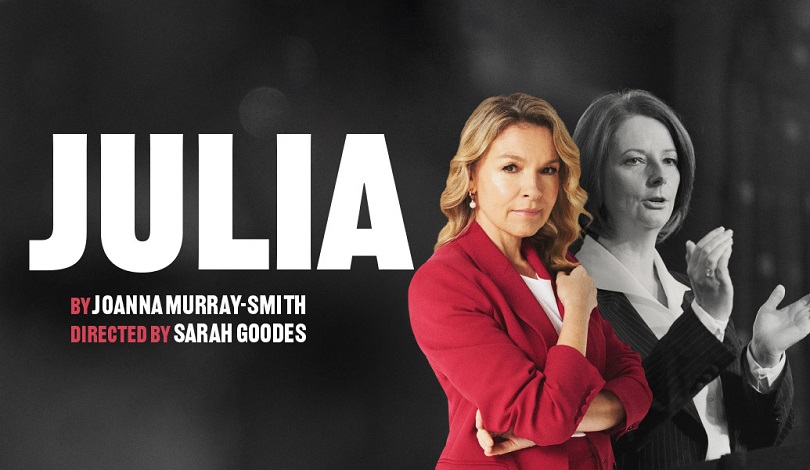
  3. Julia - Sydney Theatre Company and Canberra Theatre Centre, The Playhouse, Canberra Theatre Centre: Apparently the Canberra Theatre Centre had to fight to get this premiere by Joanna Murray-Smith, and their efforts are well rewarded. Justine Clarke plays Julia Gillard in an almost one-woman play as she revisits scenes from her personal life and political career. It's not an impression so much as an embodiment, hitting the highs (successfully passing 561 bills through parliament) and lows (the oppositional slurs and sexism) with strength and perfect emphasis. Aided by well-chosen projections, director, Sarah Goodes teases out all the subtlety behind the speeches and the meaning behind the memorable moments. Of course it all leads up to that anti-misogyny speech which brings this house to its feet with justified applause. 
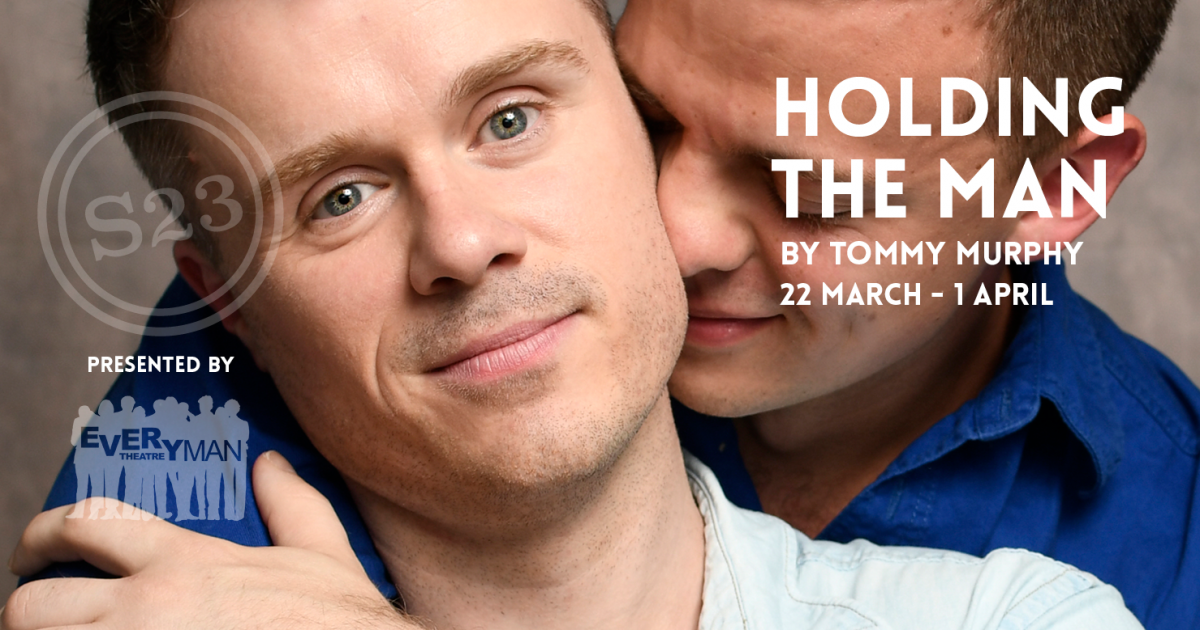
  4. Holding the Man - Everyman Theatre, ACT Hub: This is a touching play dealing with coming-of-age, coming out, and the effect the AIDS pandemic had on the gay community in the 1980s. First produced in 2006 based on a memoir published in 1995, it is entirely of its time, and exactly the worthy drama one would expect Jarrad West to direct for Everyman Theatre. There are a few issues with sight lines, the staging is basic and there are moments that drag (the masturbation scene was obviously more fun in rehearsal, and the mockery of the NIDA students dips into one-note caricature), but the central couple played by Joel Horwood (Tim Conigrave) and Lewis McDonald (John Caleo) are outstanding and push all the right buttons of awkwardness, arrogance and anguish. The supporting cast (Amy Kowalzcuk, Joe Dinn, Grayson Woodham, Tracy Noble) are kept very busy playing multiple roles with effective delineation that bring out all the requisite emotion and leaves the audience in no doubt that they have seen something beautiful unfold before them. 
  5. The Thing That's Missing - Perform Australia, Mill Theatre: Written by Elizabeth Avery Scott and directed by her partner, James Scott, this play features the advanced Diploma of Performance students from their acting school, Perform Australia. The four young people (Annie Nogaliza, Bronte Thomson, Mikkie Martinez, and Isaac Travers) have had something taken away from them, which ranges from the minor insignificance to the crucial piece of their humane puzzle. Each of the four actors tells their story before clearing the stage for the next vignette, until they end up together in their flat-share situation to offer companionship to each other and support their loss. There are moments of humour and some sharp dialogue to offset the well-meaning but overly earnest content. 

Friday, 19 May 2023

Friday Five: Spanning the year of theatre

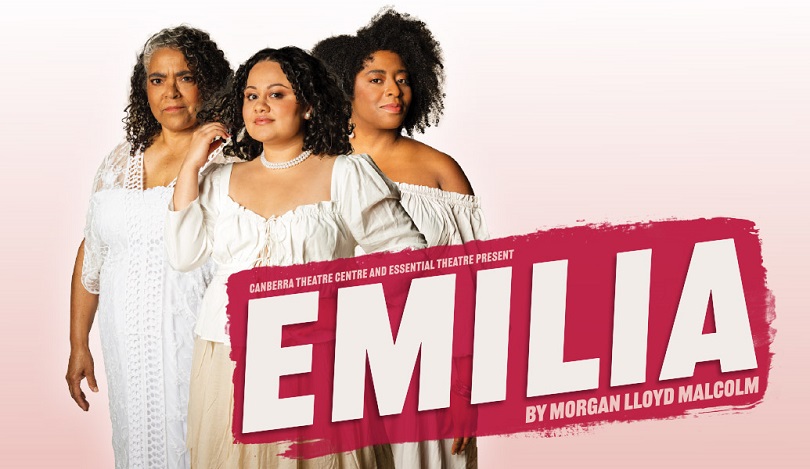
  1. Emilia - Essential Theatre, The Playhouse, Canberra Theatre Centre: When I read this play, I fell in love with it; it has feminism and Shakespeare intertwined with a glorious delight of language and heritage. It purports that the 17th-century poet Emilia Bassano is not only the 'dark lady' of the sonnets and his sometime lover, but the original writer of many of the works, whose words Shakespeare shamelessly stole to heighten the drama of his plays. Naturally, I was really excited to see this Australian touring version directed by Petra Caliva. Three women play Emilia at different stages of her life - one for her childhood and youth (Manali Datar); one for her young adulthood (Cessalee Stovall); and the third for her as an older woman (Lisa Maza). As each woman tells her story, the other two listen, react, encourage, cajole and reflect from the sidelines. The acting is of a high quality and the dialogue is delivered clearly and with passion. The characters are all played by women with the cowardly, grandiloquent and ultimately pathetic Shakespeare - played by Heidi Arena - getting the best lines and the biggest laughs. The set is minimal, comprising a revolving staircase which represents a multitude of scenes; the costuming brings the modern to the Jacobean (the brightly-colored Converse are a nice touch); and the choreography is eclectic with some snazzy contemporary moves. And yet, it just felt like there was something missing. Perhaps the haranguing and brow-beating tone left no room for nuance or relief so that the final speech, which should be incendiary - "The stakes we have been tied to will not survive if our flames burn bright. And if they try to burn you, may your fire be stronger than theirs so you can burn the whole fucking house down." - felt more like a damp squib, leaving the audience with nowhere to go and no way to react.
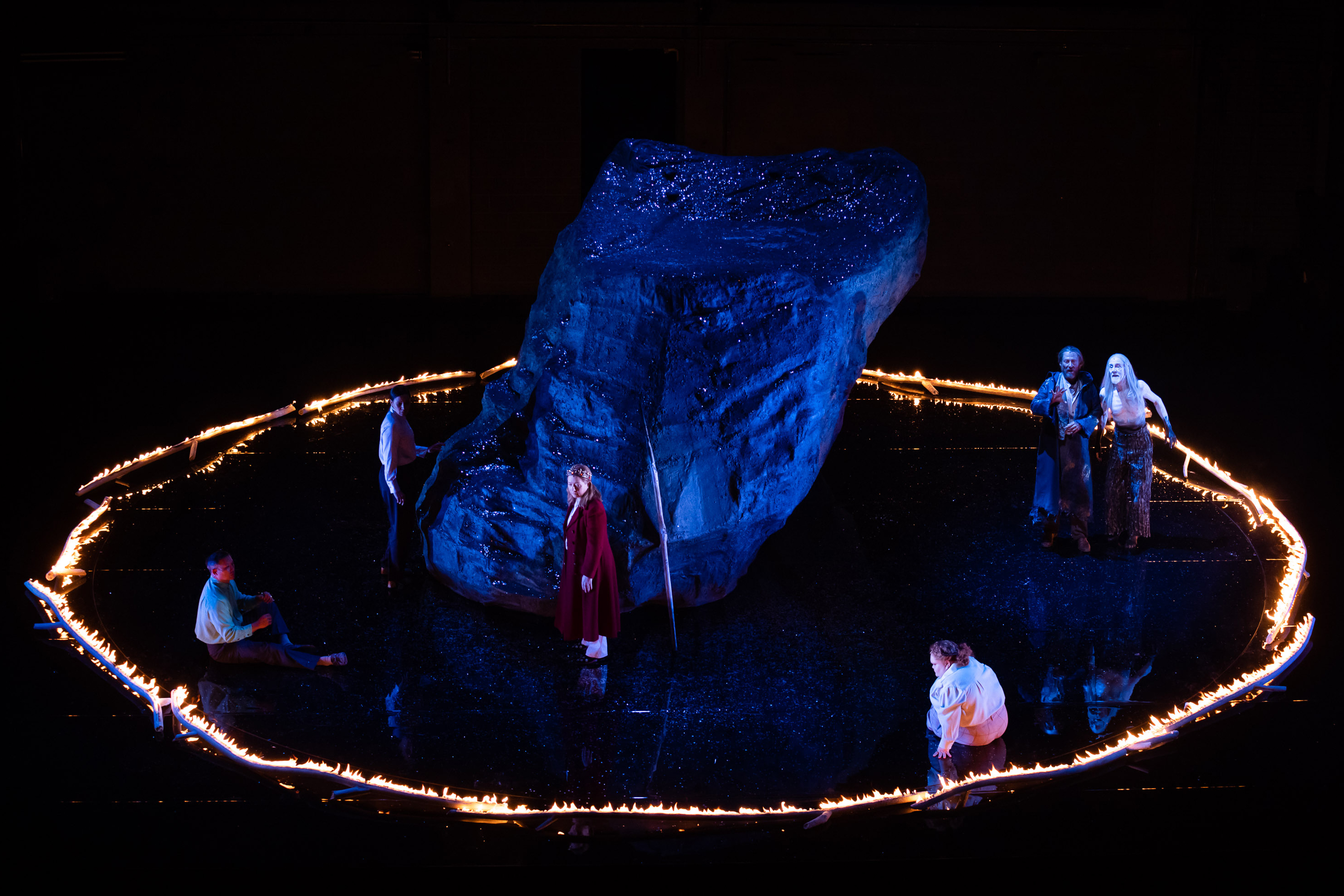
  2. The Tempest - Sydney Theatre Company, Roslyn Packer Theatre: I love the way certain directors interpret Shakespeare to suit their own ends - and why not? In this version of The Tempest (directed by Kip Williams), however, the attempt to force it to fit the 'they stole it from us' colonialist narrative, means Caliban has been made into the good guy by excising all references to his brutal rape of Miranda, Prospero's daughter. Rather than Prospero enslaving him due to fear of his bestial physicality, it becomes purely a white-man-subjugates-a-black-man narrative, and while the white man (Richard Roxburgh) and the black man (Guy Simon) in question are exquisite in their roles, and deliver the bard's blistering words with passionate sincerity, it removes much-needed nuance from the original drama. The set of a big central rock (Uluru anyone?) is inspired as it provides levels, hiding places and dramatic hierarchy, and the lighting effects are spectacular. The rest of the cast are all perfectly cast - Peter Carroll is a waspish and world-weary Ariel; Claude Scott-Mitchell as Miranda gets to speak some of Juliet and Jessica's lines (Shakespeare's other works have been plundered for their poetry), which she does with affecting flair; Susie Youssef is an unexpected boorish delight as Trinculo. Of course, some critics have taken issue with the gender-blind casting, but if they are concerned with straying from 'traditional' portrayals, I would have thought that would be the least of their worries.
  3. Cast of The Tempest by Sydney Theatre Company
  4. The Importance of Being Earnest - ACT Hub, ACT Hub: Determined to be different, Jarrad West's direction is more  cabaret than theatre, including bursts of song (Louiza Blomfield does a lot of heavy lifting as the chanteuse) and outstandingly vibrant costumes designed by Fiona Leach - Lainie Hart as a stylish Lady Braknell presents as a steam-punk-ringleader. Many of the lines have been cut (including the one about never travelling without one's diary so as to always have something sensational to read on the train) and characters' roles trimmed down; Miss Prism (Victoria Dixon in a seething passive-aggressive turn heightened by inebriation) really only serves to be hoodwinked by Cecily (Holly Ross in a wheedling doll-like performance) and for the famous misplaced handbag denouement. The setting is the Bunburry Club, and we are part of the action, with scenes taking place at tables often after audience members have been asked to move to make way for the performers. There is a lot of food and slapstick comedy involved in eating - Cecily and Gwendoline (Shae Kelly making a deliberate mockery of affectation) have a food fight over cake, and Steph Roberts delights in the gluttonous Algernon Moncrieff as she stuffs her face with muffins and refuses to take anything seriously. Joel Horwood has perhaps the hardest role of all as he plays the straight man, Jack Worthing, and with the delightfully gender-blind casting, this is no mean feat. Painting with such broad and colourful strokes, many of the British class nuances are missed but that doesn't seem to matter in this riotous production, which is more of a madcap comedy than a comedy of manners. 
  5. Amadeus - Sydney Opera House, Red Line Productions and The Metropolitan Orchestra, Concert Hall, Sydney Opera House: Let's face it, Michael Sheen is the draw-card here. Peter Shaffer's play is full of words and wit, interspersed with snatches of music and spectacle, and it requires a triumphant actor to bring the bombast and pathos in equal measure. As he looks back on the rumours concerning his part in the untimely death of Wolfgang Amadeus Mozart (Rahel Romain), Salieri (Sheen) interprets events with a satirical detachment and studied indifference, barely concealing his passionate envy and desperate ambition. It is a masterly performance, and his voice and presence command our attention. This is important, because there a few occasions in the second act where the script becomes burdensome and the audience begins to realise that three hours is an awful long run time. Director Craig Ilott revels in the flamboyance and offers plenty of distraction. The costumes are sumptuous (Anna Cordingley and Romance Was Born) with the rich fabrics, sensational colours and flamboyant designs appearing particularly striking on the austere set (designed by Michael Scott-Mitchell). The black steps and folding doors hint at a keyboard, a ladder and an amphitheatre reflecting the action back to us as if we are witnessing our own foibles and Faustian pacts played out before us. Nick Schlieper's lighting design - heavy on the back-lit scenes - creates intriguing shapes, silhouettes and shadows, although some bits of staging can only be fully appreciated if seated in the middle seats as the sight lines from the sides would cut off a lot of the visuals. Besides the brilliant pairing of Romain and Sheen, other stand-out performances come from Toby Schmitz as an endearingly foppish Emperor Joseph II, Belinda Giblin and Josh Quong Tart as the frenetic Venticelli who buzz about the stage transporting news and gossip, and the musicians of the Metropolitan Orchestra who supply Mozart's sublime music which, despite Salieri's best (and indeed, worst) efforts, we all know and love. 
  6. Grapes of Mirth - Contentious Character, Canberra:  Merrick Watts hosted an afternoon of comedy at a winery: the more we drink; the funnier they get. The acts were Frankie McNair (who gets funnier at every performance - proving that comedy is hard work), Peter Helliar (telling comfortable and amusing stories like a favourite uncle), Nath Valvo (very energetic and forthright), Dilruk Jayasinha (probably the best of the line-up), and Geraldine Hickey who was not in a good mood and was clearly thrown by the drunken heckling. Although it was baking hot and there was insufficient shade, it was a good, fun day out; not side-splittingly funny, but with plenty of entertaining stories.
Michael Sheen centre stage as Salieri in Amadeus