Showing posts with label King Lear. Show all posts

Friday, 29 December 2023

Top Ten: Favourite Theatre in 2023

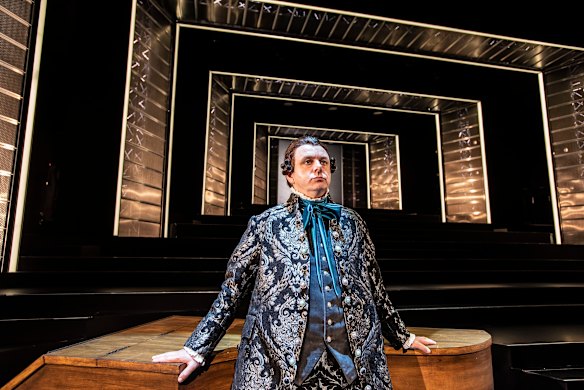
Michael Sheen in Amadeus at Sydney Opera House
I realise it's a Friday and that's usually a Friday Five, but as it's the end of the year, I give you a double episode, so here are my ten favourite theatre productions that I have seen this year (in alphabetical order):
  1. Amadeus - Sydney Opera House, Red Line Productions, and the Metropolitan Orchestra, Concert Hall, Sydney Opera House: Let's face it, Michael Sheen is the draw-card here. Peter Shaffer's play is full of words and wit, interspersed with snatches of music and spectacle, and it requires a triumphant actor to bring the bombast and pathos in equal measure. As he looks back on the rumours concerning his part in the untimely death of Wolfgang Amadeus Mozart (Rahel Romain), Salieri (Sheen) interprets events with a satirical detachment and studied indifference, barely concealing his passionate envy and desperate ambition. It is a masterly performance, and his voice and presence command our attention. The costumes are sumptuous (Anna Cordingley and Romance Was Born) with the rich fabrics, sensational colours and flamboyant designs appearing particularly striking on the austere set (designed by Michael Scott-Mitchell), illuminated by Nick Schlieper's lighting design - heavy on the back-lit scenes - which creates intriguing shapes, silhouettes and shadows. Besides the brilliant pairing of Romain and Sheen, other stand-out performances come from Toby Schmitz as an endearingly foppish Emperor Joseph II, Belinda Giblin and Josh Quong Tart as the frenetic Venticelli who buzz about the stage transporting news and gossip, and the musicians of the Metropolitan Orchestra who supply Mozart's sublime music which, despite Salieri's best (and indeed, worst) efforts, we all know and love. 
  2. The Children - Chaika Theatre, ACT Hub: When people you genuinely like, respect and admire play characters so despicable you have a visceral reaction and want to punch them,… that’s great acting. Michael Sparks, Karen Vickery and Lainie Hart give superb performances in this potentially bleak futuristic drama set in a post-nuclear where you can't work to save your life. But you can save that of others. The pathos and frustration leads to boiling questions about definitions of selfishness. Into this sterile landscape, directors Tony Knight and Sophie Benassi introduce subtle touches of natural processes, and the chopping of a cucumber has never before been such a statement. ‘You don’t even know it, but right there, in that moment, you’ve lost, you’ve lowered your defences and the enemy’s got in, hasn’t it?’
  3. The Complete Works of William Shakespeare (Abridged) [Revised] - Canberra Repertory Society, Theatre 3: Highly entertaining and very well-delivered with confident performances by Alex McPherson, Callum Doherty and Ryan Street. It is a challenge for the three actors to 'perform' all of Shakespeare's plays (and the sonnets) with mild audience interaction and character development, and the trio rise to meet it with aplomb. Kayla Ciceran's set nods to previous productions on this stage, which reflects the self-referential tone of the piece, and the lighting (Stephen Still) highlights all the right areas at all the right times. It flags slightly when one actor is left alone on stage by themself, but soon picks up the pace again in the second act to address Hamlet with requisite humour and the encores and reprises (including the esirper) do not outstay their welcome.
  4. Good Works - Lexi Sekuless Productions, Mill Theatre: Director Julian Meyrick brings an intriguing touch to this potentially complicated drama. As the timelines and characters mingle and merge, the actors (Adele Querol, Helen McFarlane, Lexi Sekuless, Martin Everett, Neil Pigot, Oliver Bailey) work as a tight ensemble to highlight the claustrophobic atmosphere and mores of a post-war small-town environment. Some scenes are deeply disturbing as fear and hatred erupt in violence - subjects include corporal punishment, unmarried mothers and same-sex relationships - while moments of compassion and understanding are treated with respect and touching empathy. The versatile set (Kathleen Kershaw) is deceptively simple and the lighting (Jennifer Wright) and sound (Damian Ashcroft) are strikingly effective in this intimate space. 
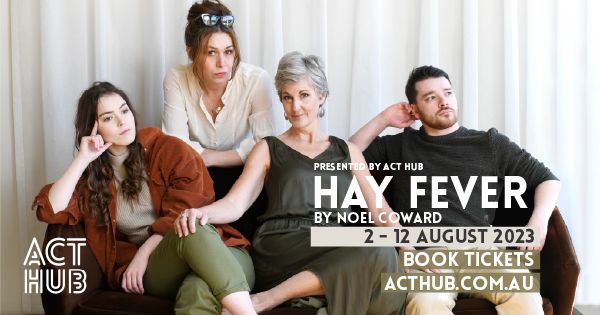
  5. Hay Fever - ACT Hub, ACT Hub: Gender-swapping Noel Coward may seem obvious. It could, however, very easily not work in this quintessential play of English manners, in which members of the Bliss family each invite s guest to their country house for the weekend ('on a clear day you can see Marlow' - my favourite line, obviously) only to treat them appallingly. The fact that it is still so charmingly awful (in all the best ways) is due in part to Joel Horwood's tight direction and set (full use of the stage to represent the ramshackle elements of a country house while inviting an awkward interaction with the audience). The rest is down to the obvious glee with which the actors portrayed their roles with strong physical and vocal performance techniques, led by the outstanding Andrea Close as Judith Bliss in a turn of pure comic genius.
  6. The Bliss Family in Hay Fever
  7. Julia - Canberra Theatre Centre & Sydney Theatre Company, The Playhouse, Canberra Theatre Centre: Apparently the Canberra Theatre Centre had to fight to get this premiere by Joanna Murray-Smith, and their efforts are well rewarded. Justine Clarke plays Julia Gillard in an almost one-woman play as she revisits scenes from her personal life and political career. It's not an impression so much as an embodiment, hitting the highs (successfully passing 561 bills through parliament) and lows (the oppositional slurs and sexism) with strength and perfect emphasis. Aided by well-chosen projections, director, Sarah Goodes teases out all the subtlety behind the speeches and the meaning behind the memorable moments. Of course it all leads up to that anti-misogyny speech which brings this house to its feet with justified applause. 
  8. King Lear - Echo Theatre, The Q: Echo Theatre's King Lear is a stark interpretation of one of Shakespeare's most challenging plays with some bold and visionary directorial choices (Joel Horwood). With the startlingly dramatic soundscape (Neville Pye) and the bleak setting (Kathleen Kershaw), this production places us truly in the Wasteland. Karen Vickery assumes the fragile balance of performative arrogance and ultimate insecurity of the titular character with a wealth of strength and experience. The supporting cast sell their stories through clarity and costume (Helen Wojtas), with the subplot of Gloucester's (Michael Sparks) literal and metaphorical blindness to the intentions of his sons, Edmund (Lewis McDonald) and Edgar (Josh Wiseman) clearly mirroring Lear's oblivion. As an added bonus, the Dover cliff scene makes more sense than in any performance I have previously seen.
  9. Ukulele Man - Canberra Cabaret Festival, ACT Hub: Marcel Cole brings this cabaret act to Canberra on the back of award-winning performances on the festival circuit. Directed by Mirjana Ristevski, he plays the part of  1930s/40s English entertainer, George Formby, accompanied by his ukulele and his mother Katie Cole, who plays his mother, wife and any other characters and musicians as required. With equal amounts of humour, pathos, wistful yearning and practical acceptance, not to mention expert timing and endearing renditions of Formby favourites (When I'm Cleaning Windows, Leaning on a Lamp Post, With My Little Ukulele in My Hand), the performance is fully deserving of the standing ovation it received. Turned out nice again.
  10. The Visitors - Canberra Theatre Centre, Sydney Theatre Company & Moogahlin Performing Arts, The Playhouse: Jane Harrison reimagines the crucial moment when local elders meet on 26 January 1788 to decide what to do about the fleet of ships that appears to be arriving in the harbour. Do they welcome the visitors as is their custom, or do they ask them to move on. And what happens if they stay? A solid ensemble of talented actors present their arguments on a sandstone rock stage as if in one of those endlessly tedious work meetings where hierarchical structures bubble beneath the surface, personal resentments are barely concealed, and nothing actually gets decided. Costuming is a mix of modern business suits and indigenous apparel, sounds are the calls of the forests, and the light is bright to the point of glaring. As a political satire, there are moments of brow-beating didacticism (it is exactly the sort of theatre we will be told 'everyone should see'), but it is mainly humorous and thoughtful provoking discussion and consideration - and isn't that part of the purpose of theatre?
  11. You Can't Tell Anyone - Canberra Youth Theatre, Courtyard Studio: Written by Joanna Richards, this is a really interesting and original play with a opportunities for a varied cast to display their talents.  Director Caitlin Baker employs a range of technical choices to create atmosphere and tension. The young cast deliver the smart and realistic dialogue to provide humour and immediacy as they gather at school graduation to consider future options. Deciding to play a party game, Paranoia (it would make a much better title, incidentally), in which the participants must provide answers to questions revealing what others truly think of them, a supernatural element creeps in making them all even more uncomfortable. The feeling of being between two worlds (as a metaphor for the threshold of adulthood) is made almost palpable through effective set (Kathleen Kershaw), atmospheric sound (Patrick Haesler) and lighting design (Ethan Hamill).
The cast of The Visitors

Friday, 30 December 2016

Friday Five: Best of Theatre 2016

Looking through my notes (I keep notes of nearly everything, as I'm sure has become apparent by now), I find that I only saw 23 plays this year in six cities. That's not many for me, but it's still pretty hard to whittle it down to a top five. 

I shall start by saying that I am not including anything in which I was involved whether on or off stage. That cancels out a number of productions for Canberra Repertory, which were very good including Witness for the Prosecution, Macbeth, and She Stoops to Conquer, and also Vinegar Tom for COUP: Canberra. Because it is very hard to separate the rest then, I shall list them in alphabetical order.

Antigone, Sport for Jove
5 Best Productions I Saw in 2016:
  1. Antigone – Sport for Jove, Canberra Theatre Centre
    This is an outstanding example of how to modernise a classic. Damien Ryan's adaptation of Sophocles' Greek drama is contemporary and pertinent while losing none of the dramatic relevance. From family grief to civil war and the aching need to just make it all stop and face a brighter future; it's all here in this tight, compelling tale. The set calls to mind Aleppo; the humour (yes, humour) invokes modern sit-coms, and the political speechifying will be familiar to all. Andrea Demitriades in the titular role and William Zappa as Creon are superb performers and mine their conflict to its ultimate depths, but Greek drama is always supported by a chorus, and this ensemble is terrific. I loved it.
  2. King Lear – Sydney Theatre Company, Roslyn Packer Theatre
    Of course it's going to be all about Geoffrey Rush as he plays Shakespeare's tragic king driven to madness. But the rest of the cast provide perfect foils as the ruthless politics become personal embodied in the actions of the daughters and their consorts; exposed with rueful poignancy by Robyn Nevin's Fool. The Dover Cliff scene is sensational as Edgar (Mark Leonard Winter) leads his beloved father, Gloucester (Max Cullen) to the edge. There's nothing happy in this play, and director Niel Armfield leaves us emotionally exhausted and utterly spent. This is cathartic theatre at its very best.
  3. Matilda the Musical – The Royal Shakespeare Company, Princess Theatre, Melbourne
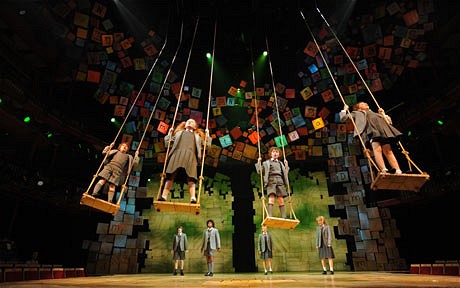
    For someone who doesn't really like musicals or children (especially singing ones), but who loves Roald Dahl and Tim Minchin, this was always doing to be a close call. I'm happy to report that the pros (and they are most certainly pros in all senses of the word) substantially outweigh the cons. The acting is excellent, with the adults hitting all the comedy notes and the kids bringing the pathos. The songs are great (I was still singing All I Know I Learned from Tele several months later), even if a few of the lyrics are hard to discern in the children's harmonies. And the production values are sublime - that disappearing cake and the school gate/ building blocks sequence are spectacular. 
  4. Tales from a City by the Sea – VCE Drama, La Mama Courtyard, Melbourne
  5. This powerful and moving drama focusses on love and life in the Gaza Strip. In some ways, with its war-torn lovers and family interventions, this is a modern Romeo and Juliet. It has all the hallmarks of that classic story - duty to family and tribe set against personal fufilfment and hopeless situations - but it is set against the real experiences of people living under occupation. There are tough choices to be made when Jomana, a Palestinian woman living in a Gaza refugee camp, falls in love with Rami, an American-born Palestinian humanitarian doctor. The simple staging of a white sheet is cleverly used to conceal and reveal, while the actors remain on stage watching the action in which they do not participate: when war affects individuals (and it always does) - we are all complicit whether or not we want to be.
  6. Uncle Vanya – Canberra Repertory Society, Theatre 3
    One of the things I dislike most in theatre is when directors take over the text, trying so hard to put their own stamp on the play that they lose the original intent. Geoffrey Borny allows his actors to bring out the nuances in Chekov's great work in such a way that makes them seem fresh and new.The family lead dull and boring lives. They eat and drink and sleep, and follow a rigid routine of sandwiches and samovars, and are immensely unsettled when this banal schedule is interrupted. The aesthetics of this life are beautiful (from the set and staging to the costumes and props) but empty. It is left to the servants to provide the depth, and the richest images are drawn from the land; those who do the physical labour are the true heart of the country. Passing passions are fleeting but solid foundations will endure. As a doctor and an activist, Chekov understood the importance of substance over artifice; as a director, Geoffrey Borny does too.
Matilda, The Musical, Royal Shakespeare Company
Honourable mentions to:
  • Miss Bronte - Bravo Theatre, Queenbeyan Performing Arts Centre Mel Dodge embodies the restless spirit of Charlotte Bronte and her struggle with conformity in a sensitive and soulful one-woman play directed by Lyndee-Jane Rutherford.
  • Mother - If Theatre, Queenbeyan Performing Arts Centre Noni Hazlehurst controls the stage flawlessly and pleas for empathy in the powerful one-woman poetic drama about an ordinary person who ends up homeless due to set of depressing circumstances.
  • Playhouse Creatures – Pigeonhole Theatre, Queenbeyan Performing Arts Centre It's such a pleasure to see this great play about women in the seventeenth-century theatre of the Merry Monarch brought to the stage with energy and conviction. 
  • Shakespeare's Greatest Hits - Vol. 400 - Remarkable Theatre, Queenstown Botanical Gardens Local actors provide promenade theatre in a beautiful setting for some great excerpts of the bard's best bits, which brings back a lot of memories from previous performances. 
Wednesday, 1 July 2009

Shakespeare's Greatest Hits


All the World's a Stage
Circa Two, 29 May - 27 June

Ray Henwood’s presentation of Shakespeare’s greatest hits is a comfort for a cold evening. That there is nothing out of the ordinary is not a criticism – rather it is because, as he explains in one of his many addresses to the audience, that the bard’s conceptions have passed into common parlance.

Dressed in a morning suit against a simple curtain for a backdrop, Henwood illuminates the stage with a range of speeches, soliloquies and sonnets inspired by Sir John Gielgud’s Ages of Man. He begins with the prologue from Henry V in which the chorus begs to ‘on your imaginary forces work’. For the next 90 minutes, Henwood takes us on a veritable round-the-bard-trip as promised.

He recites some beautiful poetry with evident passion in a voice you could listen to all day. Explaining that even the non-beautiful creations get the poetry, he portrays characters as diverse as Caliban (The Tempest), Angelo (Measure for Measure), and Lorenzo (The Merchant of Venice). The Queen Mab speech from Romeo and Juliet is spirited and full of fun.

Each section is introduced with a few words or a brief discourse. In a segment on the nature of sleep, Henwood ranges from Macbeth’s – ‘that knits up the ravel’d sleeve of care’ – to Prospero’s – ‘We are such stuff as dreams are made on; and our little life is rounded with a sleep.’ The simple but effective lighting (Jennifer Lal) generally remains true to the ethics of the limited technical intervention, as actor and director (Peter Hambleton) alike choose to paint pictures with words.

As you would expect, Henwood is particularly captivating as Lear and Henry V. He includes lots of Henry V including the infamous ‘Once more into the breach’ speech and the ‘little touch of Harry in the night’. The best of these snippets is when he plays both Falstaff and Prince Hal imitating Henry IV (Henry IV: Part One).

Attempting to persuade us that there are as many strong female as male characters (which is patently untrue) Henwood gives us Lady Macbeth on receipt of the letter from her husband narrating what greatness he has been promised. He is not entirely convincing in this role, not just for the obvious reasons, nor does he seduce us as Iago (just as an aside – Peter Hambleton’s Iago is actually the best I’ve seen in New Zealand), although he draws attention to his complexity.

Shakespeare was a master at creating complexity of character – ‘what a piece of work is a man’. This always reminds me of the Blackadder episode in the second series in which Edmund has his Aunt and Uncle Whiteadder over for dinner, at the same time as hosting a drinking party. When his aunt takes him to task after someone stumbles in wearing comedy breasts, ‘Edmund! Explain yourself!’ he replies, ‘I can’t. Not just like that. I’m a complicated person, you see, Auntie.’

Shakespeare’s characters are not representative of a certain singular trait and Ray Henwood is excellent at embodying diversity. Nowhere is this more pertinent than in his Shylock, who is more than ‘just a Jew’. He gives an interesting insight into the character – there are other Jews and other money-lenders who weren’t hated as Shylock was. It was more his disposition than his religion that was despised, yet, with our (entirely understandable) fear of Nazism, we worry that this loathing is anti-Semitism.

No one else in the Shakespeare canon is a stereotype, so why do we assume he is? As Henwood points out in one of the more intriguing passages of the evening, surely this says more about the audience, with our modern sensibilities, than it does about the bard.

Other interludes are the sonnets which provide a quality counterpoint to the plays, and the morsels from other works. Having directed the opening scene of Terry Pratchett’s Wyrd Sisters, myself, I found this as recognisable as Shakespeare’s works. Less familiar, although equally enjoyable, to me was the short excerpt from Rinse the Blood off My Toga.

Mainly All the World’s a Stage was like ‘An Evening with William’, channelled towards the fans with little from the more obscure works or the comedies. Like a concert where you only really want to hear the hits and not the worthy stuff from the experimental album, this was clearly a success with the mainly elderly audience. Having said that, this would work really well in schools as an introduction to Big Bill.