Monday, 9 September 2013

Corridors of Past Power

As we have just suffered a general election in Australia, I thought this would be a good time to record a visit I made to Old Parliament House back in May. Although I intensely dislike the new Prime Minister and his party, the whole concept of democracy is an honourable one, and the place in which it is (or was) conducted is a venerable building.

A tour had just got underway when I arrived at Old Parliament House, so I joined it. We began in the Senate, which is decorated in red, similar to the House of Lords, and has panels on the windows to reduce glare and enhance acoustics. There is a special seat reserved for the monarch and consort or the Governor General and spouse.


Dividing the Senate from the House of Representative, the King’s Hall (named after King George V who was king at the time it was built) is bright and simplistic – a classic design. There are bas reliefs in the columns and portraits hung on the walls which are owned by the National Portrait Gallery for Old Parliament House.

The House of Representatives is decked out in Eucalyptus Green (an Australian take of the House of Commons). Old Parliament House – or Provisional Parliament House (PPH) as it was called – was in use from 1927 to 1988. The benches are all made of alternating panels of Australian black bean wood and Tasmanian Blackwood.


The Speaker’s Chair was a gift from Britain and is a copy of A.W.N. Pugin’s Speaker’s Chair in the House of Commons. The Royal coat of arms over the chair is carved in oak from timber originally built into Westminster Hall in 1399. The hinged flaps of the armrests are of oak from Nelson’s flagship HMS Victory. It was built using traditional medieval methods (no screws or nails etc).

As one of only two international gifts of furniture to be presented to Provisional Parliament House, the furniture has great symbolism, alluding to the Australian Parliament’s associations with British history and the Parliament at Westminster. Sir Littleton Groom, the first speaker in the PPH, stated the chair stood for ‘the authority, honour and dignity of Parliament… it will inspire feelings of affection, esteem and gratitude towards the land that gave birth to Parliamentary institutions.’

This relationship was reinforced when the Speaker’s Chair in the British House of Commons was destroyed during an air raid in 1941. The Australian Government presented the British House of Commons with a replica Speaker’s Chair carved by British craftsmen out of Australian black bean wood with ‘The Gift of Australia’ carved across the back. It tickles me to think that each Parliament has a foreign Speaker’s Chair.

The mace is another gift to the Australian Parliament by Great Britain. Made in London, it was designed to resemble the Mace used in the British House of Commons but is etched with designs of fruit, rams’ heads and wheat to symbolise the importance of Australia’s sheep and agricultural industries. The gift in 1951 marked the silver jubilee of Australia’s federation. The real mace is obviously in the ‘new’ Parliament House (referred to throughout the tour as ‘the house on the hill’); this is merely a replica.

The tour led us through the warren-like maze of corridors to the Prime Minister’s suite of offices. They were commissioned by William McMahon but he never got to use them as he lost the 1972 election to Gough Whitlam. Each Prime Minister to work from the office chose artworks for display, located his desk in a different position, and chose new curtains.


In its current configuration, it is presented as it was during Bob Hawke’s term of office, as the last Prime Minister to work in PPH. The Arthur Boyd painting on the wall is a replica of his choice, which has been the subject of much symbolic speculation. The Prime Minister’s Secretary had a peephole into the PM’s office, which probably also raised plenty of discussion!

 
We were also guided to the Government Party Room, where every newspaper in Australia was delivered. It was the only way many could find out what was happening in their constituencies. The sound-proof telephone booths were apparently often used for private conversations with two or three members squeezing in there.

Members must never miss divisions and there are clocks here as there are in every room so members could always see one – there are over 900 in the building. When the bells rang, the members had three minutes to reach the chamber and they would race along the corridors – staffers knew to stand back against the walls to avoid being flattened.

Our tour finished, we were free to wander the building and look at whatever we chose. It seems that for all its foibles, it was quite a popular building and one member even felt moved to write a poem for it.

Farewell Old Parliament by Ralph Hunt, member for Gwydir 1969-1989

Farewell to you Old Provisional
As we your spirits depart
Leaving our house so traditional
Another era is about to start
We leave you as an empty shell
A host of memories to protect
No longer will you ring your bell
Calling politicians to reflect.

Friday, 6 September 2013

Friday Five: Running sounds

On Sunday I shall be running my first 10km race since rupturing my calf muscle nearly two years ago. It has been a long and sometimes painful recovery, but I have trained sensibly for once – the things you have to do when you’re over forty…

I know that many people run to music, and create dedicated soundtracks to motivate themselves. A friend even told me she had an app on her phone that made it sound like zombies were chasing her and would catch her if she slowed down. This sounds pretty traumatic to me, although each to their own, of course.

I never run with headphones. I can understand why you might want to at the gym, as it is incredibly tedious in there and some of the tracks they pump out are just awful. But when I’m running in the ‘great outdoors’, I actually like running and don't wish to be distracted from it. I want all my senses on full alert, and I like to listen to the world around me.

5 Things I Listen to when Running:
  1. My breathing – the rhythm of your breath, your heel strike and your heartbeat are very important to running, (and to breathing). As a person prone to anxiety attacks I was encouraged to be aware of my breathing and control it through running, swimming and yoga.
  2. Possible danger – I don’t just mean cars and out-of-control dogs, but having lived in Manchester, there is no way I would ever run down an alleyway without being able to hear exactly what or who is behind me. Wearing headphones tends to make you disconnected from your circumstances, thus compromising your own safety and that of those around you, and there’s a very good reason why they’re banned from many races.
  3. Wildlife – With approximately 250 species, Canberra has the richest bird life of any city in Australia. From screeching and squawking to twittering and even laughing, they sound great and I wouldn’t want to miss that. Rustlings in the undergrowth alert me to lizards, possums and even snakes. I’ve yet to encounter a wombat while out running but Him Outdoors has and my time will surely come.
  4. The elements – Whether it’s the wind in the wind in the trees, the trickling of a stream, or the lapping of the waves, nature doesn’t just look beautiful; it sounds it too. Running is a relaxant and a way to avoid the over-saturated stimuli of a media-concentrated world. An hour of peace and relative quiet is essential for my mental health.
  5. Other people – it’s just sociable to reply when someone says hello to you as they run past.

Friday, 30 August 2013

Friday Five: Edward Albee on Theatre

5 Great Quotes by Edward Albee on Theatre and Playwriting:
  1. “I’m not sure that it’s the responsibility of a writer to give answers, especially to questions that have no answers... I don’t think that it’s the responsibility of the playwright to present a dilemma and then give its solution, because if he does that, and if he is at all concerned with how things are and how people are now, almost inevitably he is going to present a less puissant dilemma.”
  2. “You notate a play like a piece of music. By the use of punctuation, emphasis, underling, you indicate the way a line is to be spoken. Two or three people in conversation are like two or three instruments answering each other. The structure of drama is similar to musical structure. When you have a dramatist who writes as precisely as Chekov or Beckett, you can actually conduct the play – you know there is a silence here, a phrase there...”
  3. “I am absolutely opposed to that conception of the theatre defined as a great collective experience live in common with the public, by a thousand spectators who react on each other by the warmth of their bodies, and inept comments like that. The ideal production of a play would be to have all the actors in a room with an INVISIBLE spectator whom the actors would not be able to see.”
  4. “A playwright – unless he is writing escapist romances (an honourable occupation, of course) – has two obligations: first to make some statement about the condition of ‘man’ (as it is put) and, second, to make some statement about the nature of the art form with which he is working... a playwright must try to alter the forms within which his precursors have had to work.”
  5. “The function of the theatre as a form of art is to tell us who we are: that is its first value; and the health of the theatre depends on the degree of self-knowledge we wish to have.”

Friday, 23 August 2013

Friday Five: Animal Tales

Recently I re-read The Silver Brumby by Elyne Mitchell. I loved this book as a child with its wild stallions and blissful backdrop. I was hooked from the opening sentence.

"Once there was a dark stormy spring, when deep down in their holes, the wombats knew not to come out, when the possums stayed quiet in their hollow limbs, when the great, black flying phalangers that live in the mountain forests never stirred."
Although I had no comprehension of this landscape, I loved the book and vowed one day to go to the Snowy Mountains. Having now been, I have a whole new appreciation for this evocative set of books.

It reminded me of how much I enjoyed animal stories as a child, and still do as an adult, even though they are often terribly sad. Him Outdoors and I went to see the National Theatre production of War Horse and as I shed a tear and looked to him apologetically (expecting a comment along the lines of, ‘what’s up now, you daft apeth’) only to find him snivelling and snuffling himself.

So here is a list of favourite animal stories. Of course, there are some omissions. When I read Goodnight Mr Tom, the old man’s dog made a strong impression on me, but when I looked up a synopsis, there was no mention of the dog at all, so I probably can’t classify that as an ‘animal story’. The same goes for Roald Dahl’s The Witches although (SPOILER ALERT), when the boy gets turned into a mouse and knows he will only have a short lifespan, he is content because he doesn’t want to out-live his grandmother, and because, “it doesn’t matter who you are or what you look like so long as somebody loves you.”

Everybody knows that Animal Farm has very little to do with animals, and Winnie the Pooh doesn’t count because the animals are stuffed toys. Please feel free to add yours.

5 Favourite Books about Animals:
  1. The Wind in the Willows – Kenneth Grahame: I grew up with Ratty and Mole and Badger and Mr Toad. Their river was my river and their woods were my woods. I loved them. And I wholeheartedly agree that “there is nothing – absolutely nothing – half so much worth doing as simply messing about in boats.”
  2. Black Beauty – Anna Sewell: the death of Ginger broke my nine-year old heart. This book is described in the Encyclopaedia of Animal Rights and Animal Welfare as “the most influential anti-cruelty novel of all time”. Anna Sewell’s depiction of the cruelty of the bearing rein (used to keep horse’s heads held high while pulling carriages) caused outrage and the practice was subsequently declared illegal in Victorian England.
  3. The Incredible Journey – Sheila Burford: Cats and dogs can be friends! And they travel through Canada together! And it has a happy ending!
  4. Watership Down – Richard Adams: The Animal Farm of the rabbit world. Adams places the individual and the collective against the corporate and the establishment. I can never look at fluffy bunnies in the same way again.
  5. Tarka the Otter – Henry Williamson: one of the most stressful endings ever.

Friday, 16 August 2013

Friday Five: Spring is coming!

Earlier this week I was swooped by a magpie, while out running. Yes, we have magpies around all year, but during the mating season they get particularly aggressive and territorial. Cyclists wear cable ties pointing up from their helmets to discourage the vicious aerial attacks (although it is doubtful whether this actually works) and the cat cowers indoors. This to me, more than the reports in the newspapers of the tulips being planted for Floriade and the inevitable ensuing disapproval over the use of non-native bulbs, heralds the advent of spring.

There are other indicators too, such as the effervescent golden wattle – Australia’s national flower. It bursts and froths from the bush like Ocker champagne and is native to every state of Australia. Obviously due to climactic variations, it blooms at slightly different times, but it is always in ‘early spring’. Wattle Day was first celebrated in 2010 in Sydney, Melbourne and Adelaide, on the suggestion of naturalist A. J. Campbell. He proposed that the wearing of a sprig of wattle would demonstrate patriotism for the new nation of Australia. It also came to embody the beginning of spring and has been commemorated on 1st August and 1st September, depending on where you are when it blooms.

Spring is a glorious season, although it still feels weird when it arrives at the end of the year. I can cope with snow in July and Christmas in summer (although it will never seem normal) but the other times – what they used to call the ‘shoulder seasons’ in Queenstown – still have the ability to confuse me. It seems odd that calendars begin with pictures of autumn in Australia, but whatever the month, there are clear indicators that spring is coming!

5 Indications of the beginnng of Spring:
  1. Grass starts growing again. Last weekend our neighbour cut his lawn: the sound of the suburbs is returning for the season, along with that delicious smell, by which I mean the freshly mown grass not the diesel two stroke engine.
  2. Asparagus spears appearing in the supermarkets. After a few months of roast meats, casseroles and hearty pasta meals, we welcome fresh salads and crisp green vegetables.
  3. Delicate furry buds on the peach trees (surrounded by flocks of far-from delicate galahs)
  4. People spotted out and about in Canberra – in winter they scuttle from home to work and back again as quickly as possible, a small step away from hibernating, much like the common (and cute) wombat.
  5. Him Outdoors saw a wombat while out running down by the river. I am jealous.

Friday, 9 August 2013

Friday Five: Automobile Personality

Over the past three weeks, as I have caught the bus to work, I have had ample opportunity to gaze out of the windows at Canberra’s cars. I like looking at the stickers people put on their cars, as I find it’s a way in which they identify themselves by declaring their allegiances. By affixing a sticker to a car window, you are displaying your affiliation in much the same way as you might wear a slogan t-shirt.

Similarly, we used to write lyrics and band names on our exercise books at school when we wanted people to notice how cool we were. It was easier than having to articulate it, which we were probably unable to anyway. Some people brand their flesh with tattoos for the same reason. Anyway, a car sticker is a cheaper and less permanent way of telling people what you like without actually having to talk to anyone. This is what I found in Canberra:

5 Car Stickers:
  1. A set of Stars Wars stick family transfers - Han Solo and Princess Leia adults with baby Yoda and Chewbacca
  2. Husqvarna Racing (on a black Holden ute) and a World Rally Championships
  3. Canberra Raiders (rugby league)
  4. The Batman symbol
  5. Thredbo Ski Resort
I also saw a couple of 'give blood' stickers, but as these were in the Red Cross House carpark, I didn't think they were necessarily representative of society.

So based on my totally non-scientific survey, I would have to conclude that the populace of Canberra are obsessed with vehicles, keen on sports, family orientated and a little bit geeky. You'd hardly have to live here a year to figure that one out...

Friday, 2 August 2013

Friday Five: Internet Individuality


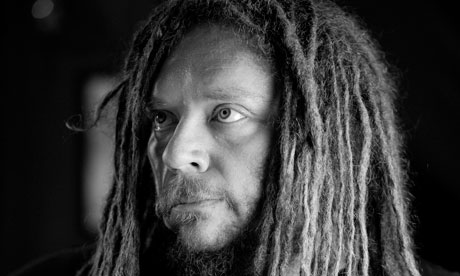
Jaron Lanier
 Today's post is brought to you by 'You Are Not A Gadget: A Manifesto' by Jaron Lanier. I have just finished reading this book and my mind is reeling. Lanier is a respected Internet visionary, a gifted computer scientist, and an expert on virtual reality. He is disappointed that the limitless power of the Internet has not been used to reach its exciting potential and has instead been harnessed by homogenous conglomerates or, as he refers to them, 'lords of the clouds'.

Rather than experimentation and creativity, he fears the hive mindset of Internet users encourages mediocrity and degrades personal interaction. But he is not entirely negative - he is a product of the e-generation himself. He suggests some ways we can individually encourage original thought and personality as an antidote to endless mashups of other people's popular culture.

5 Ways you can 'be a person instead of a source of fragments to be exploited by others': 
  1. 'Don't post anonymously unless you really might be in danger.'
  2. 'If you put effort into Wikipedia articles, put even more effort into using your personal voice and expression outside of the wiki to help attract people who don't yet realise that they are interested in the topics you contributed to.'
  3. 'Create a website that expresses something about who you are that won't fit into the template available to you on a social networking site.'
  4. 'Write a blog post that took weeks of reflection before you heard the inner voice that needed to come out.'
  5. 'Innovate in order to find a way to describe your internal state instead of trivial external events, to avoid the creeping danger of believing that objectively described events define you, as they would define a machine.'