Thursday, 31 October 2013

Licky-likey?


A sketch of her cat, Cort, by Sarah Morrissey
Today I learned another totally useless but mildly interesting fact - why yes, I do collect them. Apparently 45% of people lick the lid of their yoghurt pot. 10% of people in the survey said they didn't eat yoghurt. This leaves a whopping 45% of people who don't lick the lid. Who are these people? And why?

I can only assume that they are of the 'younger generation' who don't buy their own groceries and are therefore quite content to waste someone else's money on uneaten dairy product. I also assume that their parents have not lived through an era of rationing so they have never received the lecture on the sin of food waste. Nor have they ever had the one about starving children in Africa. Or they simply have no shame.

Of course, I'm talking individual yoghurts here, not the big family-sized one, as that would be unhealthy and a bit odd. The only reason I can see for not licking the lid is because they used to be made of tin foil and if you tore that and then licked it you could cut your tongue. Hands up who's done that? Just me, then. Well, most of them now are that plastic sort of substance and it's very difficult to cause yourself a mischief with that.

I'm not sure that I know a single person who belongs to the non-lid-licking 45%. Even my cat licks the lid, and the empty pot for that matter, and he gets his little face stuck in there which is quite funny but he won't thank me for sharing that with you. So, if you are one of these mystery container top abstainers, could you please explain your reasoning? I'd really like to know.

Friday, 25 October 2013

Friday Five: Staying inside the lines


Tonight is opening night of In Loco Parentis, written by Helen Machalias and directed by Andrew Holmes. It is a tough and confronting play that explores 'unwelcome sexual encounters, inconvenient truths, and brutal university policies'. I play Dr Bryce, the Head of College who may or may not be complicit in the appalling incidents occuring on campus. If you are in the area, come and see it - I'd love to discuss it with you afterwards!

5 lines from In Loco Parentis:
  1. "First and foremost, welfare starts at home, and that means looking after each other, especially the vulnerable members of our community." - Katy McIntyre
  2. "Chicks are like grass, they need to be cut down to size regularly or it gets out of hand." - College Boy
  3. "For future reference, Mitchell, beginning a sentence with 'I'm not being sexist, but...' is a guaranteed way to get a woman off-side." - Dr Jillian Bryce
  4. "You used to love it here, and then you took a gender studies unit last semester and became some angry, magnanimous bitch." - Mitchell Cameron
  5. "I assume he's your garden variety college footy head?" - Jana Abernach

Tuesday, 22 October 2013

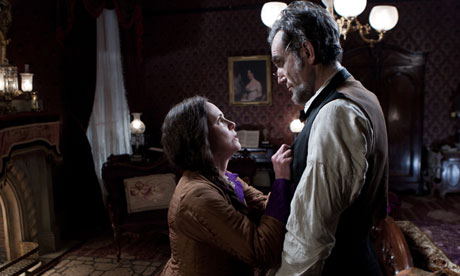
Daniel Day-Lewis IS President Lincoln


In Britain we have a royal family to obsess over. America has their presidents. Some have achieved legendary status for good or bad, but the good can barely be questioned. Abraham Lincoln is among these monolithic myths, and, with his latest film, Steven Spielberg has added to the general hagiography.

Just over twenty years ago Oliver Stone made a film about JFK which was equally reverential and full of similar examples of good actors struggling with a tedious script. In other words, it is incredibly worthy and desperately dull. Sally Field, Tommy Lee Jones, James Spader, David Strathairn and, indeed, the entire supporting cast are excellent, but this is a star vehicle for one man only, and Daniel Day-Lewis embodies the eponymous character to a frightening extent.


DDL (as he is referred to in the Hollywood press) is a notorious method actor and apparently he didn’t drop his assumed accent or stoop for three months of filming. The physical similarity is remarkable and when he stirs in his chair in the opening scene, it is as though the great Lincoln memorial has come to life. His voice is almost atonal and though there is fire in his argument it is not apparent in his delivery. He shuffles, looks down when he talks, chuckles to himself and presents as a shambling and slightly delusional drunkard.

He is also constantly telling anecdotes, gathering his staff around him like a luvvie director holding court before his sycophantic crew. His wife (the indomitable Sally Fields) reflects, “How the people love my husband. They flock to see him on public events”. However, great sympathy is shared with the Secretary of War, Edwin Stanton (played by Bruce McGill) who rails, “I don’t believe that I can bear to listen to another one of your stories!”

Lincoln must be impeccably researched and the ponderous dialogue is probably taken from transcripts – there is such a lot of it. Lincoln was a lawyer, and there are plenty of lectures which would feel at home in a courtroom. We are reminded that he was a political genius and favoured rational justice and stirring speeches rather than flamboyant gestures or theatrical fanaticism. He frequently repeats his salient points and resorts to Euclidean geometry to strengthen his message – “Things that are equal to the same thing are equal to each other – this is self evident”.


Doubtless there is meticulous attention to detail and the beautifully-framed set pieces would make an excellent stage for a play. The interior décor almost certainly suits the period (1865) perfectly, but it’s very stuffy and there are a lot of dark rooms, which makes it tiresome to view. Titles appear across the screen as each member of the confederacy or other important political figure is introduced, highlighting the documentary feel.

Lincoln attempts to do anything to win support for his 13th Amendment, which will abolish slavery and involuntary servitude, except as punishment for a crime, and is not above boardroom deals. Despite a tense voting scene, the action is severely limited for a film set in the midst of the bloodiest period of American history – more American men died in this conflict than in all other American wars combined.


We are also presented with a very simplistic view in which the Civil War was fought entirely over slavery between the Slave South and the Free North. While Lincoln preaches, “We begin with equality. That’s the origin isn’t it? That balance, that’s fairness, that’s justice” his detractors counter, “Congress must never declare equal those whom God created unequal”. There is hours of this stuff, as the debate drones tireless on. While we modern enlightened viewers clearly know which side is right, we cheer to Thaddeus Stevens’ (Tommy Lee Jones) interjection wishing to know when we can see an end to this “interminable gabble”.


As one of his black and white treatises on slavery, I prefer Spielberg’s Amistad. Watching Lincoln, the viewer may be forgiven for imagining they are back at school and being forced to sit through a fairly elementary history lesson. Lincoln himself confirms, “I could write shorter sermons but when I get started I'm too lazy to stop”.

Apparently the fear is that if slavery is abolished the men will have to be enfranchised. Whatever next; votes for women? They needn’t have worried – another 100 years had to pass before emancipation. Lincoln claims, “I’ve found that prophesying is one of life’s less profitable ventures,” which was perhaps just as well.

With the war over and the amendment passed, it remains to Lincoln to lead the country “with malice toward none; with charity for all... to bind up the nation’s wounds”. Of course, he will have far more personal wounds with his assassination (not shown on screen as the viewer is in another theatre when the fatal shot is fired), but he will belong to history.

To a score by John Williams, Lincoln strides into the dust to cast a shadow like a spectre over all American politics. References resound of George Washington, John Quincy Adams, James Monroe, and Thomas Jefferson throughout the film. It is self-evident that Abraham Lincoln takes his rightful place in this sparkling quintet. It is also obvious from the opening credits that DDL will earn an Oscar for his character portrayal. It is less clear whether the film is as assured.

Friday, 18 October 2013

Friday Five: Short Stories

The announcement of Alice Munro as the recipient of the 2013 Nobel Prize for literature has caused a minor flurry of interest as she is known pedominantly as a writer of short stories. Short stories are often considered the poor cousin in literary fiction, although many authors of full-length novels also excel at this discipline.

Meanwhile, the shortlist for the eighth annual BBC national short story award is comprised entirely of female authors. The chair of judges, Mariella Fostrup, suggests that the format is 'suited to the innovative brilliance of female writers'. This is clearly a contentious comment designed to create controversy. A such, it is not far removed from the patronising notion that women write short stories because they can only a snatch an hour here and there between rearing children and cleaning houses and their poor little brains can't cope with anything on too grand a scale.

When living in New Zealand, I read a lot of Kiwi short stories and I liked very few. The problem from my perspective was that they weren't actually stories with beginnings, middles and ends. One author stated she preferred to think of them as 'short fictions' as she felt the 'structured semantics of storytelling were tyrannous and restrictive'. In this case, you are not writing a story. At best, what you have is a poem; at worst, a creative writing exercise. Suffice to say there is much debate as to what defines a short story.

A good short story is a good short story, no matter who writes it. When I was a child I was incredibly impressed by Oscar Wilde's fairytales, Aesop's fables, Rudyard Kipling's Just So Stories and Enid Blyton's accounts of pixies and goblins. I read my way through stories of King Arthur and Robin Hood. I progresed to Greek mythology and the Bible.

My parents gave me a book of Saki's short stories to read as a young woman: I can't thank them enough. Edgar Allan Poe tortured my nights and expanded my mind. Charlotte Perkins Gilman and her tale of 'The Yellow Wallpaper' exposed me to an empathetic world I had never previously imagined. There are so many short stories that left lasting impressions, but I will attempt a truncated list.

5 Favourite Short Story Writers:
  1. Roald Dahl - going from his children's stories to his adult shorts was a revelation. I haven't touched royal jelly since.
  2. Alice Walker - her world is not my world, but she welcomes me in through her short stories.
  3. Stephen King - his stories are so well constructed and the format suits the horror genre.
  4. Edith Wharton - similar to the above, the glimpse of ghosts in her short stories are tantalisingly terrifying
  5. Jon McGregor - earlier this year I read This Isn't the Sort of Thing that Happens to Someone Like You: it was the best collection of short stories I have read in a long time.
One of Laura Beckman's illustrations for Roald Dahl's Royal Jelly

Thursday, 17 October 2013

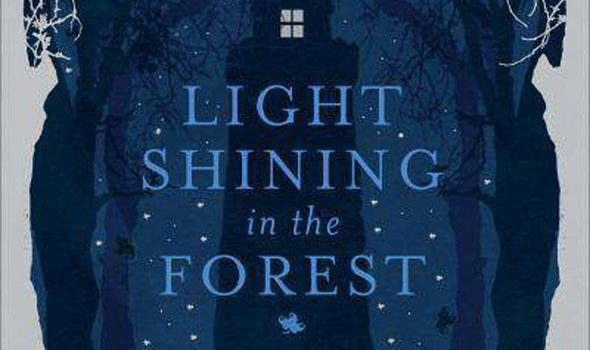
Shining Example


Light Shining in the Forest by Paul Torday
Weidenfeld & Nicolson, $29.99
Pp. 350

Every five minutes a child goes missing in the UK. This bald fact is reiterated throughout this novel, which deals with absent children, presumed runaways or victims of kidnapping. And yet it is not a police procedural.

Geordie is a logger working alone in the forest. His relationship with Mary is collapsing and his mind strays since the unexplained disappearance of their son, Theo. The overtones of the kindly woodcutter are strong and the presence of the trees becomes ominous like those in a pop-up storybook. “The trees are there because the trees are there.” If this is a fairytale it is more Brothers Grimm than Disney.

Another of the missing children, Becky, has an alcoholic mother and a distressed home life. A third, Karen, is comfortable and well-looked after. There doesn’t seem to be any pattern, but they all like to read. As in the best psychological thrillers, the familiar is rendered frightening, such as the mobile library van with its ice-cream chime luring children onto the street like a Pied Piper. But this is not a horror story.

Pompous politician, Norman Stokoe is newly appointed to the position of Children’s Czar for the North East. He isn’t sure what this entails but he sits behind a desk, patronises his secretary, Pippa, drinks a lot of coffee, and attends meetings. Although he doesn’t like children – “Children cost money. They take up time. They disrupt one’s routine” – he knows all the statistics about their welfare or lack thereof. “It is an industrial scale problem and it requires an industrial response. The UK leads the world – but whether in measuring the problem or solving it, it is harder to say.” There is a major discrepancy between the emotional and the objective, but this is not a sociological treatise.

An intrepid reporter, Willie Craig, stumbles across a potential story in the missing children and brings it to Norman’s attention. Willie finds life on the local paper in rural Nothumberland crushingly dull and is at loggerheads with his editor who believes that “a local newspaper should concentrate on community issues and leave the rest to the national tabloids.” There are elements of detection and deduction, yet the main focus is not on investigative journalism.

Paul Torday wrote the book-club favourite Salmon Fishing in the Yemen, made into a shiny film starring British box-office darlings Emily Blunt and Ewan McGregor, and criticised by some for being a little bit twee. Some of those capricious characteristics emerge in this novel. It is written entirely in the present tense with a refreshing lack of adverbs and attributions, and with undertones of humour implicit in the short, breathless sentences: “She listens. She is rapt, like a raptor.” But this is far from a quirky flight of whimsy.

In fact, it is hard to pin down exactly what this novel is, which is, obviously, the point. In this age of sound-bite culture, we like to pigeonhole and opine in definitive terms. Whereas previous ages looked to the supernatural to interpret things they couldn’t understand, we prefer scientific rationalisation while we worship celebrities. A crucifix hanging on a wall is deemed unusual. “It’s where most people Willie knows would have pinned up Newcastle Untied colours. In his own flat he’s got a shirt signed by Alan Shearer pinned to the wall as decoration. No crucifixes.”

And yet what possible logical explanation can there be for what we do to our children? “Look at the headlines in the papers most weeks: children are tortured as witches; they are tortured for recreational purposes; they are abandoned, abused, trafficked, exploited, or just lost.” Torday hints of something spiritual in the disappearance of the children, from the Angel of the North statue, which Norman spots on his drive up to Newcastle, “spreading its protective wings above the warehouses and factory units below”, to the shadows of the wind turbines, “like a cross over the road”, and the light shining in the forest, which startles Geordie as he lumbers there.

Although “Nobody wants to accept that the unreal can become real”, Theo displays stigmata – the physical representation of Christ’s wounds on the cross – which the authorities suspect are marks of abuse. When Torday invents a genuine Deus ex Machina, Pippa reflects, “there doesn’t seem to be much of a market for miracles these days”, but it is no more unbelievable than the horrific alternative of a person who plays God by taking and creating life.

Not all questions the novel poses are neatly answered, which can be frustrating if you like your stories to have tidy endings. The world may be “rather annoyed by something that it cannot easily explain”, but by not supplying pat explanations Torday’s latest novel remains mystical and tantalising. And due to a masterful control of tone, pace and suspense, in the hands of a sensitive director, it will make an excellent film.

Wednesday, 16 October 2013

Getting cocky


If you’ve ever wondered who
Would win in a fight
Between a sulphur-crested cockatoo
And a trio of Bratz dolls,
I could tell you.
On the roof
Are three mini macabre mannequins
With tatty clothes and tangled hair
Tossed there by the girls next door
Who find it hard to differentiate
Between torture and play;
Sugar and spice.


The cockatoo attacks;
It holds the dolls with a gripping claw,
Gouges their vacuous eyes,
And tears off their heads with
Its creatively curved beak.
Darwin’s design never envisaged
Such scenes of savagery.
The pompous image is punctured;
The tarnished attire is tattered;
The big-headed idols are vanquished.


A victory for the sulphur-crested suffragette
As she rips apart the ridiculous facade,
Exposing the ‘reclaim your inner slut’ mantra
As offensive, puerile hokum.
But the bird is a boy
And the violence feeds baser needs.
Some would say they asked for it,
Dressed like that.

Friday, 11 October 2013

Friday Five: Cheap as chicken

I like chicken as much as the next person. Or at least, I thought I did, until I moved to Australia, where it seems that the average person likes chicken a lot.

Australia has the second highest number of sheep in the world (after China) and yet lamb is quite expensive here. Australia is the seventh largest cattle rearing country in the world, but beef is still pretty pricey. Australia doesn't even make the top ten of national poultry producers, but chicken seems to be the choice meat of the country. This extends to the number of 'fast food chicken restaurants', of which there are many, without even resorting to the globally ubiquitous KFC.

5 Fast-Food Chicken Outlets in Australia:
  1. Nando's: originally South African, but it has been in Australia for the past 15 years.
  2. Red Rooster: first opened in Kelmscott, WA, this is now 'Australia's largest roast chicken operation'
  3. County Chicken: 'crisp and light with a taste just right', they also fry other stuff besides chicken, like fish.
  4. Henny Penny: mainly in NSW they describe themselves as 'quick service' rather than 'fast food' restaurants.
  5. Kingsley's Chicken: 'unbelievable value; awesome chips' apparently - they are a Canberra and Queenbeyan 'speciality'