Last week we were in the rainforest at Lamington National Park. It rained - a lot. But there were beautiful walks and plenty of flora and fauna to observe. We stayed at O'Reilly's Rainforest Retreat, which was rather marvellous, and while we indulged and luxuriated in spa baths, steam rooms, infinity pools and restaurants, we also did some walking. Here is a selection of the tracks.
Five (Six) Rainforest Walks:
1. Booyong Walk/ Tree Tops and Mountain Botanic Gardens:
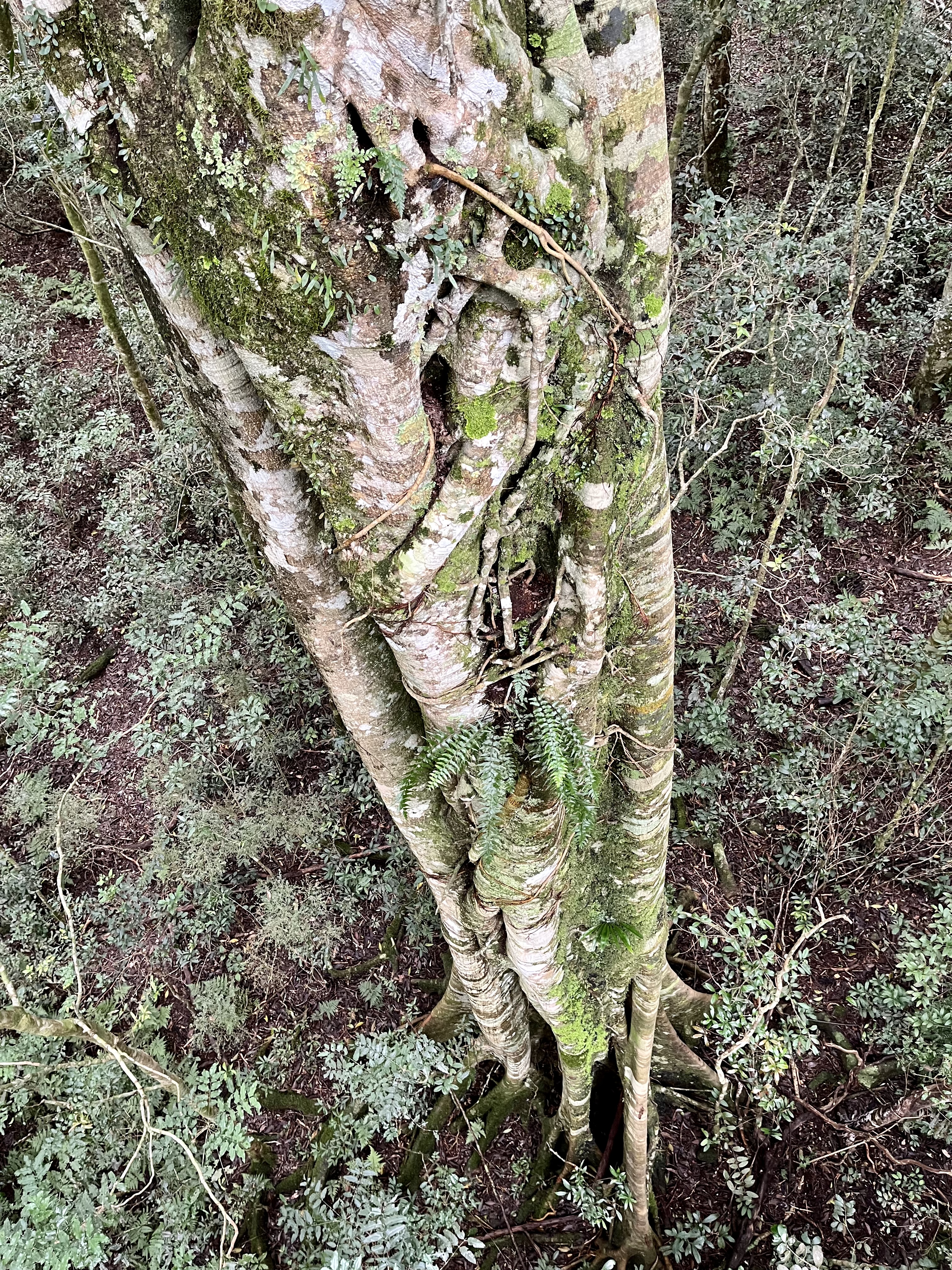
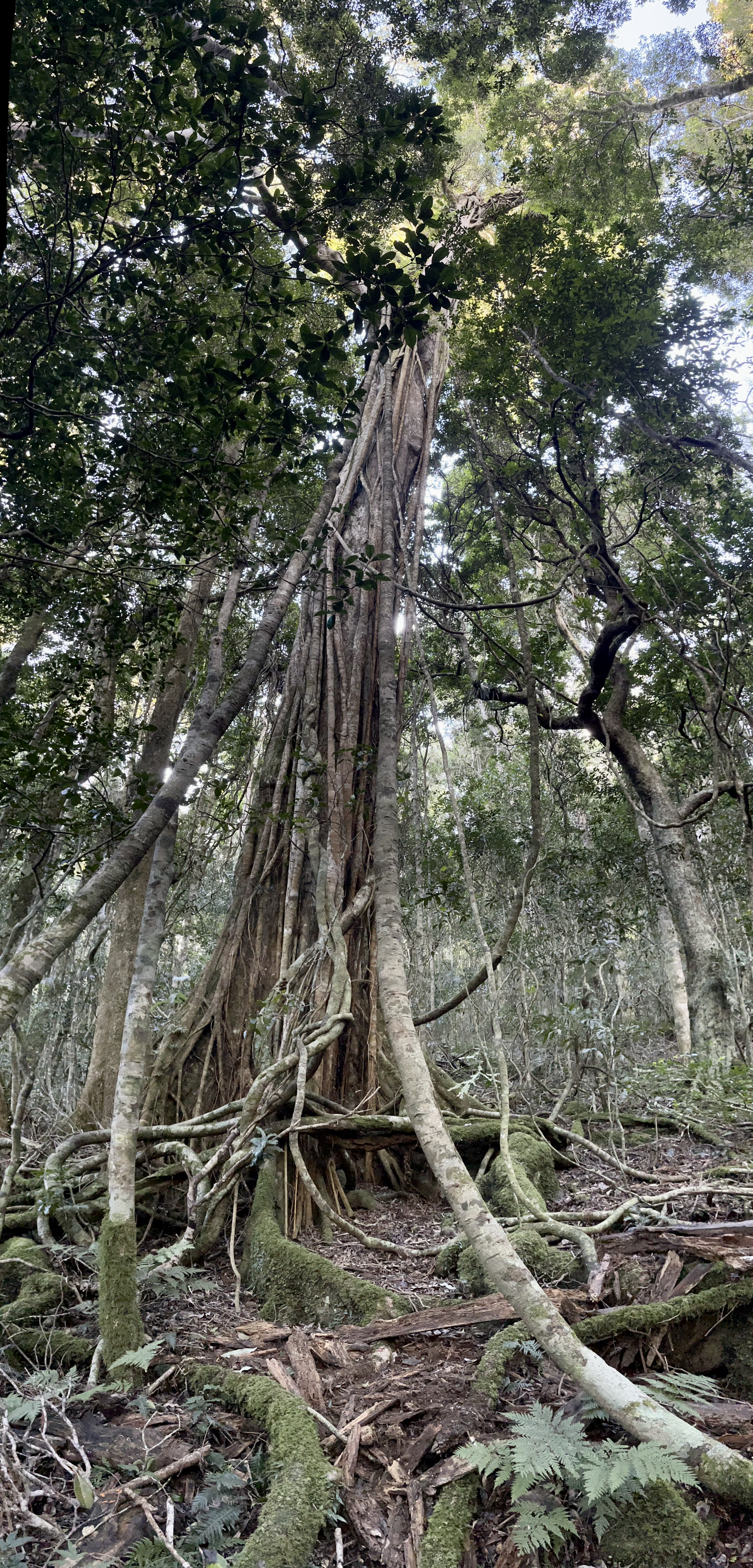
This was the first walk on the first day (while we were waiting for our room to be ready) so there are a lot of photos of trees and micro-photos of plants and fungi, as I absorbed all the amazing green! I make no apologies. The Black Booyong Tree (Argyrodendron actinophyllum) is a classic rainforest dweller, native to Eastern Australia, with the most amazing buttress tree roots. Walking past monumentous examples of this species heightens the awe-inspiring feeling of being in a natural place of worship.


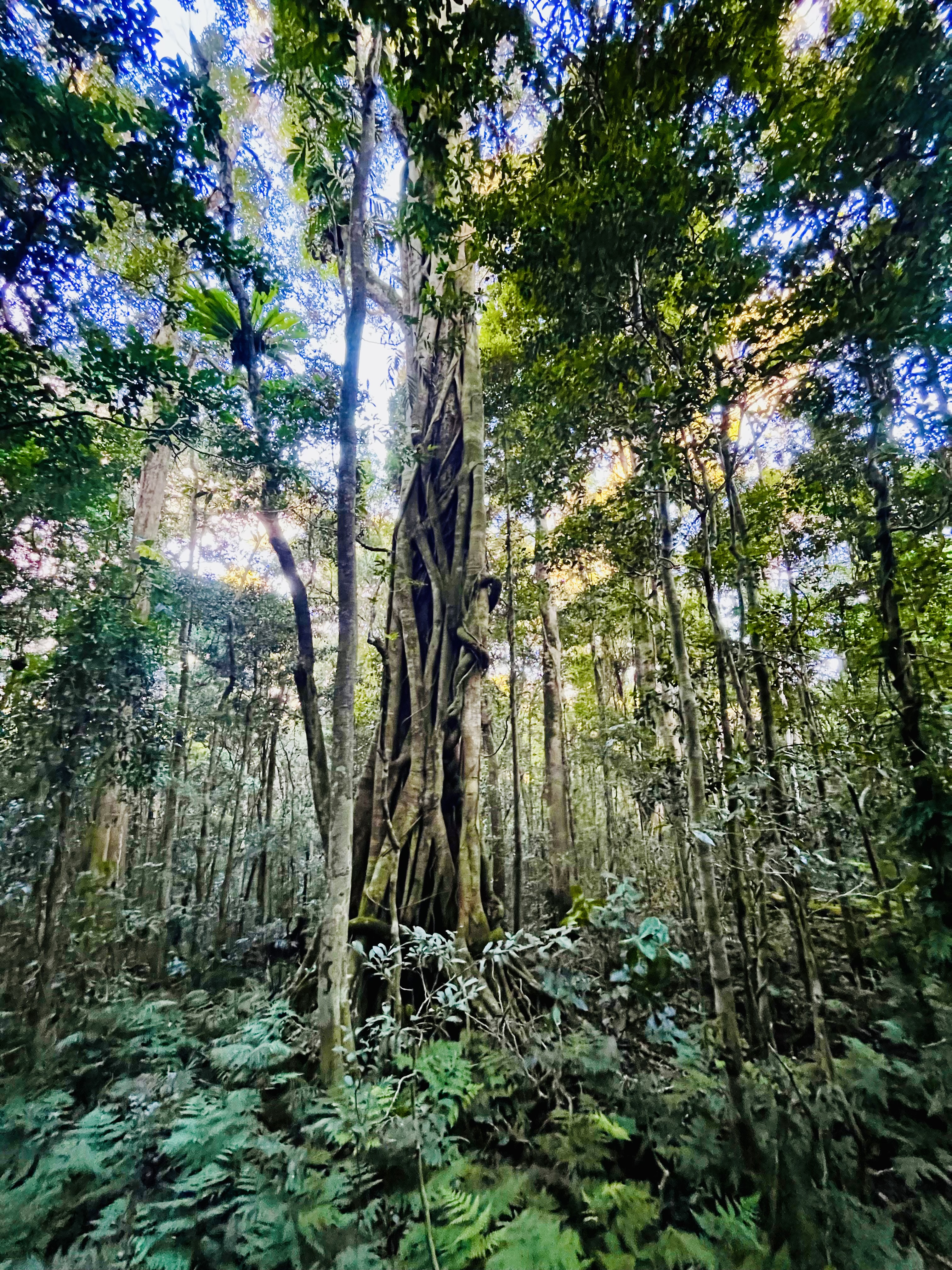
As you can see, many of these trees are entwined in strangler figs, the name given to a number of tropical and subtropical plant species, including some banyans and unrelated vines. They share a common 'strangling' growth habit as an adaptation for growing in dark forests where the competition for light is intense. These plants spend the first part of their life without rooting in the ground. Their seeds (often bird-dispersed), germinate in crevices in other trees, then grow their roots downwards and envelop the host tree while also growing upward to reach into the sunlight zone above the canopy.
Strangler figs suck up the nutrients from its victims, causing them to die eventually. When the original support tree dies, the strangler fig becomes a 'columnar tree' with a hollow centre core. However, the strangler fig can also help its support tree survive storms - that's one very complicated relationship you've got going on there, nature!
The Tree Top walk is an iconic aspect of O'Reilly's, of which they are very proud. It is 180 metres long, consisting of nine suspension bridges up to 16 metres above ground and includes a deck 30 metres above ground in a fig tree over the walkway. It was the first of its kind in Australia (built in 1987) and the unique and innovative structure is free to visitors, allowing them to observe life in the rainforest canopy at close range.
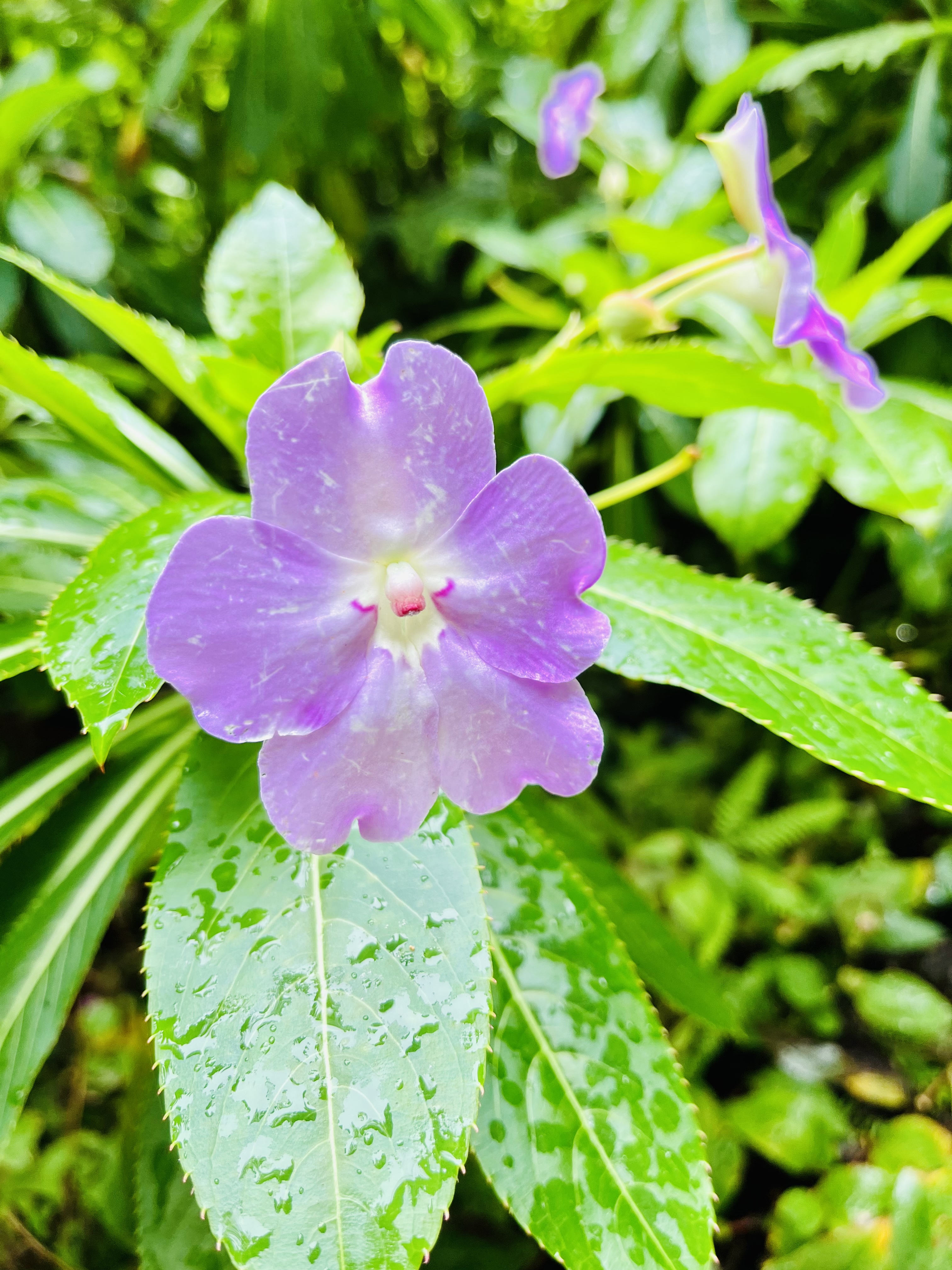
We also walked around the Mountain Gardens, which is through a little gate like The Secret Garden. Once inside it is easy to get lost meandering between the boulders along the twisting turning pathways as there are no signs, but it's a delight to find a garden in a rainforest setting rather than the usual urban setting, and it's intimate enough not to feel daunting. An enjoyable time can be spent admiring the delicate flowers on the robust plants, and it's a photographer's paradise. It isn't actually a part of the resort and operates on donations.
I think this is a corkwood tree with its rough bark, but don't quote me on that.
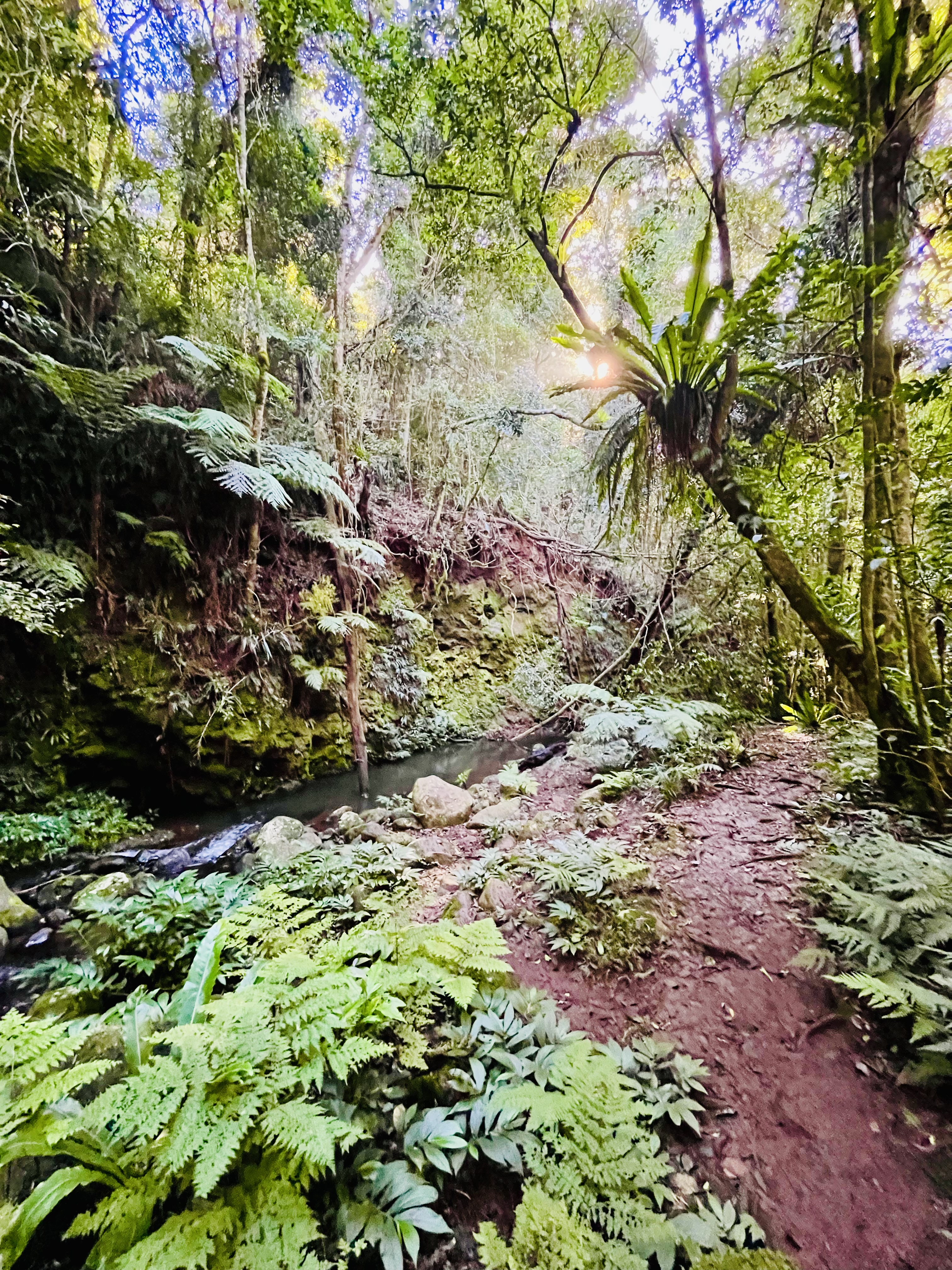
Opinions appear to differ as to the length of this walk (I've seen it recorded as 10.3km, 14.2km and 18.9km) and the time it takes to complete - it took us approximately four hours, and I suspect the weather has a lot to do with it. On the day we walked it, it had been raining heavily and there was lot of mud underfoot. 'Stepping stones' were submerged leading to river crossings becoming thigh-deep wades through fast-flowing rapids, but the waterfalls and rainforest scenery were magnificent.
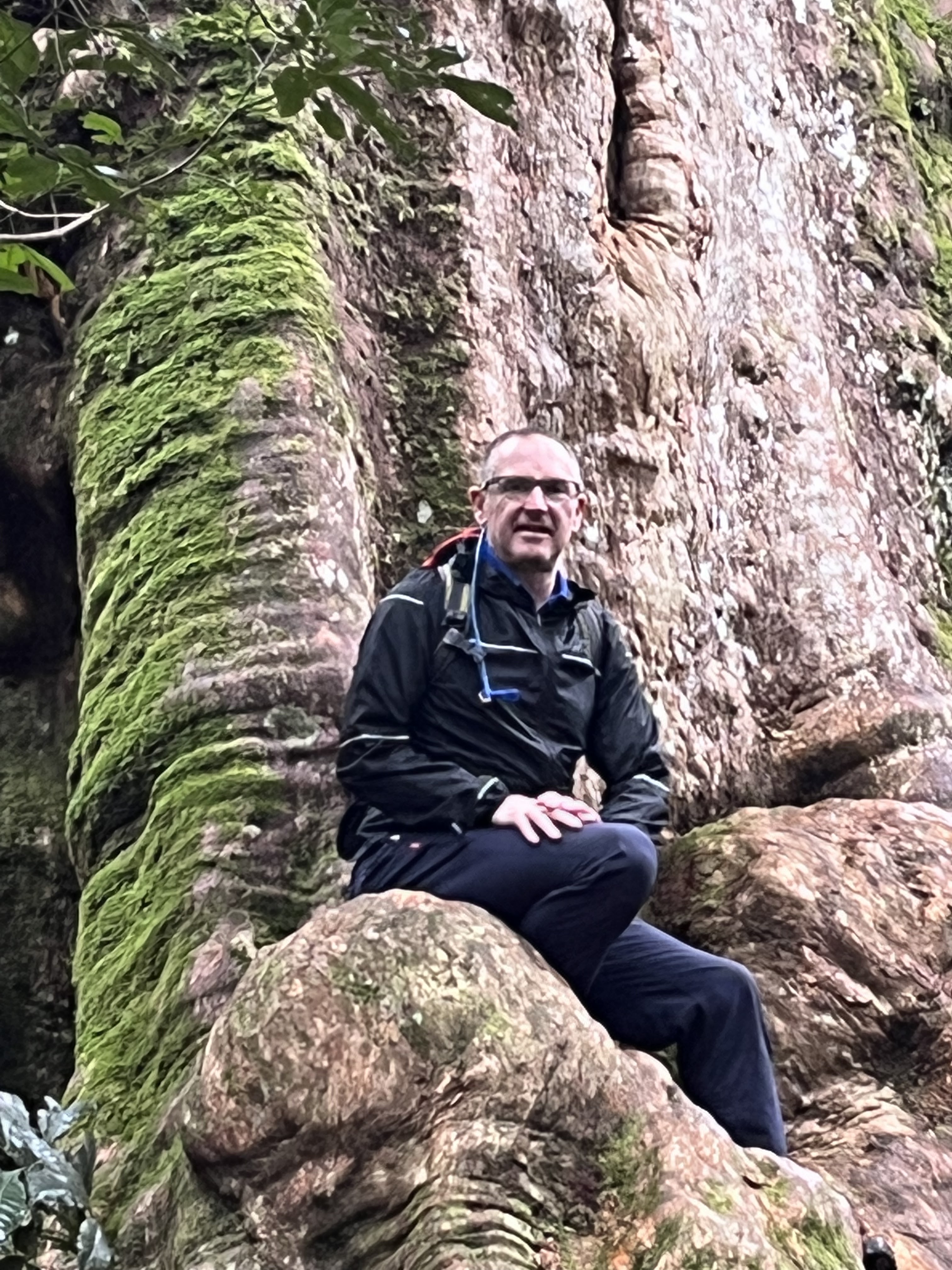
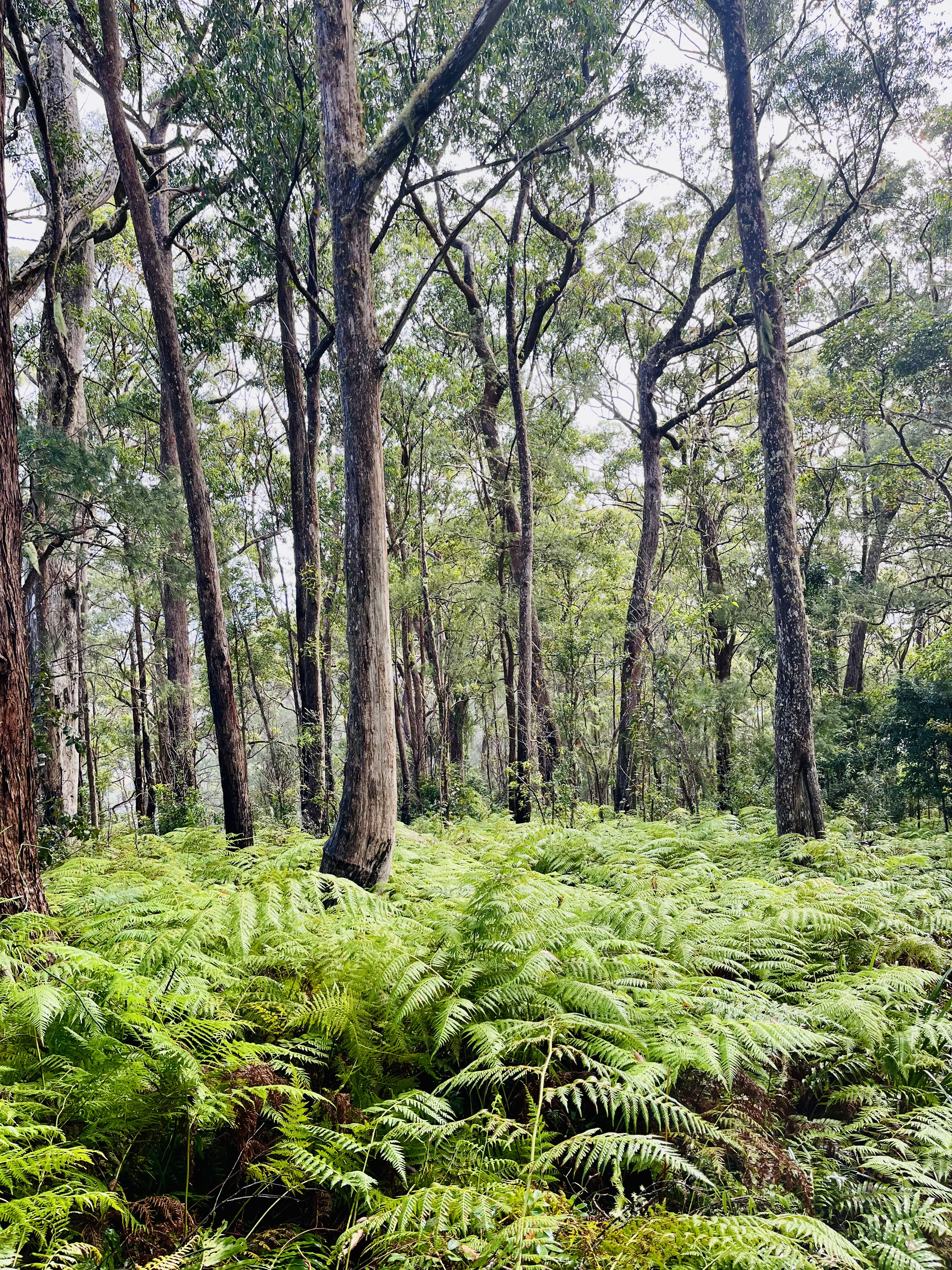
The track leads past impressive stands of smooth, pink-barked brush box (Lophostemon confertus) some of which have been radiocarbon-dated at 1,500 years, making them the oldest ever carbon-dated trees on Australia's mainland.
 |
| It wouldn't be a rainforest without a rainbow |
 |
| Him Outdoors sitting on a giant tree |
I spotted two snakes together which raised my heart rate considerably: a slaty grey and a carpet python. I screamed at them and the slaty grey slithered off although the python was unperturbed. I suspect it had recently eaten and couldn't have been less interested in us.
And here are some of the waterfalls and creeks I mentioned, complete with instructions as to what you shouldn't do.
 |
| Him Outdoors on Picnic Rock |
3. The Border Track
The 'fabled' Border Track connects the Green Mountains and Binna Burra sections of Lamington National Park. It is a 21.4 km one-way track (which, of course, you can walk in either direction) and crosses the border several times from Queensland to New South Wales and back again. Right from the start, the sun was attempting to break through the clouds and creating stage hazer effects. Apparently, 'on a clear day, lookouts provide spectacular views' but we just saw the signs for the lookouts with no views at all. We spent a lot of time squelching through ankle-deep mud as the mist swirled around us and we couldn't see a thing!
At the high point (Mt Bithongabel), it was like entering into another world. The forest simply dripped as all the tree-branches were clad in moss and the droplets of water hung at the end of everything green. Shafts of sunlight danced like wraiths before disappearing into the ferns, and paths led to impossible futures.
 |
| In case we ran out |
Of course there was much hilarity over the potential word confusion of the Queensland Naturalists' Cairn, and Him Outdoors suggested taking his clothes off for picture (I stopped him; it's okay). The Queenstown Naturalists' Club was founded in 1906, and included Cyril T White, who was the Government Botanist from 1917 until his death in 1950. He was one of a party who camped at Mt Bithongable in 1918 and drew attention to the scientific and scenic value of the National Park.
 |
| Him Outdoors at one of the (alleged) lookouts |
We stopped at a point of the ridge with a minor break in the clouds to eat our soggy sandwiches, where we encountered our first other walker - a chap from Brisbane who had come up here on his day off work. He had taken his shoes off to dry out (ha!), and they were those five-finger barefoot running shoes. I realised he would have been leaving large bare footprints in the deep mud and wondered if this might be the origin of the Yowie myth (there is a statue of a Yowie in the resort café). According to a Wikipedia article (so it must be true, right), this region in south-east Queensland has had more Yowie reports than anywhere else in Australia.
And did I mention it was wet? Up here, if you've been tramping through the rivers, you are going to get leeches. They were very attracted to us (we are clearly so desirable) and became quite attached! A few days after this walk when I had a foot massage at the spa, the woman there told me that I shouldn't worry about a few bites as the leeches were quite harmless - she was from Northern Queensland and used to the much bigger varieties. She was aware that they could be quite confronting, however, and told me she encountered one English bloke who was totally alarmed, having never seen them before until they were wiggling away between his toes, and one fell off his foot into her lap as she was exfoliating his skin. Eeuww!

This is near the end, where we have very nearly made it and I am practically hallucinating with tiredness, but people seem to be smiling, so that's good!
 |
| Koala at Binna Burra |
 |
| Calamity Sue with bubbles waiting in the bar |
4. Balancing Rock and Moonlight Crag
This is a good walk for a rainy day - and there were plenty of them, so that's just as well. The flora is dripping wet, and delicately trembling beneath raindrops.The walk crosses the valley to see similar views from the other side of hills, crags, rocks, waterfalls and (of course) rain-forests.
 |
| Looking back across the valley to our villa |
The cloud formations over the views at the Moonlight Crag lookout prove how localised these rain showers are, and how those clouds and mist cling to the contours of the hills.
 |
| Him Outdoors is not impressed with the beverage options on tap at the bar |
 |
| Looking back across to Moran's Falls |
 |
| Balancing Rock |
 |
| Balancing Him Outdoors |
5. Wishing Tree and Moran's Falls
This is a pleasant little walk through the forest to come to the Wishing Tree, a big booyong tree with a hole in the middle that people can walk through. It is an odd feeling when you are inside a tree trunk and I can understand why people are inspired to make a wish. The route takes us across a swing bridge; those are always fun. Once at the wishing tree, there are different options to return - one incorporates the Moran's Falls track.
 |
| Good question; always worth checking |
 |
| Is is woodland elves? |
 |
| No, it's Calamity Sue and General Philosophy |
 |
| View of Moran's Falls |
 |
| Moran's Falls Creek before it tumbles over the edge |
6. (Yes, I know) Python's Rock
The walk to Python's Rock is one of the easiest walks in the park and it is extremely rewarding. We walked along it in the late afternoon just before the sun set and the birds were making their last chirp and squawks before settling down for the evening. It sounded peaceful and the light was amazing. The view from Python's Rock overlooks Castle Crag to the Lost World with Mount Throakban to the left and also more views of Moran's Falls. Beautiful.
 |
| Portrait panorama |
 |
| Typical buttress of a booyong tree |
 |
| View of Moran's Falls (again) |















:focal(1920x1079:1921x1080)/https://tf-cmsv2-smithsonianmag-media.s3.amazonaws.com/filer_public/68/e2/68e215ee-c731-47e1-9135-7315790ad361/end_22_epk_wreck_still_images-4-credit_falklands_maritime_heritage_trust_and_national_geographic_caption_-_the_stern_of_the_endurance_with_the_name_and_emblematic_polestar.jpg)