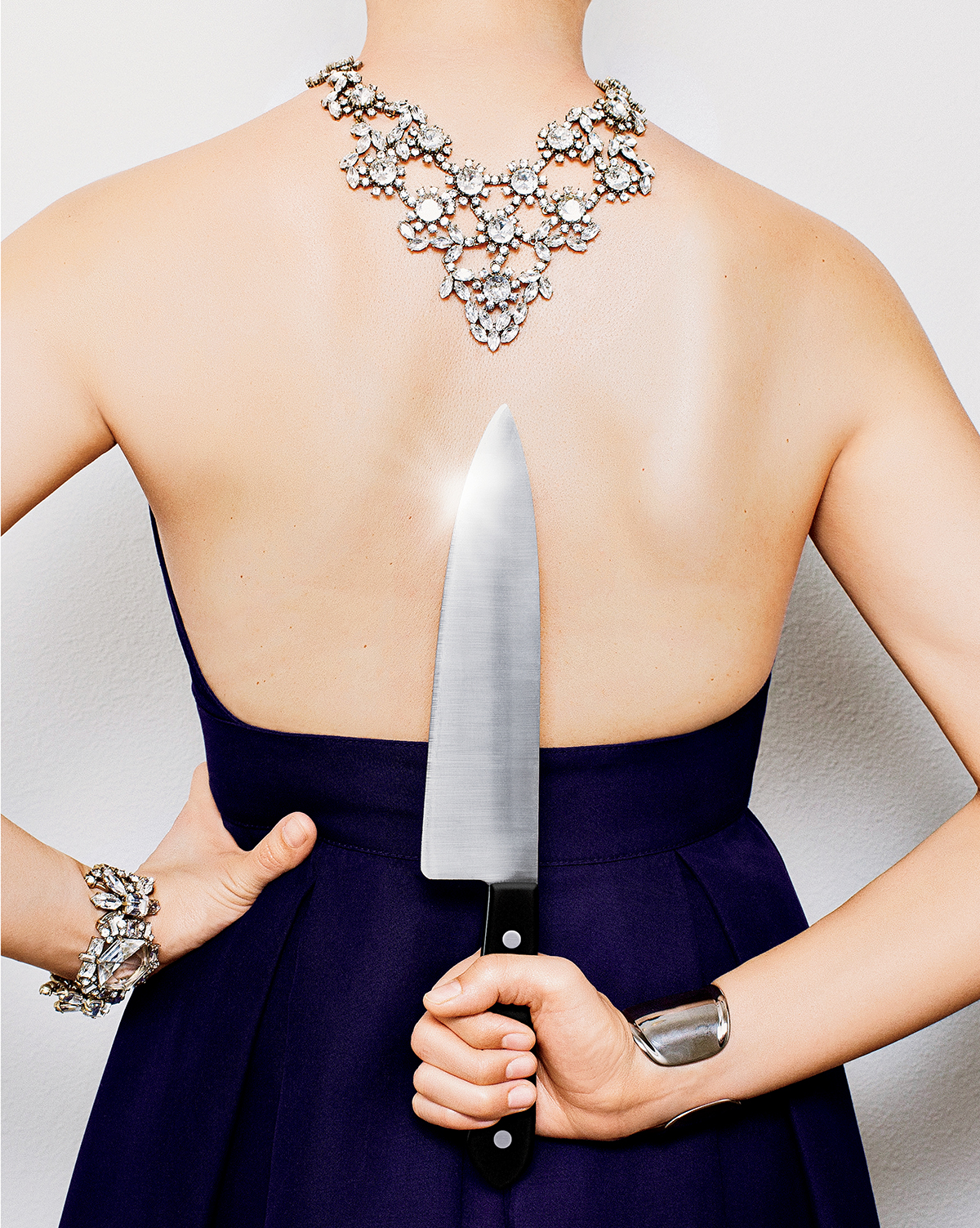
One of the themes of the play I am directing, Dead Man's Cell Phone, is the way people interract through their phones rather than realistically and so their understanding of each other becomes skewed and depersonalised. In devising a poster to advertise the play, I wanted to spotlight the overload of impersonal information and intimate details and the way in which it is easy to become sucked into this heightened but depleted digital world. I didn't want any recognisable faces or features, other than possibly a hand which could belong to any body. These are my suggestions for what I had in mind.
Friday, 7 June 2024
Friday Five: Show Posters
Friday, 31 May 2024
Friday Five: Books Read in May
- Home Fire by Kamila Shamshie (Riverhead Books) -This modern retelling of Antigone was described by one reviewer as ‘A Greek tragedy for the age of ISIS’. It is formulaic in structure, as befits a Greek tragedy, and each of the five sections highlights a different character who represents one of the figures from the drama. The world of contemporary British politics and the Islamist caliphate stand in for the democracy of Ancient Greece. Readers unfamiliar with Antigone may struggle with the apparently forced milieu and one-dimensional characters.
- How the Dog Became the Dog by Mark Derr (Scribe) - Subtitled From Wolves to Our Best Friends, this is a very scholarly and academic text that tries to trace the history and links beween the wild animal and the domestic pet. Full of analysis of archaeological fossil details regarding physiological changes to head shape, shortening and broadening of the muzzle, shortening of the nose and jaws, and teeth crowding in the mouth, as well as an overall reduction in size and robustness, it concludes that wolves and dogs share a common ancestor but are different species. Clearly a dog lover, Derr debunks the theory about humans having to be the alpha to control the dog, pointing out that wolves chose to be with humans as part of their evolution perceived mutual benefits rather than being forced into experiments. He also clarifies the distinction between attentive and intelligent compared with biddable and obedient, and contends that the problems many people have with their understanding of dog behaviour is the challenge to their assumption of human exceptionalism. He also has some harsh words to say about breeders, showdogs, and people who limit their dog's natural dog behaviour.
- The Ashes of London by Andrew Taylor (Harper Collins) - This is the first book in what will become a series of historical detective fiction (there are currently six) featuring James Marwood and Cat Lovett. The setting is 1666, as the Great Fire of London rages through the city. The crime is the body of a man found in the ruins of St Paul's Cathedral stabbed in the neck with his thumbs tied behind his back. Marwood is the son of a traitor ordered by the government to hunt down the killer. Lovett is a determined and (of course) beautiful young woman fighting for her freedom from the many relatives between whom she was passed around after her mother died and her father disappeared. As these characters are clearly going to be revisited, Taylor spends considerable time in setting them up although he doesn't seem to flesh them out and the mystery falls a little flat, sacrificied to the wealth of historical detail. Further installments appear popular so perhaps after all the exposition is out of the way, the pace might pick up in future.
- Agatha Christie: A Very Elusive Woman by Lucy Worsley (Hodder & Stoughton) - Agatha Christie wrote her own biography, but there are lots of bits missing, which Lucy Worsley attempts to fill in here. She is helped by the work of Mary Westmacott, Christie's alias, who wrote many novels of a fairly autobiographical nature. The childhood years are a bit bland - probably because nothing was really written about them - but in adulthood the interest increases. Agatha Christie thought of her writing as a profession and a way to make money and so was excluded from her upper-class contemporaries from the Bloomsbury Group. Lucy Worsley has a strong sense of narrative, using clear, defined sentences and injecting just right the amount of context. She explores the years of Christie's disappearance from multiple angles including those that both support and decry her, as well as her archeological pursuits and love of family. Along with the life, Worsley examines the literature, including some of the 'Christie tricks' which flout the agreed set of rules for detective stories, such as hiding an object in plain sight, the 'hidden couple', recycling plots, and the unreliable narrator or witness. Neither does Worsley flinch from addressing the perceived racism and anti-Semitism, while maintaining the greatness of the writer. “In 1959, UNESCO announced that the Bible had been translated into 171 languages, Shakespeare into 90, and Agatha Christie into 103.”
- Go Set a Watchman by Harper Lee (William Heineman) - Published in 2015, this was actually written before the famous To Kill A Mockingbird, and there was much controversy over its publication due to allegations that 89-year old Lee was taken advantage of by her publishers and pressured into allowing publication against her previously stated intentions. It is not a great novel, containing questionable views and underdeveloped writing. Scout (Jean Louise) returns to Maycombe from New York as an adult to question her father on his racist attitudes and his paternalistic white saviour opposition to the NAACP (The National Association for the Advancement of Colored People - a civil rights organisation formed in 1909). Atticus Finch, whom we all know as the heroic progressive father and lawyer, is uncomfortable when Black people want self-determinism and stop acting grateful. The novel appears to preach tolerance but it does so in a pedestrian and didactic manner, with many sexist, violent and misogynistic allusions, which may have been accepted in 1960 but are certainly not now. Although originally published as a recently discovered sequel to To Kill A Mockingbird, it makes much more sense when read in its true context as a first draft of the much greater work, which grew out of the flashbacks to Scout's youth contained in this one.
Friday, 24 May 2024
Friday Five: Cocktails in Spain
Another place we loved was L'Ascensor in Barcelona. It's a funky bar with access through a lift door and a great range of cocktails. Service is friendly and knowlegable and we made several visits during our stay to chat to the staff, eat, and, of course, drink.
![]() |
| From the outside |
![]() |
| From the inside |
![]() |
| 1. Agua de Valencia |
![]() |
| 2. French 75 and 3. Sazerac |
![]() |
| 4. Catalan Martini (Coffee, crema catalana liqueur, ratafia, rum Barcelo) and 5.Penicilin Ascensor |
![]() |
| Him Outdoors with Penicilin Ascensor (Laphroaig 10 Years, honey, lemon, ginger beer) |
![]() |
| 6. Rom Fashion (Flor de Cana 12 Years, bitter orange marmalade, bitters) and 7. Mediterrani (Vodka, grapefruit juice, fresh orange juice, lime, Olive lemonade, sugar) |
Tuesday, 21 May 2024
How to Survive in Suburbia: Takes One to Know One
Corie
had approached marriage and suburban life with positivity and enthusiasm, but
now she struggles to feign interest in her new environment talking about
children’s homework and kitchen renovations. “I had opted for normality and
gotten far better than I’d dreamed of. But the trade-off was giving up
exciting, sometimes risky work and leaving the exploits to someone else. For
family’s sake. Adventure for moms? The dads got that one.” So, she begins to
examine Pete and his potential motives more closely. She thinks he may be
creating an alter-ego to conceal his nefarious purposes because she recognises
behaviour patterns she has displayed – hence the title.
The
author includes a lot of research as to the way that agents conduct their
business, and, while Cories makes sardonic remarks about some of the training
she received – “The bureau had been big on mindfulness, though they called it
something more butch back then: staying in the alert zone” – her instincts also
lead to valuable insights. Corie confides in her father, who is ex-NYPD and
loves watching cosy British crime shows like Father Brown and Death
in Paradise. “Like a lot of cops, he was a major mystery fan.” He reads Sherlock
Holmes and puts some of the elimination processes to work, casting a net and
then narrowing it.
Friday, 17 May 2024
Friday Five: Theatre Since Then
- Seagull - Chaika Theatre, ACT Hub: A bright and witty adaptation by Karen Vickery with some fine performances, particularly from Natasha Vickery as Nina (a divine portrayal of a broken spirit without mawkish sentimentality), Joel Horwood as Kostya, and Amy Kowalczuk as Polina (calmy understated with a stillness and depth that is very moving). The outood to indoor setting works well and overall the production manages to be fresh and original while maintaining the humour and pathos, although there are slight distractions in some curious staging and costume choices, and some excess faffing with props.
- The Shoe-Horn Sonata - Lexi Sekuless Productions, Mill Theatre: This is an exquisite production of a challenging script. Two women, Bridie (Andrea Close) and Sheila (Zsuzsi Soboslay), meet again 50 years after they were released from a concentration camp where they were taken in the fall of Singapore. Close is a non-nonsense Aussie and Soboslay is a more subdued Brit, and they complement and contrast each other equally. They say you should never ask what someone in these circumstances has done to survive, and these women, who were forced to be the best of friends, have kept secrets from each other for half a century. Now they are exposed in a hotel bedroom and a television studio as their histories are probed and dissected. Lexi Sekuless' direction and setting aloow us to feel their emotions as we intrude upon their privacy. War robs humans of their dignity - the very least we owe the survivors is respect. This is essential viewing.
- Gaslight - Gas Theatricals, Canberra Theatre Centre: The play that launched the term for someone (usually a man) persuading another (usually a woman) that they are going mad due to a series of seemingly insignificant but carefully planned incidents is often considered old-fashioned. Patrick Hamilton wrote it in 1938, and now Canadian playwrights Johanna Wright and Patty Jamieson have given it a sensitive remodelling, while maintaing its Edwardian essence. The story remains basically the same as an utter arse of a man, Jack (played with casual indifference by Toby Schmidt) toys with the mental health of his wife Bella (a superb study in character development by Geraldine Hakewill). In trying to discover hidden gems, he turns down the lights, hides her personal affects and removes paitings, all while administering laudanum and telling her she is frail and over-imaginative. ithout spoiling the plaot, it will suffice to say that the character of Inspector Ruff has been excised from the stage allowing Bella more agency over her discories and the thoroughly satisfying denoument.
- Five Women Wearing the Same Dress - Everyman Theatre, ACT Hub: For a play that is supposedly about five women (bridesmaids at a wedding), it still manages to fail the Bechdel Test, and it introduces the concept of child sexual abuse as an 'amusing' 10-minute diversion. The setting in the round with a railing effectively screening the bedroom (as if the bridesmaids are in an MMA cage) leads to some poor blocking and limited interaction between characters. The same dress is obviously the bridesmaids' gown and, as is often the case when supposed to suit all, it looks equally horrendous on everyone - fantastically well designed by Fiona Leach.The level of acting is variable, with Kelly Roberts providing a focal point as Trisha, the strongest of the women in a poorly-written role. Billed as a 'fun night out', it is dicordant at best.
- The Actress - Canberra Repertory Society, Theatre 3: With a great vision for the set and staging, the production elements are strong but the limited range in acting and pace hampers this production. It is slow on cues with a lack of engagement between characters. Kate Harris as Nicole, the daughter, has clear diction and a warm presence that felt more natural than everyone involved in the dramatic sphere. Rob de Fries as Paul, her father and ex-husband of the main character, played his part on the same plane, which worked well for their relationship, and displayed unctous charm and amusing confidence without being creepy por aggressive, whihc is hard to do with that script. As the eponymous Lydia Martin, Liz St Clair-Long is obviously theatrical without any doftening or expression of character that encourages audience empathy. This is far from her best work and, if this really were the last performace from an actress, it would be disappointing.
Friday, 10 May 2024
Friday Five: Books Read in April
- Come Death and High Water by Ann Cleeves (MacMillan) - This is the second in the George and Molly Palmer-Jones series in which Ann Cleeves acknowledges the influence of the Golden Age mysteries. A group of birdwatchers gather for a committee weekend on an island which is cut off by a storm and a high tide. The first victim is the cartoon-like character (which the author revels in creating) Charlie Todd, who will obviously be bumped off as he has decided to sell off the island and everyone has a motive for murder. Each suspect is interviewed separately by the curt and proessional Superintendent who has been sent over to conduct the investigation, while our man George observes and passes comment on the proceedings. He is dedicated to the task, but also swept away by the brleak and beautiful scenery. “Nothing mattered but the effort of walking against the wind, the sand stinging at his eyes and the surface water blowing around his boots.”
- Homegoing by Yaa Gyasi (Penguin) - This novel is so similar to Bernadine Evaristo's Girl, Woman,Other that I'm surprised there wasn't a plaigirism case. This was written first and is American, whereas Evaristo's focusses on the British immigrant experice. The book has a family tree in the beginning, which is essential, as it covers the lives of several different characters, each one in a separate episodic chapter, but all related. The stories of the multiple generations descending from Ghana have distinct female voices and a shared focus on the historical and social complexities of the Black female experience.
- Small Gods by Terry Pratchett (Corgi) - In the thirteenth novel of the Discworld series, Terry Pratchett takes pot shots at organised religion, squabbling philosophers and the nature of belief. These are such easy targets that this novel feels lesser than many of his works, like shooting fish in a barrel. The story opens in the city of Omnia, whose chief god, Om, has been reduced to a pitiful existence in the form of a turtle because no one really believes in him anymore. Gods need belief to live and thrive, and they fear becoming small gods, barely existing out in the desert wastelands with no believers at all. Mere mortals struggle to make sense of life – hence the plethora of philosophers – but the gods are literally above it all, playing games with humans as their playthings. The novel was written in 1992, but its discourse on certainty in religion and politics feels particularly pertinent in our post-truth world thirty years on.
- The Dead of Winter by Nicola Upson (Faber & Faber) - This is the ninth in a series featuring the writer Josephine Tey as a detective. It's a smart concept (I believe it's also been done with Agatha Christie in a similar role) and although I haven't read any of the others, this was enjoyable enough out of sequence. The novel is set in 1939 where Nazis and swastikas abound, and Hilaria St Aubyn is raising money for refugees by hosting a Christmas party at a castle on St Michael’s Mount, which people bid to attend. The mystery guest, accompanied by Tey’s old pal Detective Chief Inspector Penrose, is none other than the world’s most famous movie star, Marlene Deitrich. It’s all a bit bonkers and quite fun as the incongruity of the joy of seasonal festivities mixes with the horror of murder. It’s full of thrilling set pieces, such as being at the mercy of the tides and the weather with all communication lines cut off. There are also some genuine plot twists which keep it intriguing.
- The Choke by Sofie Laguna (Allen & Unwin) - This is relentlessly grim; Australian poverty porn with a rape thrown in – in the style of Trent Dalton. Everyone is suffering some form of trauma and neglect, and most of the physical violence is perpetrated against women. Justine lives with her grandfather, pop, as her mother, Donna, died giving birth to her, and her father, Ray, comes and goes at random. She has two half-brothers, who fare no better in the paternal stakes, and their mother, Relle, will not even look at Justine as Ray left her for Donna. Pop is a Korean vet, struggling with PTSD, and Justine’s only friend is Michael, a boy who is taunted at school due to his cerebral palsy. Told through Justine's eyes, this simply doesn't ring true - she is capable and dyslexic, in a world of firing guns, collecting eggs and smoking cigarettes but has no idea about pregnancy. You know where this is going.