Friday, 8 August 2014

Friday Five: Presto!


As part of the Short and Sweet Play Festival in Canberra, I am directing a play by Mike McRae called Presto. It concerns the nature of magic and comedy; theatre and deception, with some intense arguments and witty dialogue. It features a magician (Tony Cheshire) and his assistant (Sarah McCarthy), along with a rabbit (Michelle Cooper), a monkey (Paul Jackson) and a voice (Liz McRae).

If you are in the neighbourhood of the Courtyard Theatre (12-15 August), come and see it. Meanwhile, here are some of the great lines from the play. There are more, but I don't want to give too much away...

5 Lines from Presto:
  1. "Magic is all an act, you realise? It's storytelling? It's art?" - Assistant
  2. "I've been in the magic business since I was old enough to push coins up my nose, and I tell you, people love to be fooled." - Magician
  3. "Let me get this straight; several thousand years of scientific and philosophical inquiry has busted its balls to explain how the universe works, and people are paying you to hide that fact from them?" - Rabbit
  4. "Professor Chuckles is having an existential crisis. Thinks he's not funny. He's probably right, of course. Hobo clowns are so 1930s." - Monkey
  5. "It's time, Mr Amazing. Places everyone!" - Voice


Friday, 1 August 2014

Friday Five: Stouts at the Wig and Pen


The Wig and Pen have got some lovely rich dark stouts on to help us through the winter months. That's very considerate of them, so we went along and tried them when they kicked off 'Stout Fest' last month. They were very good, so we have been back several times just to check that they are all still there. They are. 

5 Stouts at the Wig & Pen:
  1. Velvet cream - rich and strong, dark fruit, hints of chocolate, creamy texture: Black Forest Gateau.
  2. Papa Tom's Double Chocolate Stout (6.7%) - tasting notes say this is a traditional sweet stout with lashings of German chocolate malts and Dutch cacao, but it wasn't as chocolatey as I had expected.
  3. Sailor Dick's - a spiced rum stout flavoured with Queensland molasses and infused with a selection of spices including local black truffles. Again, it didn't taste spicy enough, but the obvious Freudian slip in the name developed before too long.
  4. Russian Imperial Stout (8.2%) - my favourite! Tasting notes refer to "a good bite from freshly roasted barley and hints of dried fruit esters from the traditional English Ale yeast". Perhaps that's why it's my favourite.
  5. Machu Picchocolate - apparently exactly the same recipe as 2 but with chilli; it gets hotter as the night goes on.
Some of the stouts on tap at the Wig & Pen

Friday, 25 July 2014

Friday Five: Rules of Civility


Thanks to my friend, The Green Goddess, who recommended that I read The Rules of Civility by Amor Towles. I've yet to consolidate my opinions on the novel beyond a glaring neon of Great Gatsby and 'written with both eyes firmly on the film rights', so this isn't a review. 

The title relates to the Young George Washington's Rules of Civility and Decent Behaviour in Company and Conversation. Aged sixteen, the future President of America copied out these rules as a writing exercise from a translation of a French etiquette manual first published in 1640. The original French manual has been traced back to a manuscript written by the Jesuits in 1595. 

Many of the 'rules' relate to table manners, when to doff one's hat, where to position oneself when walking along a corridor or through a door with another, and how one should never fidget, sigh, yawn, hum, bite one's nails or appear in a state of undress in the presence of others. Speaking with one's mouth full, scuffing ones feet, wearing dirty clothes, raising one eyebrow, or spreading gossip are all equally frowned upon.

What strikes me is that following most of these edicts would still serve us well over four hundred years later. Unfortunately, as most of them refer to deference, putting others before oneself, and not assuming one is the centre of attention, they are increasingly dropping out of fashion. 

It is also interesting to note that the young George did not think these behaviours were necessarily innate (otherwise, there would be no need to list them), but that, if learned, they would make shared society all the more pleasant. I still hold these truths to be self-evident. These are my favourite of the 110 rules:

5 Favourite Rules of Civility:
  1. 1st - Every Action done in Company, ought to be with Some Sign of Respect, to those that are Present.
  2. 18th - Read no Letters, Books, or Papers in Company but when there is a Necessity for the doing of it you must ask leave: come not near the Books or Writings of Another so as to read them unless desired or give your opinion of them unask'd also look not nigh when another is writing a Letter. (Poor George would have conniptions over mobile-phone usage!)
  3. 41st - Undertake not to Teach your equal in the art himself Professes; it Savours of arrogancy. (Critics; take note!)
  4. 53rd - Run not in the Streets, neither go too slowly nor with Mouth open go not Shaking yr Arms kick not the earth with yr feet, go not upon the toes, nor in a Dancing fashion.
  5. 89th - Speak not evil of the absent for it is unjust.

Friday, 18 July 2014

Friday Five: Time for Tea


There's so much guff talked about coffee these days - people who pour the stuff are called by special names as though they have qualifications rather than being a jumped-up kettle. And although I do  like a good caffeine hit, I could do without the side-serving of pretentiousness and baseless disdain. So it's back to the basics of a good cuppa for me.

5 Favourite Teas:
  1. Ceylon black tea (of the P.G. Tips/ Tetley variety) - there are few problems in England that aren't ameliorated with a good brew
  2. Darjeeling - a delicate floral aroma and light muscat grapes notes, known as 'the champagne of teas'.
  3. Earl Grey - supposedly named after the Charles Grey, the second Earl Grey, and British Prime Minister between 1830 and 1834. The tea is flavoured with the oil from the bergamot orange rind.
  4. Lapsang Souchong - known in China as 'tea for Westerners'. The word 'souchong' refers to the fourth and fifth leaves of the tea plant, further from the prized bud (pekoe) and coarser than the more desirable leaves, so they are smoke-dried over pinewood fires to make them palatable.
  5. Chai - a warming, soothing style thanks to the addition of Indian spices including cardamom, cinnamon, ginger, cloves, and pepper.

Friday, 11 July 2014

Friday Five: Le Tour en Angleterre


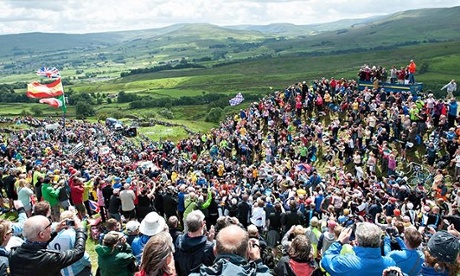
Philip Davies (MP for Shipley) has called for the CEO of Welcome to Yorkshire (Gary Verity) to be recognised in the next honours list. It's not that far-fetched; 2.5 million people watched Le Tour in Yorkshire, with the scenery and residents displayed to their best advantage. 

Despite some utter selfie-taking morons thinking they were more important than the race and causing crashes and potential harm to the athletes who have trained for years for the opportunity to participate, the British leg of arguably the world's greatest cycle race has been a resounding success.


5 Great Things about Le Tour in Britain:
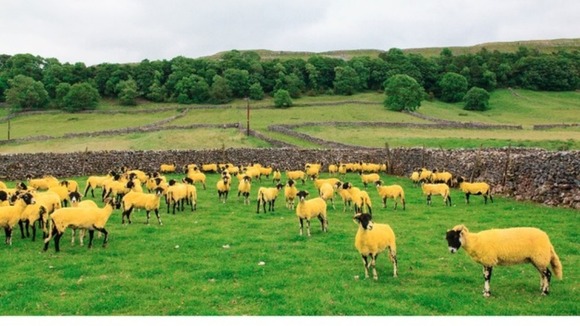
  1. Yorkshire: dry stone walls; green rolling hills; acres of moors; spectacular villages... and coloured sheep
  2. The history: just as the helicopter flies above the beautiful chateaux of France; so we got brilliant aerial shots of castles, colleges, stately homes and abbeys - stunning
  3. The crowds - the number of people who turned up to shout and support and add colour and enthusiasm was fantastic to see. And the road closures and the publicity and the all-round welcoming spirit can only bode well for the future of cycling in the country.
  4. London - the capital looks great with cyclists streaming through it, past the sights of Big Ben, Tower Bridge, the Tower of London and so many more
  5. The Red Arrows flypast at the beginning, with Ian Stannard in the back seat.

Thursday, 10 July 2014

2014 World Cup: Today's Talking Point - The Pain of Penalties


Penalties are like democracy, which, in the words of Winston Churchill, 'is the worst form of government, except for all the others.' For the neutral, they provide thrilling entertainment, for the team that wins, they are wonderful; for the team that doesn't they are crushing. And either way, you have to live with the result.

But what is the alternative? Knock-out games need a result. You could make the teams play on and on and on, adding further periods of extra time by the half hour until there is a result. This gives the opposition time to reply and sets a fair expectation - as in those interminable tie-breaks in tennis. You could go for the 'golden goal' option (this used to be called 'sudden death' but the term was deemed to have 'negative connotations' and removed from use in 1993) as FIFA have sometimes done.

This was basically a 'next goal wins' scenario whereby if the match was drawn at the end of normal time, there were two extra halves of 15 minutes played each way and if a goal was scored in this time then the game was won instantly. If not, the match then proceeded to penalties. Detractors complained that this led teams to play defensively (as if this were a bad thing) focusing on not conceding a goal rather than scoring one. 

Then there was the 'silver goal' introduced in 2002, whereby if a team scored in extra time, that half was concluded and the game was not stopped automatically, but if the goal had come in the first half, then the second half wasn't played. Furthermore, it was up to each tournament to decide which rules they were going to implement. Confusing? Yes, well that might well be why FIFA resorted to penalties.


Some say penalties are a lottery. Not really. If you are going into a tournament that may be decided on penalties (and a fifth of all World Cup knock-out matches since 1974 have been decided on penalties), then you practice taking them, and the side that performs best at penalties wins. This is proven by empirical evidence. 

England have been involved in three penalty shoot-outs at the World Cup; they have lost all of them. After their shoot-out defeat (by Argentina) in 1998, manager Glenn Hoddle admitted that his squad had not practiced taking penalties. Prior to the 2014 World Cup, England had lost more penalty shoot-outs than any other nation. Incidentally the teams that have won most penalty shoot-outs in the World Cup are Argentina and Germany. Bring on the final.

Wednesday, 9 July 2014

World Cup 2014: Today's Talking Point - The Case for the Defence


What else could we possibly talk about other than that defeat? Hosts Brazil, who haven't lost a home game since 1975, let in seven goals; five in nineteen minutes in the first half. The final score of 7-1 to Germany could have been greater. And every non-partisan supporter cheered for football.

The Brazilian team has been appalling in this World Cup. Their football has let them down; they have relied too much on Neymar and have left gaping holes in defence, as Germany exploited to their delight and Brazil's bemusement.

Brazil aren't the only ones; the defending at this World Cup hasn't exactly been spectacular. All the focus in the early stages was on Neymar, Suarez, Ronaldo, Messi, van Persie, Robben, and even Rooney, but no one bothered about what was going on (or not) at the back. The games in the group stages were largely goal-fests, which may have entertained the masses, but it didn't bode well for the future of football. It was clear that the teams that were going to succeed in this World Cup would be any one which paid equal attention to both ends of the pitch: bringing a fresh interpretation to the cliche, 'a game of two halves'.


But it was more than that. The tricks, flicks and flairs of traditional Brazilian football were infrequent in this tournament. Crowds have been turned off as the boys from Brazil have hacked, fouled, shoved, barged and kicked their way through to the semi-final. The fact that they have appeared to win more than their fair share of referee's calls has also looked ugly. It has been far from aesthetically pleasing, and football fans are unimpressed. And so there are very few regrets as the Germans go marching on. So long, samba; the party's over.