Friday, 15 March 2024

Friday Five: Ides of March

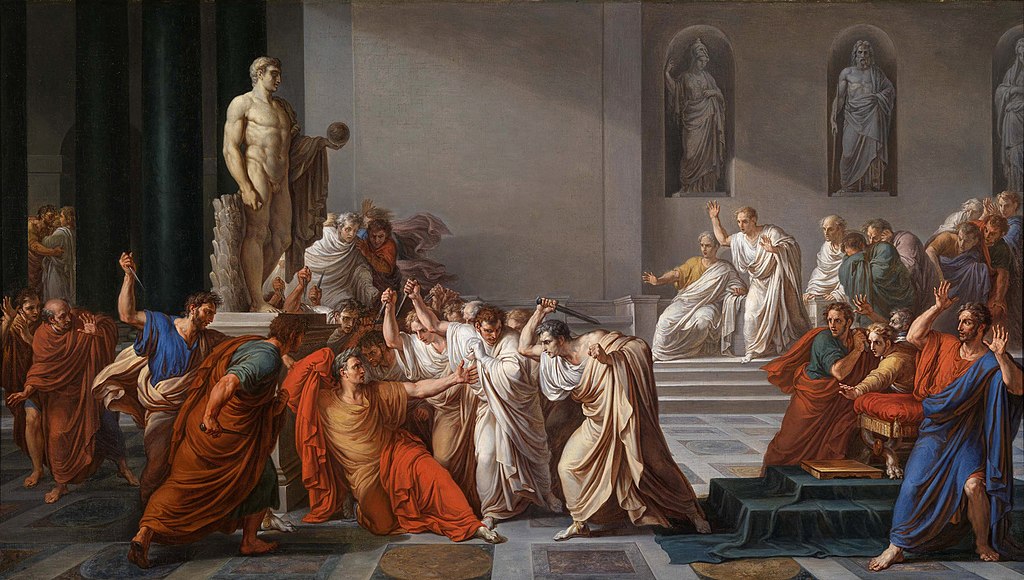
La Morte di Cesare (1805) by Vincenzo Camuccini
Well, today's the day that all self-elected senators should probably avoid temple steps, just in case all their so-called mates gang up on them and stab them in the back. Or so says Shakespeare, anyway. The soothsayer tells Julius Caesar on more than one occasion to beware the ides of March, but does he listen? No, he does not. And the rest, as they say, is history.

As with many people educated through the British school system in the 70s and 80s, I learned much of my history through Shakespeare plays. It was a great grounding for understanding the true definition of fake news, which allowed me to filter out a lot of the nonsense promulgated by white men talking about subjects they didn't really understand, but who had a following because they wrote a good speech, or got ghost writers to do it for them. In keeping with that theme, here are five Shakespeare quotes that relate to calendar dates.
  1. "Beware the Ides of March", The Tragedy of Julius Caesar, Act I, scene ii (15 March)
  2. ''And gentlemen in England now a-bed/ Shall think themselves accursed they were not here,/ And hold their manhoods cheap whiles any speaks/ That fought with us upon Saint Cripin's day."- Henry V, Act IV, scene iii (25 October)
  3. "Good morrow, friends. Saint Valentine is past: Begin these wood-birds but to couple now?" - A Midsummer Night Dream, Act IV, scene ii (14 February)
  4. "On Holy-rood day, the gallant Hotspur there,/ Young Harry Percy and brave Archibald,/ That ever-valiant and approved Scot,/ At Holmedon met,/ Where they did spend a sad and bloody hour." - Henry IV, Part One, Act I, scene i (14 September)
  5. Twelfth Night - Yep, the whole play. (5 January)

Friday, 8 March 2024

IWD Autumn Haiku


Like fruit, you say I 
bruise too easily, but you 
make me fall so hard.

Friday, 1 March 2024

Friday Five: Books Read in February

  1. The Other Slavery by Andrés Reséndez (Marine Books) - If you mention slavery to most people in America, they think of the despicable African slave trade. They may even consider the ongoing trafficking among Asians, Latin Americans and Europeans. While Andrés Reséndez does not for a second diminish these atrocities and horrors, he does want to bring the homegrown slave trade of millions of Native Americans to national and international attention. The book is scholarly and academic following the history and laws (or lack thereof) that he believes are largely unknown and should receive greater recognition. He argues that slavery rather than disease and misfortune is the true reason for the decimation of the indigenous population of North America. Covering Caribbean islands, Mexico and the early territorial governors of the U.S, this powerful thesis is, in the words of a considered review published in the Los Angeles Times, "one of the most profound contributions to North American history [ever] published."
  2. Painting of Indian soldiers from the Coritiba Province escorting Native prisoners, by Jean-Baptiste Debret

  3. Takes One to Know One by Susan Isaacs (Grove Press UK) - Corie has retired from her role as a counter-terrorist agent for the FBI to become a wife to federal judge, Josh, and a mother to his daughter, Eliza. Although she still does some consultation work for the FBI, she ostensibly leads the perfect suburban life complete with a dog called Lulu, a ‘cover’ job recommending Arabic literature to a publishing house, and weekly lunch meetings with fellow freelancers at a French restaurant. And she is bored senseless. So, when she suspects a member of the group of being up to no good – he always picks the same seat to watch his car, changes phones often and makes frequent interstate trips – she imagines that he must have a secret life, and she sets out to investigate. Are her instincts, honed by training at the Bureau, correct, or is she desperately trying to create some excitement, and Pete from packaging really is simply bland? I love the fact that some people made donations to Long Island charities by bidding to have a character named after them, which is a great idea. This is a very easy-to-read novel, which combines the excitement of law enforcement with the tedium of suburban domesticity. It may hurry to its conclusion, but the characters are warm and engaging, which makes them enjoyable company.
  4. The Midnight Library by Matt Haig (Canongate) - My sister's choice for the family book club, it has an easy-to-read style and an uplifting premise, suggesting that we can all have a second chance at life. It begins with Nora attempting to take her own life because she sees no future and is riddled with regrets, but she gets transported to a magical library where she has a chance to live out all those previous lives she wishes she could have chosen and realises that the one she has isn't so bad after all. And she gets the chance to go back to where she was and live it. It's very nice and tidy and a little bit twee, and completely unrealistic - she still has to return to the life from which there is no future, and most people who consider suicide really have no hope left. It is endorsed by the Daily Mail, which gives us an idea as to what to expect, and is clearly crying out to be made into a Netflix series. 
  5. George Whitman, proprietor of Shakespeare and Company
  6. Shakespeare and Company: A History of the Rag and Bone Shop of the Heart edited by Krista Halverson (Shakespeare and Company, Paris) - Shakespeare and Company is an English bookshop in Paris, run by Americans - originally Sylvia Beach and then George Whitman (descended from Walt), who oversaw its move to the left bank of the Seine, in the shadow of Notre Dame, followed by his daughter, also called Sylvia. The bookshop is an icon of Paris, frequented by locals and homesick tourists alike, myself included. This glorious coffee-table book is divided into decades and contains photographs, graphic novel images, copies of newspaper articles, historical content, and the autobiographies of the Tumbleweeds. The Tumbleweeds were people who came to stay for a couple of days and helped out at the shop in return for a bed (or sofa, or place on the floor) and two meals a day; George asked them each to write an autobiography of approximately two pages, which collection he intended to publish. He was an incredible person with an eccentric nature - he 'cut' his hair by singeing it with a candle, travelled the world, and believed that books, knowledge and sharing were the staples of life. 
  7. The Museum of Modern Love by Heather Rose (Allen & Unwin) - In 2010, an artist, Mariana Abramović, created an art installation, The Artist is Present, whereby she sat at a table in MOMA opposite visitors to the gallery, who had queued for the privilege - 1,554 people sat with her over 736 hours and more than 850,000 people observed from the sidelines. Marco Anelli photographed all the sitters and published a book, Portraits in the Presence of Mariana Abramović. Both Abramović and Anelli appear as themselves by permission in this novel. The rest is made up. It is a novel about the characters who sat or observed, and how the experience affected them, including Arky Levin, a film score composer whose wife is dying and who has legally requested he doesn't visit, although she permits her daughter to so do. Jane Miller is a recent widow who travels to New York and spends all her time at the exhibition - are all these people now connected? The novel addresses existentialist questions about human nature and art and whether either one can exist in a vacuum or whether we need to relate to common environment and shared experience. It reads like a performance itself and emphasises that its value is in the reader's reaction. 
Mariana Abramović and exhibition goers at The Artist is Present

Friday, 23 February 2024

Friday Five: Les Fameliars!

Back when we were in Ibiza (was that really almost a year ago? Oh, how I miss it), we came across statues and sculptures of a little sort of monster all over the place. The Fameliar is a little elf with a big ugly head, a big mouth and a terrible voice, which can only be found in the islands of Ibiza and Formentera.

A plaque at the foot of one of the statues explained, "according to tradition there is an ugly little being which, nonetheless, is capable of carrying out any job it has been given quickly and properly. The drawback is that it only knows how to do to things: work and eat. So, the only two words it knows are 'Feina o Menjar' (work or eat)! Anyone who wanted to have a 'fameliar' had to go under the old bridge of Santa Eularia on the Saint John's night with a black bottle, pick a certain flower that could only be seen on that night and place it into the vessel. Once it was well sealed, there was nothing special about the bottle but, as soon as it was opened, the 'fameliar' would appear, anxious and demanding work or food. The problem of the 'fameliars' is that they are so hard-working and they carry out the master's commands so fast that, once the job is over, they eat everything in the larder in the blink of an eye."

I know there are only four of them, but there are three pictures of one of them, so I reckon that works out. 

Tuesday, 20 February 2024

Prison Performance: Mad Blood Stirring


Mad Blood Stirring by Simon Mayo
Doubleday
Pp. 387

Simon Mayo’s first novel for adults concerns a relatively unknown incident about a massacre at Dartmoor Prison where American sailors were being held in 1815 after the end of the three year-year conflict between the United States and Britain. The peace had not yet been ratified and there were thousands of prisoners of war crammed into Dartmoor, frustrated, angry and turning to violence. This much is true, and the novel is packed with solid descriptions of prison life: crowded bunks; appalling food; general boredom; thoughts of escape and political intrigues; and the constant backdrop of fear and danger.

Inspired by true events, the detail is precise including the initial march to the prison, the labour of snow-clearing, the smallpox outbreak and vaccinations against it. The sailors are segregated by choice, with the black sailors in Block Four, where they sing gospel songs and perform plays which they take very seriously. King Dick ‘rules’ Block Four, and the Rough Allies attempt to rule the rest, with violence and intimidation.

Sixteen-year-old Joe takes on the role of Juliet in Romeo and Juliet that is to be performed with great passion by the inmates of Block Four, although they bowdlerize the text. The kiss between the lovers is fraught with danger partly due to the homosexuality (punishable by flogging and further brutality) and also because Joe is white, while Romeo, played by Habakkuk (Habs) Snow is black. The title of the novel is taken from the opening scene of Act Three of Romeo and Juliet, and here implies but the growing unrest in the prison, and the illicit feelings that Joe and Habs develop for each other.

Highlighting the theatrical elements, the chapters are divided into Acts, some scenes are presented as scripts, and there is a list of characters at the beginning. There are many characters and they are not all fully formed with some aspects that could have made great stories relegated to mere subplots, causing the novel to read a little like the first draft of a film-script, albeit in a well-defined setting.

Friday, 16 February 2024

Love the Show Steve! Friday Five: BBC Radio 1 DJs.


BBC Radio 1 played a big part of my formative years. It was my musical background; I felt comforted by familiar tunes and challenged by new ones. I defined my style through sounds - those I liked and those I didn't. The music made up my identity. There were the road shows, the drive time mixes, the morning routines, the chart release countdowns, the ridiculously catchy-jingles, the in-jokes and the wonderful lack of advertising. I didn't actually realise how wonderful that last point was until I started to listen to commercial radio and wished the station didn't have to keep being interrupted by the utterly banal - how naive I was not to know that was capitalism. 

Of course, it wasn't just the music; it was the personalities and their presentation. I learned a lot about mic technique and public speaking, just by listening to others. I learned there was a time to be controversial and opinionated and a time to let others speak their views. As this is was a public service broadcaster it was meant to be apolitical (as with all things which are supposedly non partisan, the right thinks it is too left and the left thinks it is too right), but as it targeted the 15-29 age group, it mainly focussed on 'youth issues' if it strayed into that territory at all.

Annie Nightingale
I'm mentioning it in the past tense because I stopped listening it to it when I left the UK in 1996. It is still going, as it has been since September 1967. Recently I have been thinking of it often, however, as several of the DJs to whom I used to listen have died, with the most recent being Steve Wright. So here, for Friday Five, I thought I would pay my respects to some of the great BBC Radio 1 DJs of the recent past (in alphabetical order). 
  1. Annie Nightingale (1940-2024) - one of Britain's trailblazing DJs died earlier this year and it was a great loss to the musical community. As the first female presenter on BBC Radio 1, she specialised in championing new, experimental and underground music. She hosted afternoon request shows, afternoon slots, evening shows, and current affairs shows. In the late 1980s she considered leaving radio after becoming disillusioned with popular music, but instead became interested and involved with acid house music from 1989 onwards, playing it on her Radio 1 show before it became mainstream. She travelled and performed as a DJ at festivals all over the world and continued playing house music on her show until her death. 
  2. Janice Long (1955-2021) - Janice Long (née Chegwin - big sister to Keith) presented a weekday evening show (Monday - Thursday, 7-10pm) featuring a mix of new music and current affairs. I used to listen to it as I did my homework (it ran from 1984-1987). She left the station in 1988 to have a baby, and was not offered a way to return, so she moved to Greater London Radio instead. It's her voice I remember most, as listening to it in my bedroom was an almost daily occurrence for me. 
  3. John Peel (1939-2004) - The longest-serving of the original DJs on BBC Radio 1, he broadcast regularly from 1967 until his death in 2004. He was an absolute inspiration and a devoted Liverpool fan. He chatted away on the radio about new bands to whom he had been introduced by his son, William. With his avuncular attitude and eclectic taste, he showcased a number of genres from pop, dub and reggae to punk, post punk, electronica, indie rock, extreme metal and British hip-hop. His radio show was noted for the regular Peel Sessions- four songs recorded by an artist in the BBC studios, many of which became definitive versions - and the Festive Fifty, which was he only countdown that mattered. When I lived in Manchester I would occasionally walk past him on Oxford Road as we both hurried to or from work/ class, and it would always make my day to be in the presence of greatness. 
  4. John Peel
  5. Mike Smith (1955-2014) - Mike Smith was the presenter of the weekday lunchtime show on BBC1 from 1983-4, but it was his stint on the breakfast show from 1986-8 that brought him to my attention. He was charming, friendly, chatty, and a comforting presence, one of BBC TV's main presenters at Live Aid in 1985, and a regular presenter of Top of the Pops. He mainly played chart hits and new music from mainstream bands - nothing startling - with a family-friendly approach. He also piloted helicopters and married Blue Peter co-presenter, Sarah Greene. He seemed like a thoroughly wholesome chap. 
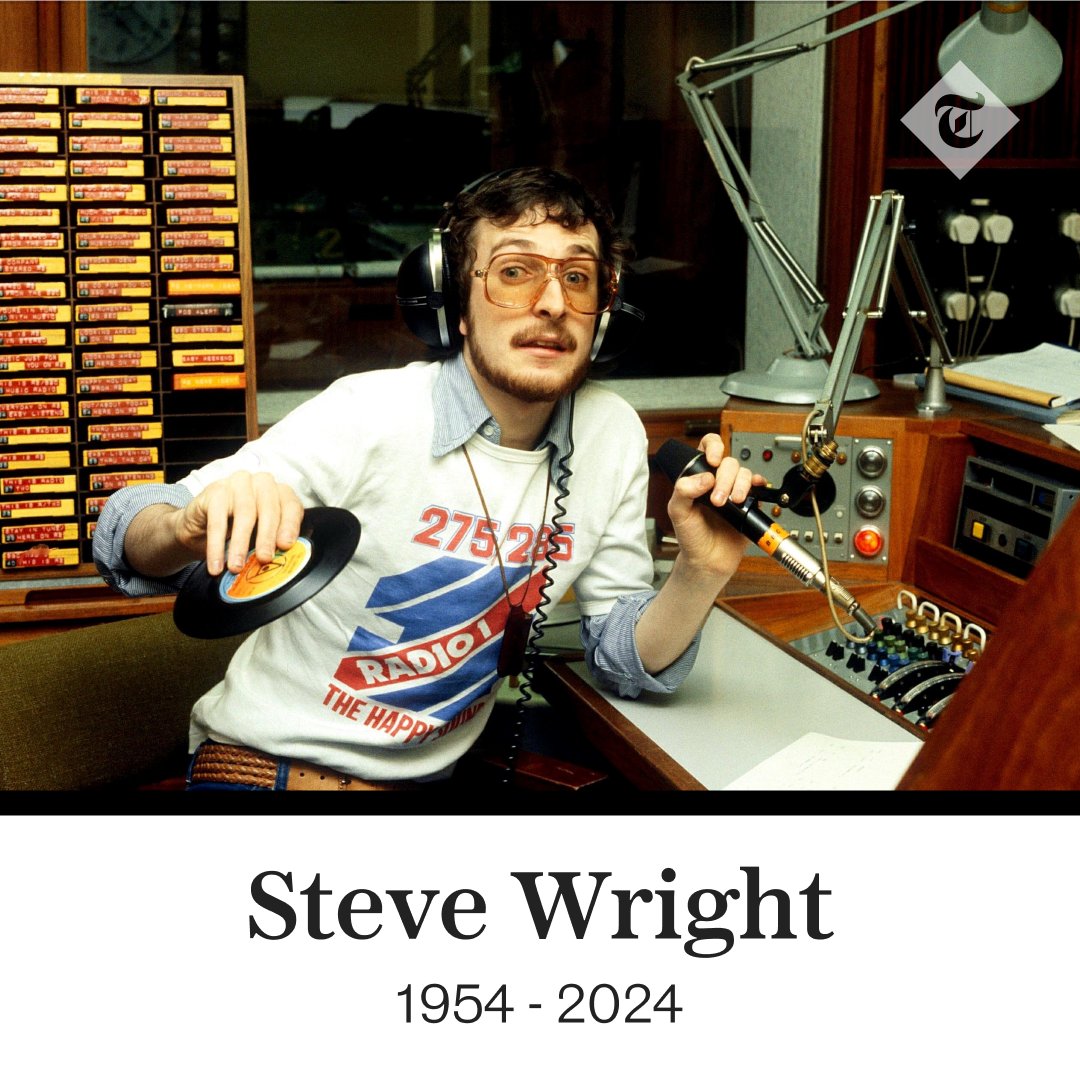
  6. Steve Wright (1954-2024) - Steve Wright was one of my childhood DJs, whose show Steve Wright in the Afternoon had a cast of characters performing irreverent skits, inspired by the style of his mentor Kenny Everett. The 'posse' included producers and radio staff who joined in with the spoof and sketches. The program ran from 1981 to 1993 and it was what we listened to on the bus on the way home from school. The style - known as the zoo format due to the general feeling of chaos - became legendary and defined what it was to be a DJ at that time. It wasn't enough to just play music; you had to be a personality as well and to entertain above all. As he said himself, "It's a tabloid newspaper of the airwaves - fast, fun and packed with info. Something for everyone."

Tuesday, 13 February 2024

A Refusal to Die of White History: Modewarre


Modewarre by Patricia Sykes
Spinifex
Pp. 90

Modewarre is the indigenous word for musk duck, a creature at home on land, water and air. Through her poetry, Patricia Sykes explores various histories and the boundaries between them which blur and blend. She splits the poems into three sections: House of the Bird, House of Water, and House of Detention, examining words and their connotations, dwelling on reflections, refractions and altered perceptions.

Naming things robs them of their magic and power, as we use “language, so impossibly cumbersome/ for discovering the true weight of things/ the grandmother would have known”. The literary fragments are almost Sapphic with physical and sensual meaning: “as always the modewarre/ places faith in its eggs/ yolk and the sun/ breed each other”. The strong bonds of belonging and connection to land go beyond words, until the frustration is clear in a poem such as eponymous, “to the interrogator who keeps asking/ ‘so are you still suckling on myths of place?’/ I say try the enigma address/ the bird who keeps vanishing in water –”

The poems recall the land and the life before the colonists came, and also the sheer incomprehension of the invaders dealing with the loss. In eupathy (right feeling of the soul) she sees the land from above as though flying with the eagle. “to talk now/ of whether this is still so/ or if the eagles in free flight/ are an option/ to speak of/ options, land, again/ once more/ not as that which was taken/ is un-ownable/ contracting and crowded/ but as lava shift/ the heat of a river/ always underfoot/ in a molten indifference/ to politics”. There are layers of knowledge contained in a word, such as the poem, ‘brid’, eight darkness in which ‘brid’ is the name given by Nyangangu, a Yolgnu artist of Northeast Arnhem Land, to her bird carving. “there, where you are,/ bred of earth, breeding sky/ working the uplift, wingbeat/ as if sculpting a refusal/ to die of white history”.

The world is a palimpsest and so is the brain – our thoughts and memories are malleable. Birds connect people and places, and are often totems for Aboriginal and Torres Strait Islander people, helping to define kinship with people, their Country and nature, connecting to the roles and responsibilities of a mob, offering protection and foreshadowing danger and momentous events. This connection extends throughout the world as the birds migrate along their own songlines.

Means of expression are insufficient, with even mechanics of speech and typing unable to capture the richness of the language. “this keyboard’s/ tireless tap-tap mouth/ which cannot voice/ the interior ‘n’ in Nyangangu/ the one with the tail/ the sound of ‘ng’ in singer”. And yet the words can be damaging and belittling. “how the eyes like linguists are never satisfied/ how they’ll poke and pry into any lexicon”, wanting to preserve and capture, destroying the natural.

The poems in House of Water are concerned with childhood, disease, death, invasion, cattle, birds, and bunyips. Roads are built over traditional lands, only to crumble and fray at the edges demonstrating their impermanence in the liminal space. “what never was field/ become paddock become/ fences become livestock/ the cattle the sheep/ foraging for the hoofprints/ they lost the last time/ they departed a shore”.

In the House of Detention, the poems move on to highlight migrants trapped in refugee camps, prisoners in cells, wives in marriages, women in motherhood, caterpillars who will one day be butterflies, political constraints, and people wanting to be “at home in every world/ where exile does not exist”. In great-aunt narrative among the excised lands, Sykes leans upon the double meaning of refuse (verb and noun) as it relates to denial and pollution: “oh my Canberra…/ high city of presumptive cleanliness/ among the dirty waters exuding from the workplaces/ the smell of your refusal laws”. She uses a rare capital letter in this poem, which must surely be ironic as her punctuation is clean and almost entirely absent.

Modewarre is a great collection of powerful fragments, connecting words to the echoes of previous language both spoken and unspoken. It is a reminder that we are merely one of millions of moving parts that comprise our environment, expressing a concern for what will happen to the delicate balance once we form a pyramid and place ourselves at the apex.