Friday, 1 May 2020

COVID-19 Friday Five: Podcast Listening


I have a colleague who became a friend, who used to start many conversations of a morning with, "I was listening to this podcast..." and she would proceed to regale us with an 'interesting fact'. Obviously, the idea of whether something is interesting or not is highly subjective, so we decided in the office that we would be the judge of the fascinating factor of her shared information. Her name is Lyn so we would ask her if it was really interesting, or just 'lynteresting'. I miss seeing her in the office, so in her honour, here are five podcasts to which I have been listening a lot in the coronaverse (this is in addition to my usual favourites).


5 Current Podcasts:
  1. You're Dead to Me (BBC Radio 4) - "The history podcast for people who don’t like history… and those who do. Greg Jenner brings together the best names in comedy and history to learn and laugh about the past." Recent episodes have seen the Horrible Histories author and historical consultant tackle topics such as Eleanor of Aquitaine, The History of Chocolate and Neanderthals (Tim Minchin was the featured comedian on that one).
  2. Is it Just Me (acast) - "Each week Jo Elvin, James Williams and a celebrity guest debate the funniest, weirdest and most pressing dilemmas: from social media to mental health, to, erm… bra washing. Are you alone in your strong opinions on trivial stuff? Tune in and find out!" Guests have included Ben Miller, Claudia Winkleman, Marcus Wareing and Lisa Snowdon.
  3. The Infinite Monkey Cage (BBC Radio 4) - "Witty, irreverent look at the world through scientists' eyes. With Brian Cox and Robin Ince." In the last few weeks I have both learned things and been entertained by discussions on quantum worlds, coral reefs, fire, and conspiracy theories - among the featured guests on these podcasts, comedians (Shazia Mirza; Marcus Brigstocke; Ed Byrne; Katy Brand) sit alongside marine biologists, physicists, psychologists, and forensic chemists. 
  4. Ladies, We Need to Talk (ABC) - "a podcast for women, by women, that isn’t afraid to dive head first into the tricky topics we often avoid talking about. Join host Yumi Stynes as she tears open the sealed section on life. With sensitivity, personal stories, and serious smarts, this is for women who feel the squeeze between work, their private life, and their pelvic floor." This podcast addresses a variety of issues about which you might have wanted to know but been afraid to ask: erotic literature; toxic mums; body image; coronavirus anxiety; how to make friends as an adult, to name but five.
  5. Evil Genius with Russell Kane (BBC Radio 4) - "It’s good, bad, ugly - and very very funny. Changing the way we see heroes and villains in history." No (deceased) subject is safe from Russell Kane and his panel of guests as he detonates 'fact bombs' and forces them to make the reductive choice of evil or genius about icons from Emmeline Pankhurst to Pablo Picasso; Winston Churchill to Joan Crawford; Enid Blyton to Albert Einstein. You thought you knew them? Think again. 

Tuesday, 21 April 2020

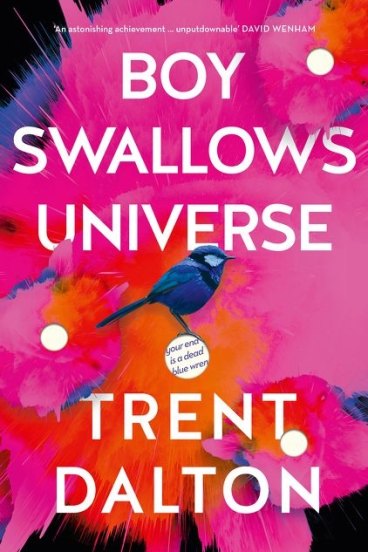
One Trick Pony: Boy Swallows Universe


Boy Swallows Universe by Trent Dalton
Fourth Estate
Pp. 471

Set in Brisbane in 1985, this novel focuses on a boy, Eli Bell, and his terrible life. His father is absent; his drug-addicted mother is in gaol; his brother, August, doesn’t speak but writes words in the air with his finger, predicting things he couldn’t possibly know and that don’t make any sense; his stepfather is a dealer; and he’s surrounded by violent criminals. It is reminiscent of Bridge of Clay in style, where a young boy narrates but with a much older voice than the teenage kid he is meant to be.

Eli seems anxious to show off his disadvantage; he is brought up by drug-dealing thugs and potential killers, and told many prison stories. At one point his mother’s boyfriend drags her by the hair down to the dog kennel and forces her to eat their food from the dog bowl; at another he has his index finger chopped off with a cleaver. Referring constantly to the seedy underside of life and proudly intent on exposing the dark side of the country,, his unrelentingly grim descriptions sound like a kid trying to be hard-boiled, thinking he’s Holden Caulfield and hiding behind a tough exterior.

The style constantly gets in the way of the story, to the point that it is tedious to follow. Dalton writes in the present tense, in frequently overblown prose, with short snatches of description that aren’t actually sentences. “This room of true love. This room of blood. Sky-blue fibro walls.” The many full stops do not create emphasis, but merely sound like empty aphorisms; one could try to work out whether they mean anything, but mainly they just sound like an advert for carpet. Many of the references are to male narratives he probably wouldn’t have read: Ken Kesey; Henry Miller; Papillon by Henri Charriere; Steinbeck’s The Grapes of Wrath; Patrick White; Hermann Hesse; John Le CarrĂ©; Joseph Conrad; Hemingway and Herman Melville.

There are also allusions to The Wizard of Oz and The Jungle Book, and a scene in which Eli escapes from hospital by getting another child patient to create a diversion, which is his take on the escape from One Flew over the Cuckoo’s Nest. Eli’s mute brother, August, writes words in the air: Your end is a small blue wren; Caitlin Spies. These all, obviously, turn out to be prophetic. Eli ruminates, “Maybe we’d all be much more effective communicators if we all shut up more.” Ooh, deep!

Eli writes to Slim’s friends in prison, and Slim (his babysitter and a previous criminal who served time) advises him to put details into the letters: “The boys appreciate all that detailed daily life shit they don’t get any more.” Eli hones his observation skills because this builds up knowledge, which leads to power. It is, also, however, monotonous and smacks of product placement. The number of times he mentions the brand of his shoes and tracksuits; he could be sponsored by Dunlop and Adidas.

He thinks of his mother as a saint or an angel, but she’s a dealer and a junkie who winds up in gaol. There is a sentimental view of mothers which is familiar from stock criminal narratives. His father (Robert), Slim (Arthur) and Lyle are men who teach Eli wisdom whereas women don’t teach him anything; they are mothers, nurses, and love interests. He is well aware of the toxic masculinity that surrounds him and believes that “every problem in the world, every crime ever committed, can be traced back to someone’s dad... Mums maybe too, I guess, but there ain’t no shit mum in this world that wasn’t first the daughter of a shit dad.”

All of the chapters are introduced with three-word headings such as Boy Writes Words, Boy Receives Letter, Boy Meets Girl, Boy Seeks Help, Boy Parts Sea, Boy Steals Ocean, Boy Conquers Moon. The reason for this becomes apparent later when a newspaper editor asks Eli to describe his story in three words: Boy Swallows Universe.

The novel certainly contains a lot of detail, is grimly pessimistic and, although Dalton claims it is a love story, it is more of a tirade. He may claim that love and family is the answer rather than drug addiction, but he has a good wallow in poverty porn before he reaches that conclusion.

Wednesday, 15 April 2020

COVID-19: We Aren't Gathered Here Together


Last weekend it was Easter. I am a 'wishy-washy Anglican' (not actually my words, but I have been called thus) and only really attend Church at the major religious festivals - Christmas, Easter and Whitsun being the big dates in my calendar. Of course, this year I could not go to Church - no one can - and I missed it. I missed singing the songs and saying the prayers; I missed turning to my fellow members of the congregation and wishing them peace and good will. And I missed them doing the same for me. I missed that communal feeling.

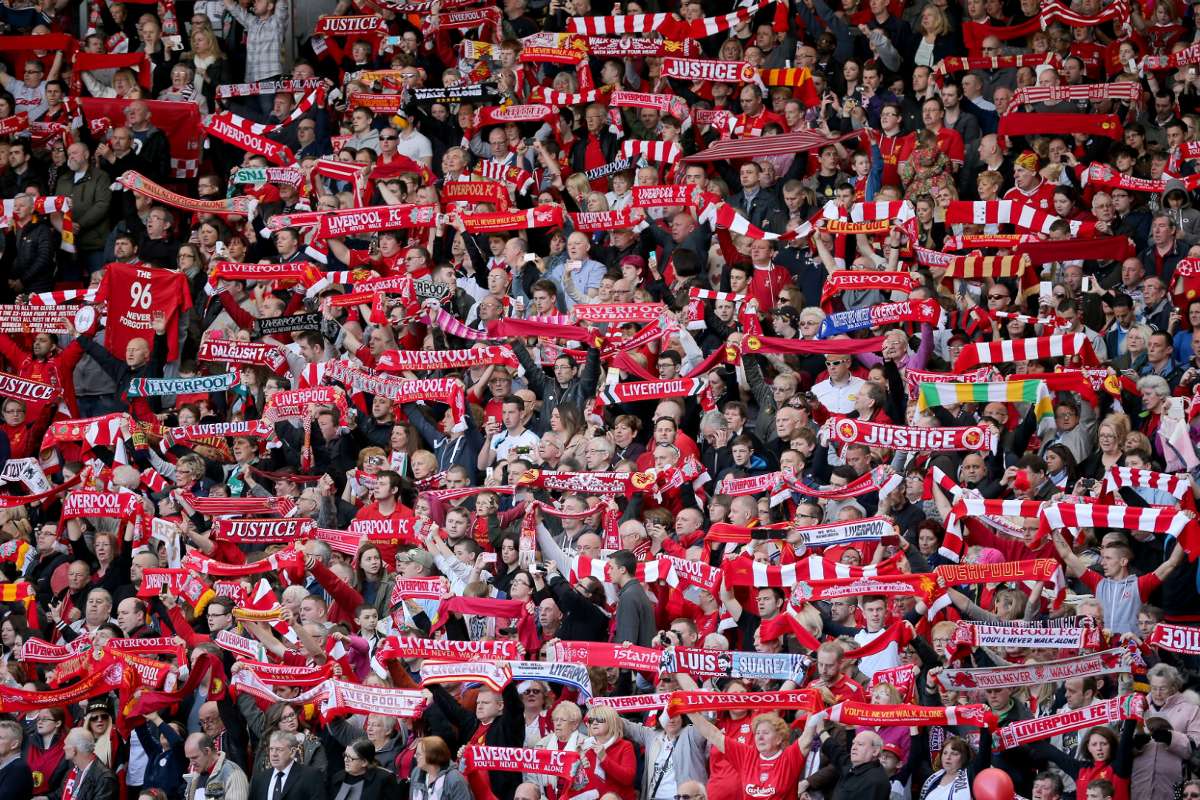
For the same reason, I love watching sports and theatre; I enjoy a shared experience. Knowing that you feel the same thing as others is a wonderful thing. When I breathe in the hallowed turf of Anfield, it is a spiritual moment; all the home players and supporters know what I mean - we stand and sing together and no one cares how out of tune we are; we are in time. Our time. Any true fan will tell you the same (although they will worship at a different shrine). 


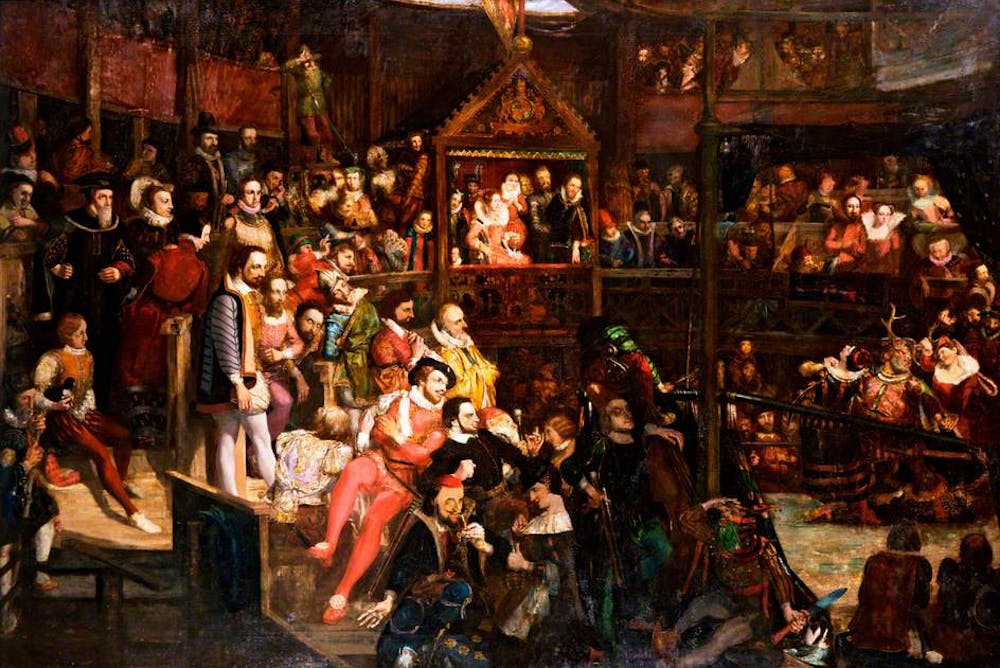
When the curtain raises on the stage and everyone takes a collective breath, we are all waiting to see what unfolds together. This moment will never be repeated - every performance is different - and we know we are privileged to witness it. And when the curtain falls and people applaud, they do it together. I have been part of a cast that received a standing ovation. It was magical and unforgettable. We did it for the audience and the audience appreciated us; and we were one. It was incredible.

I like listening to a band, but I prefer going to a gig or a festival. I don't need to then hear this gig again; I'm not a fan of live albums because generally the sound quality isn't as good, and the whole point is the being there. I am pleased the National Theatre, The Globe and the RSC are screening some of their performances so we can all enjoy things that we couldn't otherwise see - but we are still watching them alone. The roar of the greasepaint and the smell of the crowd is missing. (Yes, that was deliberate.)

'Queen Elizabeth viewing the performance of The Merry Wives of Windsor, at the Globe in Merrie England' by David Scott
I like a drink as much as the next person. But there's a reason I go to pubs and clubs, even if the beer is often ridiculously overpriced. I like the atmosphere of sharing things with like-minded folk. Restaurants and cafes are better when they're busy (not cramped and heaving full, but with a low-level hum of noise). Silence is good when it is shared. Have you had a moment's silence in public? Then you know what I mean: there is nothing more moving than a collective memorial. 

Over the last few weeks I have held many on-line conversations and 'attended' conferences and meetings; I have done group trivia quizzes and play readings; I have watched re-runs of football matches and 'live' theatre. But I have missed the physicality. I will stay at home, and I will practice the physical distancing, because it saves lives and that's what matters. But when all this is over, I will find my flock and I will join them again, and we will sing our songs. 

Because it may be elitist; it may be exclusive; but being there is everything.


Friday, 10 April 2020

Friday Five: Easter Cross-Stitch

Everyone who knows me, knows that I have ideas and like to be creative. They also know that I never send things on time. I delivered one of these today, the rest will be late. Oh well, it's the though that counts, right? Happy Easter!


Thursday, 9 April 2020

Small Town Boy: The Ballad of Barnabas Pierkiel


The Ballad of Barnabas Pierkiel by Magdalena Zyzak 
Henry Holt 
Pp. 269

The narrator of this tale is our guide to the tiny town of Odolechka “located so far from the sea and everything else that nearly no one had known it existed, that is, until everyone knew at once.” In a cross between Borat and Gogol, she mocks the town and all the inhabitants with a gentle satire that points out both their limitations and pomposity. The parishioners and villagers hate each other and are mainly concerned with eating sausages and salted herrings. Our eponymous hero is seventeen and lazy; obsessed with Roosha, the gypsy woman, and his own appearance.

Odolechka does not have much to recommend it. Indeed, when a German spy (with the wonderfully unsubtle name of Boguswav) arrives by parachute and quizzes the mayor and the police chief about their town’s assets, they proudly show him the highlights: an abandoned barracks; haylofts; straw stacks; the windmill; the abandoned string factory; “the scarecrow in the corn field by the wheat field by the edge of town”; “our split oak tree, where Kashak crashed his bicycle” the scorched bootlegging barn; hectares and hectares of cabbage fields; some picket fences; and a well with four bricks missing.

In the true style of a picaresque novel, the town is populated by simultaneously dull and colourful characters, including the police chief who is so fat he can barely squeeze between the church pews, and the mayor who is not much thinner. There is an entrepreneur with a motor vehicle (the only one in the village) a doctor and his phlegmatic wife, and Kumashka, the drunken priest, concerned with minor points of scripture.

Much of the humour comes from the fact that the author claims this is a poor translation, while using specific expressions and complex vocabulary, which has the reader rushing to a dictionary. For example, at one point in church, Barnabas was “leaning on a splintery pilaster in the narthex” and when there is nothing to counter the religious fervour of Kumashka, “The speechlessness of the laity was so entire that borborygmus here and there was heard.” Throughout the narrative, she deliberately deconstructs and draws attention to the artifice of the novel, and frequently loses track of the main narrative, trailing off after other non-entities, only to “return to our hero, whose perspective the negligent author keeps abandoning.”

The quixotic folk tale elements cease abruptly, and a realistic WWII conflict ensues which none predicted. Zyzak’s tale is a blow to complacency. The fictional, bumbling, rural town of Odolechka and inhabitants are mocked, but the town is now destroyed by war. As such it represents a “touchstone for a hundred towns” near the Polish/ German border. We are rocked by sadness for a traditional town we never knew, but also remembrances of real residences that were similarly obliterated. By weaving a tale of froth and humour before ripping it apart with brutal force, Zyzak teaches us a lesson we cannot and should not ignore.

Tuesday, 7 April 2020

COVID-19: Keep Your Distance


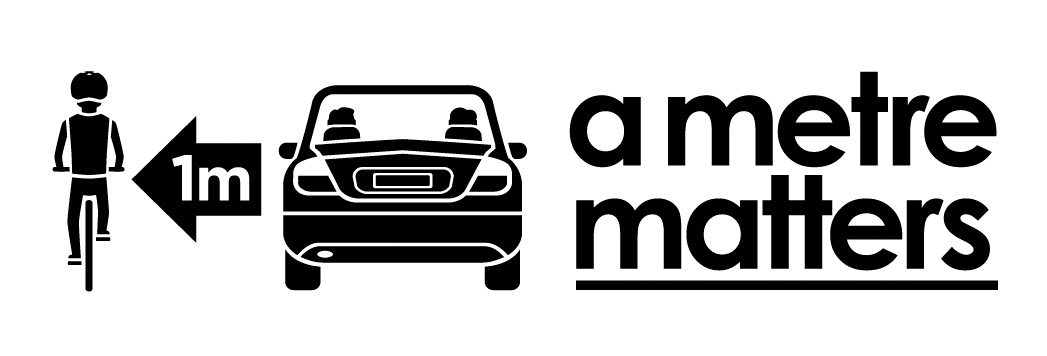
Cyclists have long known that a metre matters. Launched in 2009, the Amy Gillett Foundation's A Metre Matters campaign focuses on advising drivers how to pass cyclists safely. The research and evidence shows that when passing cyclists drivers need to allow a minimum passing distance of one metre (or 1.5 metres in speed zones over 60km) to reduce the number of cyclist fatalities, Over the past few years this recommendation has become law in several Australian states. 

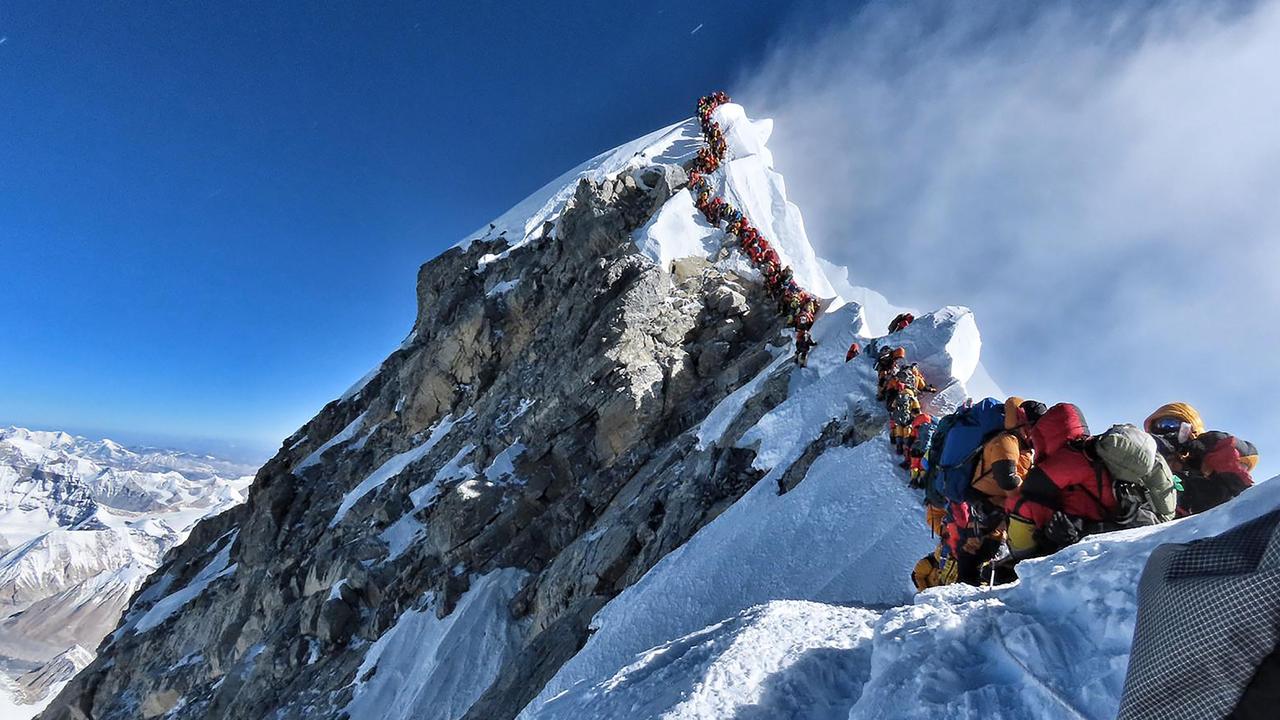
Due to COVID-19 and the fear of infection, in Australia we are meant to be practicing physical distancing, which includes keeping 1.5m between you and another person to help to stop the spread of the virus. In the U.K., this recommended distance is two metres - I'm not sure who calculates this distance and on what exact science it is based. But we get the picture; back off buddy. 


Whereas people are pretty good at observing these measures in shops and work spaces, I have noticed they are not so compliant when it comes to exercising. I have a handful of regular routes that I walk, jog or cycle four-five times week. On my usual walk up Mt Painter I see maybe a couple of other people; last week I saw 49. The same sort of figures are true when jogging around Umbagong Park or cycling trails in Black Mountain. Great. I'm all for people getting out and about to get their exercise, and this is a wonderful country with space for everyone to share. 

But, can we still please adhere to the physical distancing guidelines? I know many walkers wear earphones so if I am coming up behind them, I feel it is up to me to move out the way. If a cyclist is approaching from behind and really feels that they can't move out of the way, then they should alert the person in front to their presence (in the ACT it is mandatory for a bike to have 'a warning device such as a bell'), unlike the person on the e-bike (don't get me started) who overtook me while I was jogging within a foot with no previous indication. 


I don't care who comes here more regularly (it's me), but surely people must realise that we can't share the path in the same way as we used to, and be prepared to give way. I would expect, what with this flurry of exercise being a new thing for some and people not used to the etiquette yet, that when it comes to a case of who blinks/ moves out the way first, it would be about 50/50. Remember that walk I mentioned last week with the 49 fellow folk out enjoying the fresh air and the exercise? Guess how many moved out of my way rather than holding their line on the narrow path. One would expect approximately 20, right? None. Not one person thought they should yield. I felt like I was fighting a battle and losing every single time. I know it's not about winners and losers, but that was ridiculous. It's about compromise, surely? 

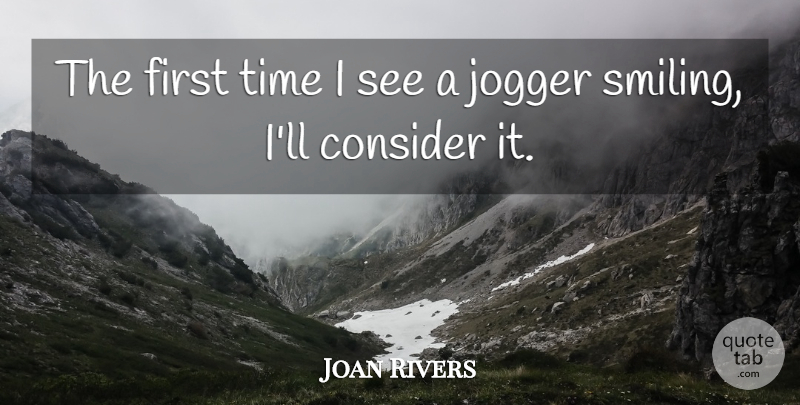
And another thing, we are still allowed to smile at each other and say hello. You can be social while maintaining physical distance. As far as I am aware coronavirus is not transmitted through eye contact. So, if you're new to this getting out for a walk/ run/ cycle malarkey, welcome. And please play nicely. 

Saturday, 28 March 2020

COVID-19: Under Pressure

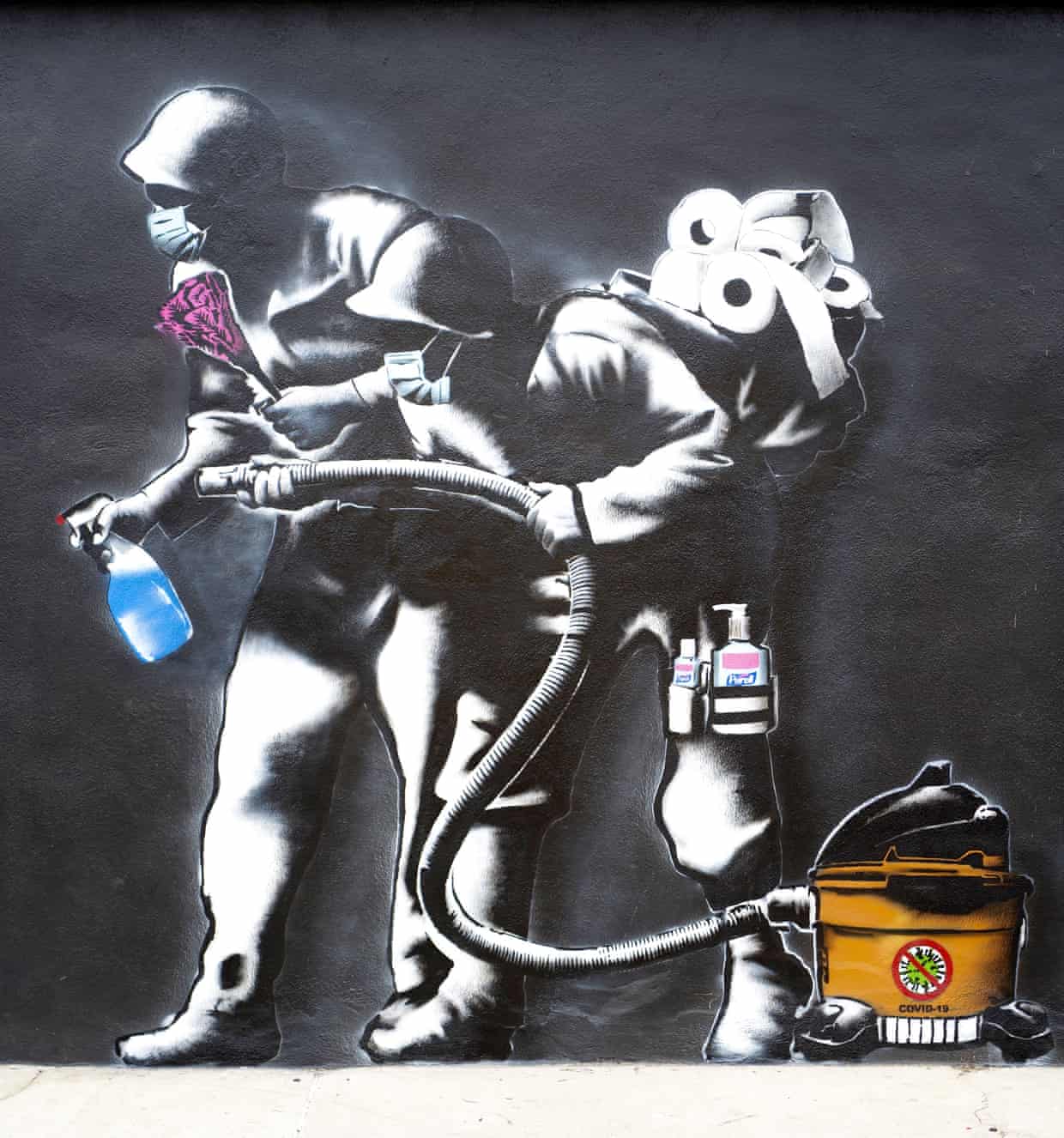
Street art by @hijackart
There are posts doing the rounds on social media of how this enforced isolation might be good for some of us. People are proposing that we could take this opportunity to create a new work or learn a new skill. I have seen suggestions that people could paint a picture, learn a language, master an instrument, take up horticulture, or improve their culinary skills. Several well-meaning people have asked if this is not the perfect time for me to write my second novel.

The short answer is 'no'.

My fist novel took me about 25 years to write. A lot of that was research, and a lot of it was reflection. To do this I need to feel safe and have a routine; an acknowledgment that if things don't go well, or if I unearth something painful (believe me, memories of death, bombs, muggings and other trauma are not things I deal with easily), I will be able to mentally and emotionally decompress in my chosen environment (a walk in the hills; a swim in the ocean; a pint or two in the pub with my friends). This is clearly not the case at present.

I cannot speak for everyone - there are far too many people purporting to do that at present for my liking - so I shall speak only for myself. The current situation is causing me extreme anxiety. I cannot sleep. I am having frequent panic attacks which cause shortness of breath and nausea. I have a constant headache and am permanently fatigued.  

I worry. I worry about my health and that of my husband (who, performing an essential service, must leave the house every day). I worry about my family - none of them live in the same country as me and I'm not sure when (and in some cases if) I will see them again. I worry about my friends, in different countries around the world with different governments taking different precautionary measures (or not, in some cases). I worry about my community - if I don't support it, will there be one when all this is over?  I worry about losing my job. If there is no community and there is no work for me to do, how can I continue; how can I support anyone else? I worry that I am not being a good enough wife, daughter, sister, friend, neighbour, citizen, employee... when did this turn into a competition?

I try not to think too deeply about anything because I will cry, so I am currently existing on a superficial level, or a submerged one. I do not feel safe. I do not feel secure. I know I am lucky to have a house with a garden and access to fresh air and open spaces. I know others are in a far worse position than me. Anyone who has ever suffered with depression will tell you that this doesn't necessarily help. It makes me feel selfish for having these concerns, and that makes me feel like a bad person. It's a very dark vortex into which I do not want to be drawn.

So, no, do not expect anything creative from me at this time. My imagination is not in a good space. There is too much pressure to perform - and no good performances come from fear.