Friday, 27 December 2019

Friday Five: Top Theatre from 2019

Christopher Samuel Carroll performs Icarus 
As I state every time this year, this list can only represent the theatre that I have seen. I have heard good things of lots of other productions that I didn't get the chance to attend, but here are my top five productions of 2019.

5 Top Theatre Productions of 2019:
  1. Icarus (produced by The Street at Street 2) - Written and performed by Christopher Samuel Carroll, this is an amazing piece of physical theatre. It is wordless but with a rich soundscape and highly effective lighting that scales the heights and plumbs the depths of human nature and our relations with each other. The crafty re-imagining of the myth is both epic and domestic with moments of humour and great pathos that kept me spellbound for the hour-long duration. 
  2. The Miser (produced by Bell Shakespeare at The Playhouse, Canberra Theatre Centre) - Frothy, frivolous and farcical, this adaptation of Moliere's The Miser is an utter delight. The fresh translation sparkles with witty rhyming couplets and cutting dialogue. Set and costumes are exquisite, and the scene changes are seamless and a part of the plot. Some of the deeper nuances and themes are missed in the superficial fast-paced treatment of the text, but overall it is a lot of fun. 
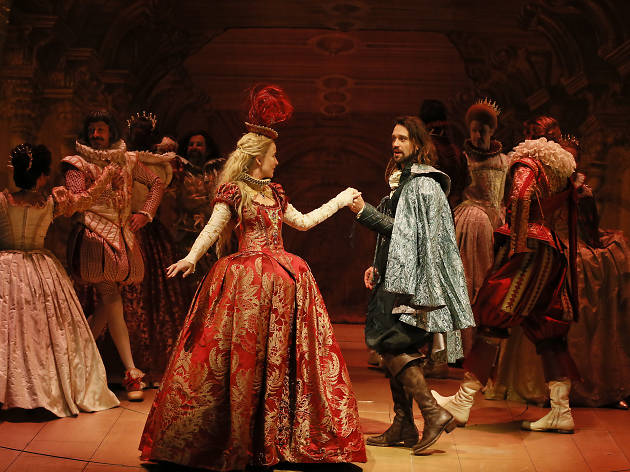
  3. Shakespeare in Love (produced by The Melbourne Theatre Company at The Canberra Theatre Centre) - Sumptuous production values combine with an earthy, bawdy to make this one of the best non-Shakespeare-written Shakespeare plays on stage. I enjoyed the film from which it is adapted, but the theatre is its natural home. There are actors acting actors; there are beautiful lines of the bard's which are sublime even out of context; there are lovers and duels and taverns and playhouses; and there is a dog. What more could you want?
  4. Claire van der Boom and Michael Wahr in MTC's Shakespeare in Love
  5. The Irresistible (produced by Side Pony Productions/ The Last Great Hunt, The Playhouse, Canberra Theatre Centre) - If I had to sum this up in one word, it would be 'odd'. Nominated for the 2018 Helpmann Award for best play, it combines parallel narratives and voice modulations to tell a multi-layered, somewhat disturbing futuristic narrative with roots firmly set in reality and tendrils reaching into the realms of the surreal. Two performers embody a number of different characters across a wide range of ages and temperaments. If you want to challenge your perceptions of traditional narrative drama, this is one for you. 
  6. A Day in the Death of Joe Egg (produced by Trafalgar Entertainment, Trafalgar Studios) - Inspired by the author (Peter Nichols)'s own experience of raising his daughter who has severe cerebal palsy, the play, which was written over 50 years ago, bears up in this brilliant new production. Actors talk to each other but frequently break the fourth wall to explain their actions to the audience and reveal details of the past which have led to this point. The daughter, Josephine, is played by Storme Toolis, with the same disability as the titular character and the first time an actor with a disability has played this role. It's funny and moving in the way that black humour can be when done well - it makes us uncomfortable; and so it should.
Storme Toolis, Claire Skinner, Clarence Smith, Toby Stephens and Lucy Eaton in A Day in the Death of Joe Egg

Tuesday, 24 December 2019

God Help Us: Winter


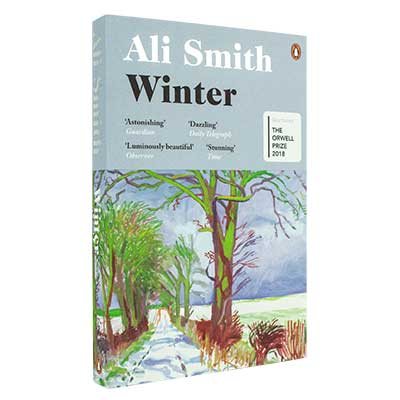
Winter by Ali Smith
Penguin
Pp. 322

Ali Smith’s seasonal quartet began with Autumn, published last year, and continues here with Winter. The subject is quite different but many of the themes are familiar. It is written in a continuous fluid style, but with short sentences and without irksome stream-of-consciousness. The novel embroiders snatches of literature and legend into a rich tapestry: a retelling of Dickens’ A Christmas Carol for our times. Dickens opened his festive novel with the words, “Marley was dead, to begin with. There is no doubt whatever about that.” Smith riffs on this idea. “God was dead: to begin with. And romance was dead. Chivalry was dead. Poetry, the novel, painting, they were all dead, and art was dead. Theatre and cinema were both dead. Literature was dead. The book was dead.”

So, what’s left? An ageing woman called Sophia imagines a child’s floating head to keep her company. She is visited by her son, Arthur (Art for short), who writes a blog called Art in Nature, which his ex-girlfriend, Charlotte, hates because it isn’t political. He explains, “What I do is, by its nature, not political. Politics is transitory. I watch the progress of the year in the fields, I look closely at the structures of hedgerows. Hedgerows are, well, they’re hedgerows. They just aren’t political.” Not wanting to admit he is alone, Art pays Lux, a girl he spotted in a bus-stop, to accompany him and pretend to be his girlfriend. When Sophia appears to be very ill, Lux contacts her estranged sister, Iris, to whom she no longer speaks. Iris turns up on the doorstep and recriminations and family resentments rise to the surface. The names with their connotations of sleeping heroes, guiding light and Greek gods are all pertinent.

The treatment of nature is centre stage – if Autumn was about Brexit; then Winter is about the environment, and the disasters destroying the planet and humanity. Iris is politically motivated, and the sisters dredge up memories of the Greenham Common protests, about which Smith seems almost nostalgic. She suggests that individuals can still make a different if they work together, as topics range from the Grenfell Tower to the insistence on stopping migrants; the political becomes personal and vice versa. The novel contains CND songs, and 1960-style rhymes about poisonous gasses and noxious chemicals. Horrifyingly, people are crowdfunding to raise money to stop rescue boats from helping refugees.

Having been impressed by Cymbeline, Lux originally came to England because it is the land of Shakespeare. In an obvious political metaphor, she says, “If this writer from this place can make this mad and bitter mess into this graceful thing it is at the end, where the balance comes back and all the lies are revealed and all the losses are compensated… then that’s the place I’m going. I’ll go there, I’ll live there.”

Language and communication are themselves under threat in this modern world. To glean information, people no longer talk to each other; they google things and the results are listed. Just as there is a disembodied floating head in Sophia’s imagination, words are split in half to create new meanings: get ahead; get a head; “I’m nobody’s child. I’m no body’s child.” Art examines the concept of snow and the connotations of the word ‘snowflake’. In one section, Art asks Lux a series of questions, and then we see her side of the dialogue separately as she answers them. Further indications that cohesive dialogue is breaking down is seen in parliament when a man barks like a dog at a woman who is trying to make a speech.

This is a novel of stories and interpretations. We are given tales of fertility; the Green Man, Sir Gawain and the Green Knight, and defenders of past rituals and natural bounty. Smith combines the richness of the past with the frustrations of the present and a glimmer of hope for the future, believing that communities and compassion can overcome division and isolation. Winter is an incredible achievement – it was written to reflect the immediacy of the time (even the text is not justified, implying a sense of urgency), yet it feels fresh rather than hurried. It ends with another echo from A Christmas Carol: “In the middle of summer it’s winter. White Christmas. God help us, every one. Art in nature.” It’s enough to make the reader want to take to the streets.

Friday, 20 December 2019

Friday Five: Cross Stitch Designs

To help with general mental health and well-being, I am still doing cross-stitches; here are another five of my latest cross-stitch creations. The first three patterns and explanations are taken from Really Cross Stitch; for when You Just Want to Stab Something a Lot by Rayna Fahey.


Poverty, war, climate change, corruption, slavery, refugees, indigenous rights, education, housing, health care, child care, food prices, domestic violence, prison reform, gun control, equal pay, trade agreements, tax reform, chemical warfare, land mines, pollution, drilling, fracking, mass control of the population through the media; I could go on FOREVER.

It'd be a lot quicker and more concise just to stitch this pattern. But don't temper your rage. As Gloria Steinem once said, "The truth will set you free, but first it will piss you off."


"We will be the thorn in your side. The glass in your bread. The pain in your ass." - Anti Racist Action

The needle in your eye...

Last time I checked, there were a grand total of zero feminists advocating for the rounding up of men and stuffing them into gas chambers. There are, however, thousands of white supremacists organising around the world for the elimination of interesting people. Standing up against fascism is really important (see: the twentieth century). They're not normally a smart bunch so it's not actually that hard.


Lobbyists spend literally billions of dollars a year to keep the world's politicians on the side of greed. Every time we optimistically sign a petition, there's ten of these bastards lined up to open up nee loopholes.

But these times are indeed a'changing. We are taking back our democracy and turning the tables on lobbyocracy.

"It took this horrific moment of darkness to wake us the fuck up. It seems as though we had all slipped into a false sense of comfort, that justice would prevaila dnt at good would win in the end. Well, good did not win this election. But good will win in the end." - Madonna, Washington Women's March


I made this for a friend for her birthday. We watched The Handmaid's Tale and avidly discussed each episode after it had aired. This particular design was inspired by one of those church signs outside the Gosford Anglican Church equating repressive legislation with the fictional regime of Gilead in Margaret Atwood's tale of dystopian society. And also, by the fact, that according to the TV series it spawned, 'Muffins mean yes".


Liverpool FC: six-time champions of Europe. YNWA. Enough said.

Monday, 9 December 2019

History Never Repeats: The Testaments


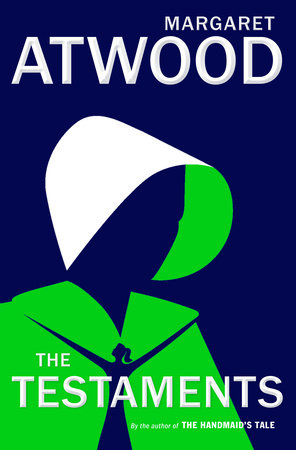
The Testaments by Margaret Atwood
Chatto & Windus
Pp. 415

In her acknowledgements, at the end of The Testaments, Margaret Atwood thanks “the readers of The Handmaid’s Tale; their interest and curiosity has been inspiring.” If my desire to know what happened after The Handmaid’s Tale is in any part responsible for the writing of this book, 35 years after its predecessor, you’re welcome. It’s been a long time coming, but it is certainly worth it, and after all this time, it still has a clear directive: “We must continue to remind ourselves of the wrong turnings taken in the past so we do not repeat them.”

Much of the novel is a thinly-veiled polemic against totalitarianism. One of the narrators is Aunt Lydia, who warns against assuming all that is new is good, and ignoring past wisdom, especially that derived from women. “The corrupt and blood-smeared fingerprints of the past must be wiped away to create a clean space for the morally pure generation that is surely about to arrive. Such is the theory.” She keeps a secret diary, which is part confession, within the hollowed-out pages of a book, incorporating sarcasm about women’s perceived roles with asides about the veracity of history and the stories we are conditioned to believe.

Her wit and humour are displayed throughout her manuscript, and she rambles with her folksy sayings and pragmatic methods. There is a dark side to the humour, however. Some of the young girls threaten to will kill themselves if they are forced into marriage, afraid of male sexuality. “No one wants to die. But some people don’t want to live in any of the ways that are allowed.” It is horrifically symptomatic of totalitarian regimes: women and children suffer as men rape and take what they want.

Before Gilead, Lydia was a judge, and the new (male) rulers did not want her around. “Any forced change of leadership is always followed by a move to crush the opposition. The opposition is led by the educated, so the educated are the first to be eliminated.” Persecution was fairly indiscriminate: “All that was necessary was a law degree and a uterus: a lethal combination.” Now she is a cornerstone of the Gilead government, but she knows power can be overthrown and statues easily toppled.

Whereas The Handmaid’s Tale was focused primarily on June and the other handmaids and was claustrophobic in tone; this novel is narrated through three different voices: Aunt Lydia, Agnes, and Daisy. As the title suggests, they are putting their name to a document they have sworn to be true, and the novel opens up into a wider world. Where there are women; there is communication. “The Aunts, the Marthas, the Wives: despite the fact that they were frequently envious and resentful, and might even hate one another, news flowed among them as if along invisible spiderweb threads.”

Treatment of women by men, who seek to dominate and oppress them, is an over-arching motif. Women must be pure: those who enjoy sex and physical relationships are sluts. Women should be nurturers and carers. Women are blamed for their indiscretions; men are not held accountable for their deeds: men must act on their urges; women must not encourage them. Women exist to reproduce; their bodies are baby-making factories and do not belong to them individually. “Every woman wanted a baby, said Aunt Estée. Every woman who wasn’t an Aunt or a Martha. Because if you weren’t an Aunt or a Martha, said Aunt Vidala, what earthly use were you if you didn’t have a baby?” It’s all depressingly familiar.

Aunt Lydia keeps secrets so she can blackmail people later when it is useful to do so. “All that festers is not gold, but it can be made profitable in non-monetary ways: knowledge is power, especially discreditable knowledge. I am not the first person to have recognised this, or to have capitalized on it when possible: every intelligence agency in the world has always known it.” Fake news and students on strike are recognisable tropes. The combination of adulterated Shakespeare and pertinence to contemporary affairs is deliberately unsettling. Atwood uses the language of fairy tales, but the chilling ones like Sleeping Beauty and later comparisons with Bluebeard.

Atwood notches up the tension as a couple of young protagonists escape Gilead by boat in a thrilling adventure, as the reader experiences the fear of young women who have never left their established order. Just as in The Handmaid’s Tale, there were cassette tapes that carried the messages of those trapped within a system; here there is another way of disseminating information and spreading the truth. Aunt Lydia thinks, “Fly well, my messengers, my silver doves, my destroying angels. Land safely.” Further parallels between the books exist in the closing of them both with a Symposium. Here the thirteenth Symposium cleverly ties it together and prevents alternative endings, while still leaving sufficient scope to flesh out. “As they say, history does not repeat itself, but it rhymes.”


Friday, 6 December 2019

Health Care

I'm too sexy for my socks
Yesterday I had minor surgery to remove uterine fibroids (one the size of a golf ball), hopefully saving much future menstrual agony, and leading to this oh-so-sexy surgical-socks-and-painted-toenails combo. Him Indoors was unintentionally hilarious when he said, "You look like you've been in a period drama." My, how I laughed. But I sincerely hope my period drama is over.

It has taken me 35 years of nausea, cramps, excessive bleeding, low iron counts and a general lack of energy to have this taken seriously. I'm so glad it finally has been, and I hope that by talking more to our young women we can prevent them suffering the pain that we have tolerated because we've been told things like, 'that's just the price you pay for being a woman'. Let's not even start getting into the issue that medical practitioners might be less inclined to be so dismissive if it effected men. I'll get to that elsewhere. 

What I would like to acknowledge is how well the process was handled. From the admission staff to the nurses, doctors, wards-people, surgeons, and anaesthetists, everybody was efficient, understanding and compassionate. I am impressed and awed by the service and care I received. Of course, I have some pain now (as is only to be expected after things have been scraped away from my insides), but I have been given drugs to manage it with clear instructions, a follow-up call this morning, and a routine check-up in a few weeks' time. 

Scooter
While I was in the hospital, being hooked up to machines and having all my vital signs monitored, I was of course transported back to eight years ago today, when I lost my best friend to cancer. I still miss him every day, but, although my heart aches, I am able to think of him and smile rather than cry these days. I have so many memories of happy times, and also, obviously, sad ones as we saw him lose his sparkle. But even as his physical form was shrinking before our eyes, the palliative care he received was incredible. The kindness of the medical staff who managed his pain and saw him to the end of his life was humbling. They were wonderful to him, and to his family and friends, who visited him in hospital and stayed with him when there was nothing further that could be done, except let him leave with dignity. I thank them all.

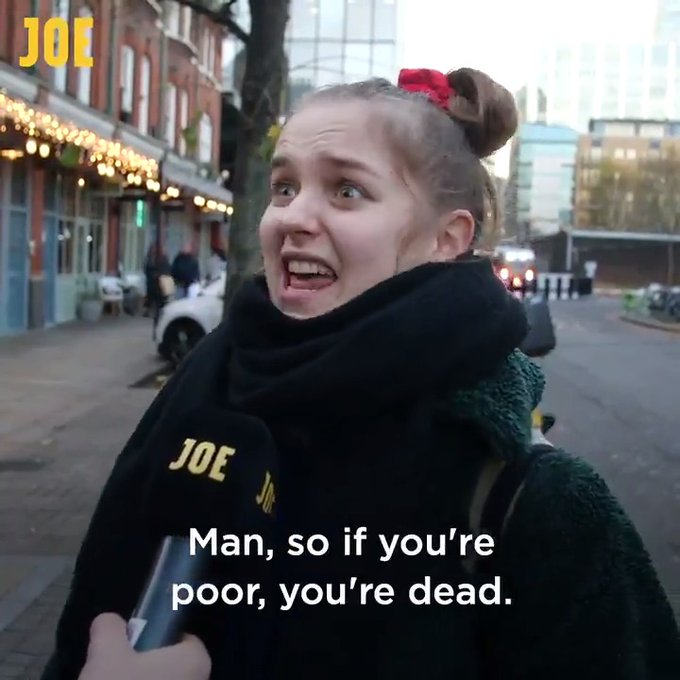
In the UK, some people want to sell off the NHS. It is baffling beyond belief that anyone would actually choose a system like the one that exists in the U.S.A. A recent video released on the Common Dreams website shows the shock with which British people heard the costs of basic healthcare (childbirth; ambulance ride; asthma inhalers) across the Atlantic. I don't want to get political here, but, seriously, how could anyone with a conscience vote for a party that would allow this to happen? Healthcare should be not be optional; it should be available to all; and it should not be monetised. 


I know the NHS is a creaking organisation and one which desperately needs funding and a massive overhaul. I'm not ignorant - I realise that people are ageing and that medical procedures are becoming more expensive and more in demand. I understand that we can't continue the way we're going as the population continues to both age and increase. What we need is measured and considered discussion and respect. What we do not need is privatisation. 

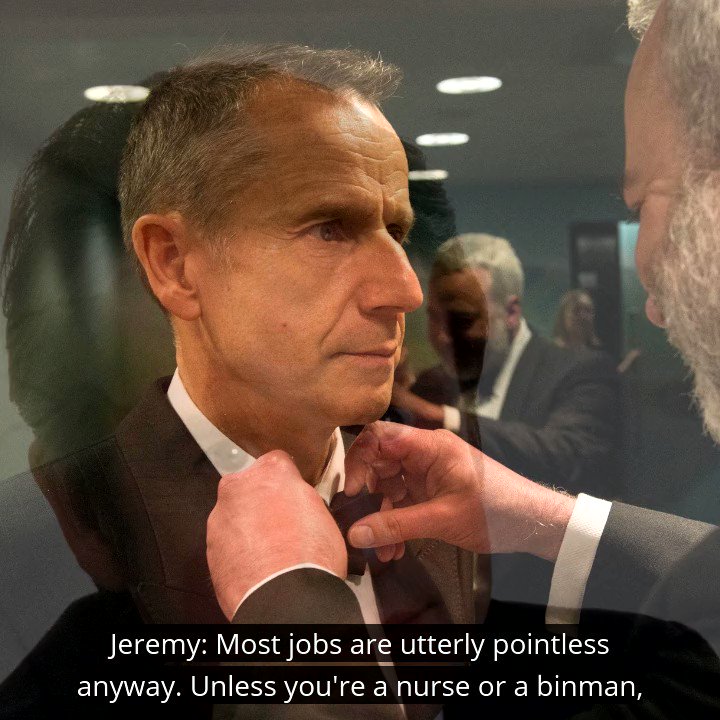
And the people who care for us; the people who listen to our complaints and assuage our pain should be respected and rewarded - not penalised, underpaid or stressed beyond breaking point. They are literally (and I don't use that word lightly) our saviours. In fact, I'll finish with a quote from the late, great Jeremy Hardy, who also passed away this year, who had an enviably incisive way with words, and is also sorely missed.

Friday, 15 November 2019

Friday Five: Films on a Plane

On the very long flights to and from the U.K., I tend to read, write, and watch TV - I am useless at sleeping. Him Outdoors bought me a great pair of noise cancelling headphones (in Liverpool red), which are comfy and practical; who says he's not romantic? This time round, I used up most of the hours by binge watching a couple of TV series - Chernobyl (bleak but essential viewing) and Line of Duty Season 5 (I love the drama but the ending is frustrating). So I didn't watch as many films as usual, but I did watch some, and I wanted something relatively mindless after those heavy hitters.


5 films watched on a plane:
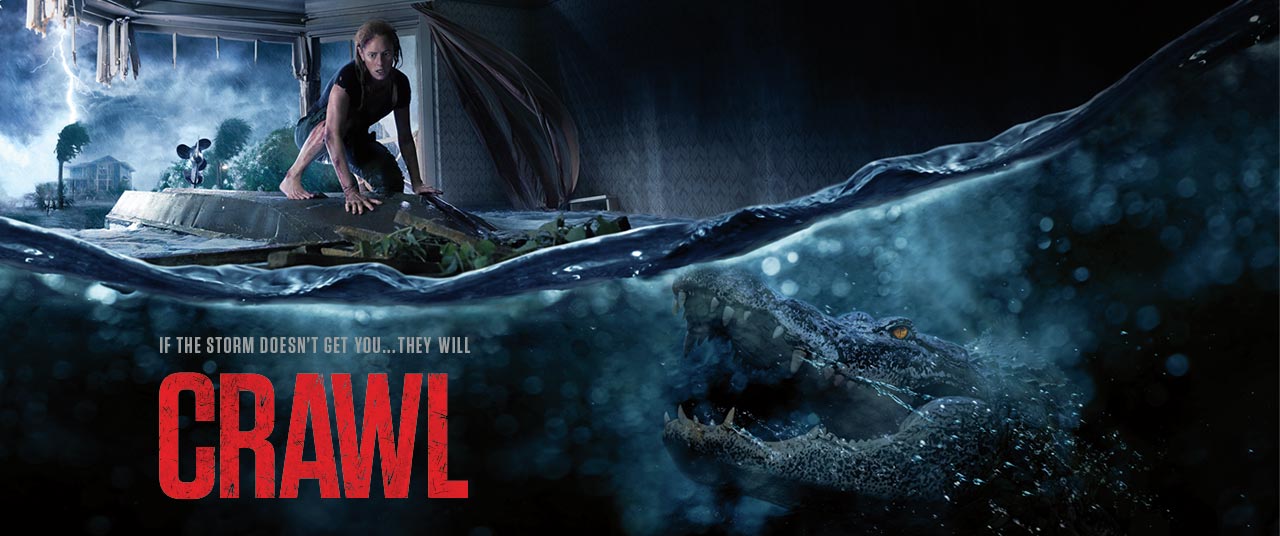
  1. Crawl - a classic giant beastie horror film, low on budget (eight actors and a dog) but big in heart. The apex-predator alligators provide suitable thrills in the rising flood waters amid sympathetic fears of drowning and claustrophobia, while the father/ daughter reconciliation scenes are surprisingly touching. Yes, it's utter tosh, but it is fun.
  2. Fighting with My Family - Based on the true story of professional WWE wrestler Paige, Stephen Merchant's tribute is charming and delightful. Florence Pugh is excellent as the girl who fights back, and the supporting cast (including Nick Frost and Dwayne Johnson) are well drawn. Like the sport it represents, the film is energetic and relentlessly up-beat. 
  3. Late Night - Emma Thompson and Mindy Kaling star in Kaling's film about injecting some 'colour' into a tired late night TV show. It's fairly formulaic, as characters learn things about themselves through shared experiences that they really ought to have already known, but it is a light-hearted and easy-going approach to sexism and racism in the workplace, and that's a start. 
  4. Old Boys - The Cyrano de Bergerac story is given an 1980s public school setting. The school's 'jock' Winchester (Jonah Hauer-King), requests assistance from the school 'nerd', Amberson (Alex Lawther) to woo the French Master's daughter, Agnes (Pauline Etienne) through a series of letters, mix tapes and scrappy video recordings. Director Toby MacDonald is probably more interested in the unlikely blossoming friendship between the boys than he is in the romance with the girl, but it's a chunk of nostalgia for correspondence in a pre-digital and self-branding age.
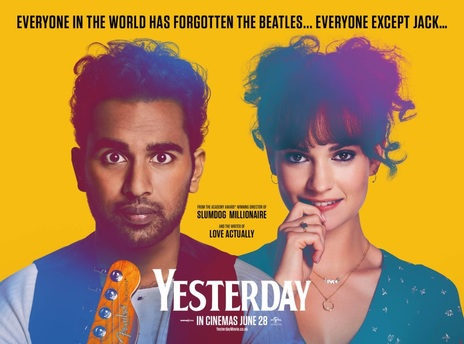
  5. Yesterday - I suspect there is a direction correlation between one's enjoyment of this film and one's liking of The Beatles. I appreciate The Fab Four, but I've never been a fan. I'm not sure that if they came along now they would be as popular as they were then, as I believe their appeal lay in their difference rather than their talent. Written by Richard Curtis and directed by Danny Boyle, it seems a lot more of the former than the latter, but even the jokes aren't as funny as usual (the gag about there being no Oasis if there were no Beatles is about the sum of the laughs) and some of the dialogue is poor. The leads (Himesh Patel and Lily James) are perfectly fine, but there is absolutely no chemistry between them, and it's all just a bit ho hum until the end credits remind me just how much I dislike Hey Jude.

Wednesday, 6 November 2019

Innermost thoughts: Someone Like Me


Someone Like Me by M.R. Carey
Orbit
Pp. 500

In many ways this novel by M.R. Carey reminds me of those by Stephen King. It is rooted in reality with a strong dose of pop culture. The relationships seem true and sympathetic, with natural dialogue and some elements of humour. The concept of split personalities, or multiple characters in different dimensions, is a good one, and the supernatural elements creep in subtly. It would make a great film, with strong visuals and spooky scenes, but the ending is ultimately unsatisfactory and leaves the reader (or potential viewer) wondering how on earth they are ever going to get away with telling that story to the police.
 
It begins with a sadly familiar tale of domestic violence, as Liz Kendall is being strangled by her ex-husband, Marc. It appears that has another character inside her, Beth, who comes out after years of abuse to fight back. The abuse is documented as part of an on-going case: “That was a lot less exciting and TV-movie-forensic than it sounded.” The author is aware that this is commonplace and that we have seen it all before in modern culture, so he has to make it about more than ‘just’ domestic violence.


We sympathise with Liz; she is poor with two kids to raise (Zac and Molly), an abusive ex-husband and a terrible medical insurance policy. When she is first ousted by Beth, there may be sympathy for her too, as Beth has been repeatedly killed by Marc in different times and other realms. We feel for her absence and all the things she has missed, as she hugs Molly, “It was the first human contact Beth had experienced in what felt like a hundred years that wasn’t born out of violent rage.” But Beth will then use anything to survive, even at the expense of the children, and we begin to wonder about her motives.


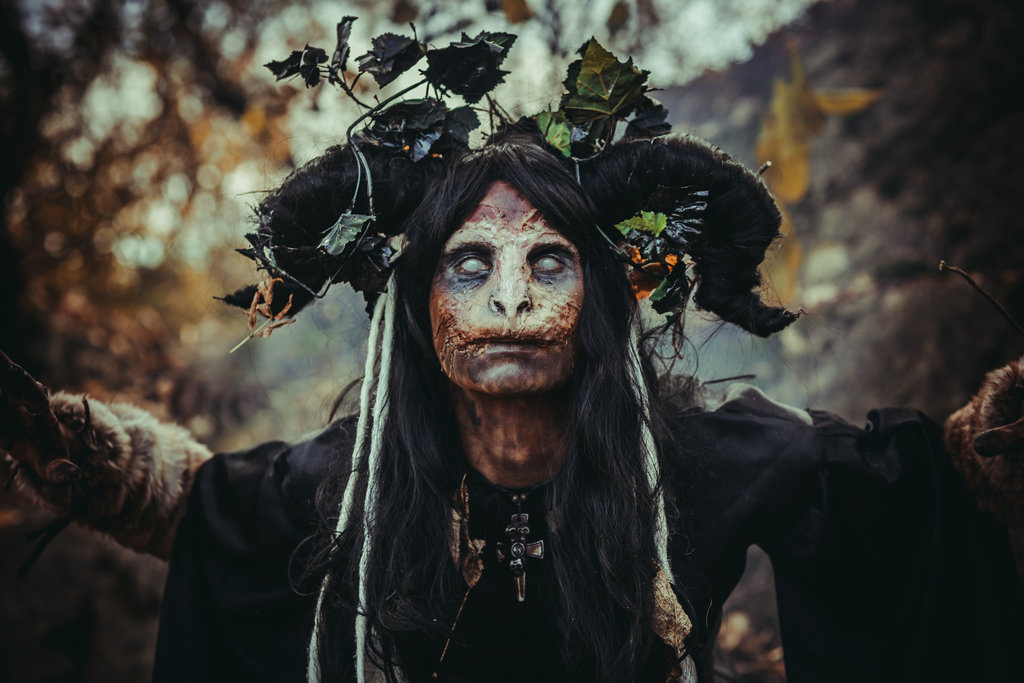
Meanwhile, Zac’s schoolmate, Fran, is also one of these people who is aware of the multiple options of things happening in different futures or pasts, and she recognises the duality of Zac’s mum, Liz/Beth. When she was a child, Fran was abducted and taken to the Perry Friendly Motel by a man (Bruno Picota) who saw two personalities in her and tried to kill one. Throughout the trial that led to his incarceration in an asylum, he became known as the Shadowman because he constantly referred to shadows that move independently of their host or ‘skadegamutc’ from Native American culture. He describes this (in a transcript that Fran and Zac conveniently locate) as “the ghost of a witch. A ghost, but it’s got magic. An evil spirit. And you can’t ever see where it might have come from. You just see that it’s there.”

Skadegamutc or forest witch
Fran also has an alter-ego who is a cartoon fox with a sword and armour, Lady Jinx from Knights of the Woodland Table. Fran comes to understand that Picota was obsessed with split personalities or detached characters, who have been separated from the original. He thought he had killed one of hers. Did he?

As in Fellside, M.R. Carey takes us to a world of psychologists and criminals as he explores the dark places of the mind. Is this what happens to the brain when it tries to shield the body from pain, or to remove the memories of experiences that are too traumatic to confront? Are these supernatural elements based on self-delusion, or is medication involved? There is enough ambiguity to interest the reader as the novel crosses from the solid world we know to the less certain one we fear.

Like Stephen King, Carey incorporates Native American elements, pop culture references, ‘innocent’ children involved in violent and spooky situations, cinematic and comic book devices (he used to write comics for DC including Lucifer and Hellblazer), and a denouement at a creepy, deserted motel. The genre-crossing thriller ghost story is domestic in scope with science-fiction undertones, but there are sufficient similar themes to those found in Fellside, which I read earlier this year, that I don’t think I need to read any more of Carey’s novels for a while.