Wednesday, 17 February 2021

New York Nostalgia: City of Girls


City of Girls by Elizabeth Gilbert
Bloomsbury
Pp. 466

This novel of New York and nostalgia is written in the framework of a letter. When Angela writes to Vivian asking, “Given that my mother has passed away, I wonder if you might now feel comfortable telling me what you were to my father?” Vivian decides to respond with the story of her life and, although we don’t actually know who Angela or her father is, and it’s quite some way through the book before we discover that, the format leads to a conversational style as Vivian talks to Angela without trying to upset or offend her.

Vivian grows up in a typical conservative WASP family in upstate New York, where there is an assumption that she will go to college, find a husband and settle down into the life of a wife and mother. Due to reasons of lethargy and lack of engagement, her parents pack her off to New York to stay with her Aunt Peg, who happens to run a rather dilapidated playhouse. Vivian has always been told that she hasn’t got a lot of talent, but she can sew, and she is soon making costumes for all the productions and winning friends with her skill with a needle and a tight budget.

When Vivian reaches New York and meets the showgirls, she is wildly distracted by their gossip and their glamour, and entranced by their lifestyle, which is different from anything she has ever known. The leader of this troop is the outrageously entitled personification of a whirlwind, Celia Ray. Her behaviour is infuriating and inconsiderate, but Vivian is happy to tolerate it because it makes her feel included into another world of conviction, enthusiasm and, above all, youth.

The novel is a love story to a time and a place. The time was the 1940s; the place was New York City, more specifically, the Lily Playhouse. Sure, there was a war approaching, but with the callow and shallow nature of self-obsessed youth, Vivian managed to disregard it, even though her brother had just joined the navy. New York is a city of dreams, possibilities and action, and in Vivian’s eyes and breathless descriptions, the Lily Playhouse is where these dramas take shape. It would be a fabulous, chaotic place to work, but the business model is unsustainable, and it is the sort of atmosphere that can be regarded fondly with hindsight, but not last forever or be recreated. Elizabeth Gilbert, through Vivian’s reminisces, is expert at blending the brilliance with the base, and tempering the glow of nostalgia with the grit of reality.

A theatre is the perfect metaphor for presenting a bright surface to conceal a shabby behind, and the shows that were staged at the Lily are the essence of this. “To my mind there was never anything better than those simple, enthusiastic revues. They made me happy. They were designed to make people happy without making the audience work too hard to understand what was going on.”

Vivian spends a lot of her youth being told who she is, and what she should be, by men. She discovers another talent – that of making men desire her – and she works that angle for all it is worth, and far beyond, damaging her own and others’ relationships in the process. There is a freedom of sex which she interprets as power; it is not as if she enjoys the act itself, but she does relish the game. She is callous and flippant and frivolous, and she loves every second of it, until she becomes entangled in a scandal and is judged, again unfairly, for her part in the affair – men get away with indiscretions; women are discreetly got away. In typical Moll Flanders style, the later bits of her life, when she comes to realisations and profundities are not as interesting as the titillating sections of her wild youth.

City of Girls is mainly fun and frivolous. It has some dark moments hiding in the shadows, waiting for the bright lights of the big city or the playhouse to fade to leave behind the reality of life. It is a paean to concealment; through theatre, fashion and sex, but it is not superficial. It is one person’s account, but it is also a universal truth. After all, as someone who knew a bit about theatre once wrote, “All the world’s a stage.”

Friday, 12 February 2021

COVID-19 Friday Five: Anxiety Dreams


I'm having trouble sleeping. When I do sleep I have anxiety dreams. I have lived with anxiety for a long time and, as I grow to understand it, probably even longer than I first thought. It comes - resulting in panic attacks at its most extreme - and goes (although it never goes completely), and most of the time I try to externalise it and can lessen its harmful effects that way. I know I am not alone and that a lot of people have anxiety (approximately 18% according to a recent survey, although only about a third of those seek professional treatment).

I also know that COVID-19 has led to an understandable increase in anxiety and feelings of helplessness, many of which manifest in dreams.  A research paper published in Scientific American found that 37% of people had 'pandemic dreams', many of them marked by themes of insufficiently completing tasks and being threatened by others. Here's an example of one of mine.

I was in a very quiet (English-looking) pub with a group of Aussie theatre friends. I had taken them there to introduce them to 'my other community' (although I don't know where it was and I didn't recognise any of the other patrons). I was trying to get a round in with the help of another person, but each time we thought we had ordered the correct number of drinks, someone else walked in and we had to get one for them too - it took so long to process the order that some people had finished theirs before we had even sat down, so we thought we had to get them another one. 

By the time I finally sat down at the table I realised I didn't have a pint and, although I really wanted one, I couldn't be bothered to go through all the rigmarole again, and so when my friend noticed I hadn't got a drink, I said it was okay and that I didn't really want one anyway, which I did. Everyone else was talking amongst themselves and laughing at something that I hadn't heard, and no one involved me in the conversation. I knew that there were some people missing whom I really wanted to be there, and that they would have made me feel better if they were around, but as they weren't, I was going to have to deal with it myself. 

I nonchalantly got up to go and look at a picture on the wall, and I realised it was actually a jigsaw puzzle when it all fell apart in front of me. The pieces were tiny, but I thought I had to try and put it all back together before anyone noticed - there was a spare table so I scooped all the tiny pieces on to it and frantically started to reassemble it, although the light in the pub was dimming and I was finding it really hard to see the picture. 


A group of people walked in (some of whom I recognised) and asked if they could use this table because they needed to have their meeting. I tried to stall for time by asking them what their committee was, and regretted it instantly when they told me they were the Committee Against Colour-and-Gender-Blind Casting (CACAGBC). The rest of the pub fell silent and all I was afraid it was all going to kick off and somehow it would all be my fault... and they'd notice I'd wrecked their puzzle picture. 

I woke up sweating in fear and gasping for breath. It took a while to calm down and convince myself that I hadn't broken or destroyed anything, from inanimate objects (such as the jigsaw puzzle) to friendships (particularly among my theatre community). I am still tired, emotional and a little bit nauseous. I know this may sound ridiculous to some, but these things affect me on a daily basis. While I cannot stop these dreams, I can identify what is bothering me in them - thoughts and feelings which I try to repress in my waking hours.

5 Anxiety Issues in My Dreams:
  • Feeling responsible for things which are beyond my control
  • Stress of trying to plan something within shifting and uncertain parameters
  • Feelings of isolation - trying to reconcile different aspects of my life
  • Feeling overlooked and excluded but trying to pretend it doesn't bother me
  • Wanting to 'return' to a time and place but not knowing when I will be able to get there and afraid that things will have changed so much that I won't recognise anyone when I do

Wednesday, 10 February 2021

Not Always Greener: Marilla of Green Gables


Marilla of Green Gables by Sarah McCoy
Thorndike Press
Pp. 446

In this imagined prequel to the Anne of Green Gables books, Marilla has much in common with Anne. Her relationships with her brother, Matthew, and her friend, Rachel, are explained, and the setting of place and time are clear. At times, however, it becomes confusing as the similarities between Marilla and Anne are great: there is even a parallel story of Marilla’s romantic connection with a Blythe who got away. The author claims she began with the “cryptic un-telling” of a mention in Anne of Green Gables of Marilla telling Anne, “John Blythe was a nice boy. We used to be real good friends, he and I. People called him my beau.”

When Marilla’s mother, Clara, dies in childbirth, her Aunt Izzy continues to stay for a while and Marilla’s life changes irreparably. Aunt Izzy is a strong woman driven by fairness who teaches Marilla to recognise her advantages and privilege. It is on Aunt Izzy that the ‘subplot’ of racism and slavery hangs. In a nod to the Underground Railroad, Aunt Izzy helps people across the border from America to Canada, and introduces Marilla to concepts of self-determinism.

Marilla is not a prototype feminist, but she has got opinions and is prepared to speak her mind. She is highly intelligent, takes her school exit exams early, and gets good results. When John Blythe tells her she is “smarter than any other girl I know”, she is pleased with the compliment and determines that this will be her primary attribute. “Her mother had been virtuous. Izzy was beautiful. She, Marilla, would be smart.” Her thoughts are quite radical in terms of self-identity. “Who said a man or a woman had to be a husband or a wife? Maybe they could simply be, unto themselves. Besides, there were bigger issues in the world than love doves and wedding bells.” Sarah McCoy writes in her Author’s Note, “And now I write again with the hope that readers will understand Marilla for who she is as a woman unto herself… as I am unto mine.” She seems to achieve this ambition.

Sarah McCoy clearly has a great love for the “beloved works” by Lucy Maud Montgomery. In her Author’s Note, she shares, “I wrote from a place of grateful reverence to a fictional landscape that has given me much scope for imagination. I wrote praying each hour that I would honour that world and add to it in a way that would make its creator proud.”

The novel contains instances of homey and rural wisdom, and the chapters have titles like ‘John Blythe Suggests a Walk’, ‘A Return to Hopetown’ or ‘Aunt Izzy and the Three Magi’ This might suggest the novel is intended for a young adult audience, but modern teenagers might not be interested, so it is more likely to be an attempt to copy the style of the original and appeal to the nostalgia of its fans. Sarah McCoy takes a well-loved story and crafts her own version upon it, which is the sincerest form of flattery. It makes sense and it certainly doesn’t do any damage to the originals, although I’m not sure anyone with no previous interest in the Anne Shirley stories will engage with it.

Colleen Dewhurst as Marilla Cuthbert in the CBC Televsion adaptation of Anne of Green Gables

Friday, 5 February 2021

Friday Five: More TV Shows


I was doing posts about ISO TV, but feel slightly fraudulent calling it that in Australia, where almost everything is back to normal operations - apart from theatre and festivals. So let's just go with TV shows; here are another five that I have been watching.


5 TV Shows Recently Watched:
  1. Belgravia (ITV) It's not a patch on Sanditon, but it has some pretty bonnets, sly asides and wildly anachronistic character developments. The nineteenth-century drama focuses on illegitimate children, inherited wealth and social climbing as one would expect from Julian Fellowes, writer of Downton Abbey. The cast includes Tamsin Greig, Philip Glenister, Tara Fitzgerald, Paul Ritter, Harriet Walter, Saskia Revves and Tom Wilkinson, who are all marvellous, even if they barely get to flex their acting muscles.
  2. Between Two Worlds (Seven Network) The monochromatic colour palette (almost everything is a shade of blue or grey) is matched only by the complete lack of inflection in the acting and dialogue. The premise should have been interesting - a man who has a heart transplant starts to imagine he has inherited characteristics of his donor - but the simultaneously tawdry production and deadpan delivery cannot raise a pulse. Models are all very well but their acting is more of the cardboard cutout variety.  Hermione Norris, what were you thinking?
  3. Roadkill (BBC) Hugh Laurie seems to be cornering the market in nasty bastards. This political drama written by David Hare has a touch of Yes, Minister crossed with The New Statesman, but the comedy is replaced with cold hard pragmatism. Hugh Laurie plays Peter Laurence, a government minister on the rise until a past scandal threatens to bring him down. Helen McCrory and Saskia Reeves also star. The four-part thriller was filmed last year and, if COVID and finances permit, is perfectly poised for a second season. 
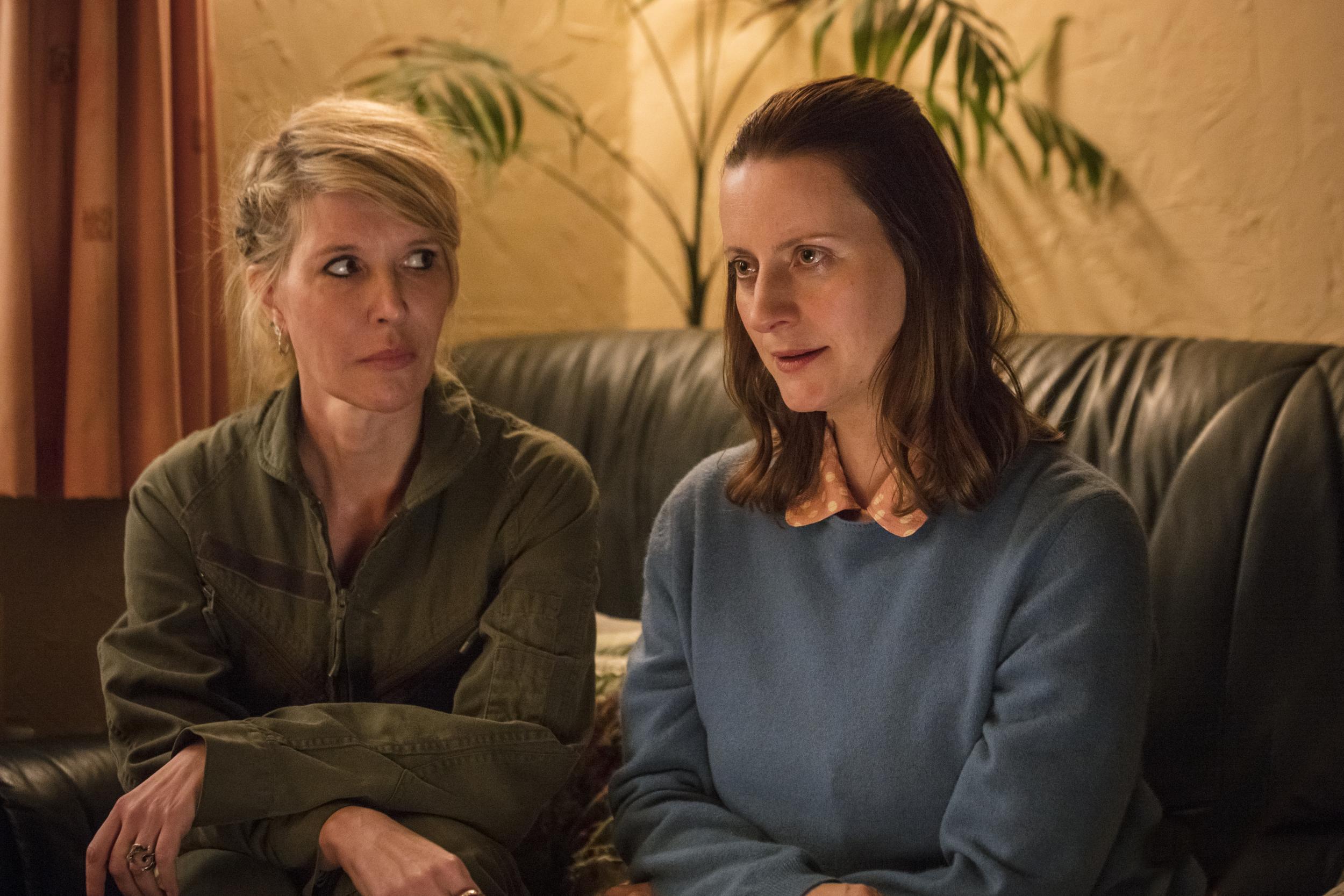
  4. Julia Davis and Catherine Shepherd in Sally4Ever

  5. Sally4Ever (Sky Atlantic/ HBO) Inevitably this will be compared with Fleabag because it is written by a woman  (Julia Davis) and features 'normal' women (Catherine Shepherd; Julia Davis) dealing with life and having sex. I long for the days when this isn't such a unique premise and the gender balance is more equal in terms of writers and actors getting decent work. In the meantime, this is a good benchmark. The seven thirty-minute episodes cause the viewer cringing discomfort and cathartic guffaws of laughter. It's black comedy at its best. 
  6. The Good Fight, Season Four (CBS All Access) It begins with Diane (Christine Baranski) in an alternate reality where Hilary won, the #MeToo movement has never happened and Harvey Weinstein is still a good guy. After she wakes up it continues with military whistleblowers and an investigation into the death of Jeffrey Epstein. It's well-written and topical, with characters we grow to love (Cush Jumbo as Lucca Quinn; Sarah Steele as Marissa Gold; Nyambi Nyambi as Jay DiPersia; Michael Boatman as Julius Cain) and it combines stand-alone stories with a continuous thread. It's like a cross between Boston Legal and The West Wing, and I enjoy the glitzy American courtroom drama with powerful women not just doing the filing and answering the phone. Only seven of the scheduled ten episodes were fully completed before production was halted due to the COIVD-19 pandemic, and it feels unfinished with a tantalising mystery still in the air and Lucca has left the series. I feel a bit bereft. 
More of this sort of thing: Cush Jumbo, Christine Baranski and Audra McDonald in The Good Fight

Friday, 29 January 2021

Friday Five: Everybody Wants to Rule the World


As part of the highly informative kings and queens of Scotland at Stirling Castle exhibition, there was a section entitled: Dos and Don'ts of Kingship. This was a straightforward checklist for any would-be ruler, which I thought I would share with you here.


5 Dos and Don'ts of Kingship:
  1. Assert Your Authority: As the kingdom became more stable, kings assumed greater power and responsibility. Do confront nobles who have grown too powerful - James II was only six when he inherited the crown. He was a pawn in the hands of the Livingston and Douglas families, who used their control of him to gain power and land. At 18 the king took personal control of his kingdom, swept the Livingston's from power, and had the leading members of the family executed. But don't go too far... At Stirling Castle in 1452 James II, then 21, lashed out and murdered the Eighth Earl of Douglas when he refused to bow to his demands. Such a ruthless, unlawful elimination of his rival was very risky and caused general outcry. But James did some swift damage control. He showered traditional Douglas supporters with land grants and so neutralised the threat of a serious invasion.
  2. Build a Power-Base: To ensure support, kings had to involve their nobles in government and reward their loyal service with lands and wealth. Do encourage loyalty through good management - James IV exercised an inclusive style of government, giving the appearance of taking advice from a wide circle of advisors. He was a dynamic ruler, whose attractive personality allowed him to build close personal ties with his nobles. Although James IV held relatively few parliaments during his reign, the nobility had access to him which they believed gave them influence in policy-making. Don't alienate your most powerful nobles. James II was seen as remote and disengaged. He isolated many of the greater nobles, the king's traditional advisors. Instead, his inner circle consisted of a few lower-born favourites. The nobles were rarely consulted by the king, whose pro-English policies were particularly unpopular. Discontent grew. Eventually the nobles launched a rebellion which ended with James's death after the Battle of Sauchieburn in 1488.
  3. Wage War: Kings need to be commanding military leaders, in whose service fame, fortune and honour could be won. Do set an example for your followers - Robert the Bruce has the reputation for being Scotland's most successful warrior king. He was the military role-model of medieval kingship and fought, against the odds, for Scotland's freedom. His most famous victory was won at the Battle of Bannockburn in 1314. Don't flee the field before the battle begins. In 1436 James I led a major - and very expensive - expedition to recapture Roxbugh Castle from English control. What should have been a demonstration of military superiority turned into a fiasco. James abandoned the siege before it began. He left behind his expensive artillery - the visible status symbols of a warrior king. James's failure was seen as poor kingship and was a catalyst for his assassination in Perth the following year.
  4. Secure the Dynasty: Royal marriage was a powerful tool used to build alliances and seal agreements. It was also essential for the provision of a legitimate heir. Do make a prestigious marriage - As their dynasty became more secure, the Stewart kings began to look to other European courts for their brides. They made some impressive diplomatic alliances, bringing wealth in the form of the bride's dowry. When James III married Margaret of Denmark in 1469 her dowry ultimately comprised the highly desirable Orkney and Shetland islands. Don't fail to produce an heir. David II, son of Robert the Bruce died childless in 1371 despite two marriages. He never gave up hope of producing an heir, and attempted to divorce his second wife, Margaret Logie, to marry his mistress, Agnes Dunbar. But Margaret successfully appealed to the Pope to obstruct the divorce. Agnes was still queen-in-waiting, living at Stirling Castle, when David died. The king's infertility ended the Bruce dynasty and the crown passed to David's nephew, Robert II, the first Stewart king. 
  5. Stage a Spectacle: A successful king knew how to make an impression by ensuring he had a physical presence in the realm, while publicly displaying his wealth and status at every opportunity. Do host elaborate events at the royal court, such as pageants and tournaments - In 1449 James II hosted an international tournament at Stirling Castle. Knights o horseback hoped to unseat their opponent and gain fame for their deeds. This sporting event provided welcome entertainment for the nobility and gave James a chance to parade his importance in front of his influential guests. Don't neglect your public image... James III seems to have avoided chivalric sports and public entertainments. There is no evidence of a tournament being held in Scotland at any point during his reign. Instead he horded his wealth. This failure to provide crowd-pleasing spectacles for the court was part of the reason for the eventual rebellion against him.

Wednesday, 27 January 2021

At Least It's Not a Marathon: Sprint: How to Solve Big Problems and Test New Ideas in Just Five Days


Sprint: How to Solve Big Problems and Test New Ideas in Just Five Days by Jake Knapp with John Zeratsky & Braden Kowitz
Bantam Press
Pp. 264

In this ‘How to’ manifesto, a group of guys from Google Ventures show us a ‘new’ business method. Of course, it is not really new and we’ve heard it all before, packaged differently. A rich white guy has a period of self-reflection, which leads him to want to work smarter rather than harder. As one would expect of a Google product, it’s written in an approachable and accessible sanitised way, with some good basic knowledge and an eye on the bank account.

The question the boys tackle is how to take an individual activity and focus on finding a solution. The basic idea is to provide a DIY guide for running your own sprint (five-day problem-solving exercise) with a clear daily focus and checklists (including shopping lists for necessary materials) in the back, along with FAQs and a link to the website (thesprintbook.com) for more information and resources.

The authors recommend removing all phones, laptops and tablets from the room to focus more fully on the immediate task. “These devices can suck the momentum out of a sprint. If you’re looking at a screen, you’re not paying attention to what’s going on in the room, so you won’t be able to help the team. What’s worse, you’re unconsciously saying, ‘This work isn’t interesting.’” They acknowledge that not everyone has the luxury to set other work aside for a week (who picks up the slack?), so this method can only really work in a big organisation. Interestingly, it can only really work in person, which is a shame in these ‘unprecedented’ times when nearly all meetings are conducted over video conferencing systems. The concepts involve using simple graphics and sketch designs: many of the suggestions are worked out on white boards and with sticky notes.

They maintain that deadlines force one to focus when pitching ideas while they also recognise that smaller parts of the sprint can be used if there is insufficient time to run the whole week. The ideology can be applied to making a small decision or dealing with a frustrating problem, and customer interviews can be conducted at any time. The highlights of the process are the focus on asking the experts, interviewing potential users, and making decisions on solutions.

They make an effort to use female pronouns – “The Decider needs to choose one target customer and one target event on the map. Whatever she chooses will become the focus of the rest of the sprint.” – but all the references are Silicon Valley frat boy (Star Wars; Apollo 13; Ocean’s Eleven; Lord of the Rings; Led Zeppelin; Huey Lewis and the News). The examples they use for the businesses which benefited from a sprint are: a coffee outlet; a hospitality robot; a software company; and a medical assessment service. A quick glance at the bios at the back (masquerading as thank-you notes), reveals that they spent their ‘ordinary’ childhoods computing, recording, designing sailing yachts, playing basketball and producing music.

There are some good ideas in this sprint methodology, but you have heard them all before. Now that they are repackaged in a slick, accessible, practically comic-book-style, you are likely to hear them repeated again and again, if you strain to hear the sound over that of the cash registers ringing.

Friday, 22 January 2021

Friday Five: Kings and Queens (and a Bonus Oddball) of Scotland

When we visited Stirling Castle, we saw an exhibition about the kings and queens of Scotland and their relations with the castle itself. It began with a family tree, which claimed to illustrate the direct blood link between Kenneth MacAlpin and Robert the Bruce. A cautionary note warned that 'the route between was often complicated'. This was written by the master of understatement.

Now, I have no illusions that I am any good at this sort of thing, and this is certainly not any attempt at providing a definitive history. There are, however, a few names that capture the imagination here.


1. Kenneth MacAlpin (842-858) - Kenneth (snort); it just doesn't seem like a very regal name. He was, however, apparently a notable warrior and the first leader to establish power over the Picts and the Scots to unite them in the kingdom of Alba, now known as Scotland. 

2. Macbeth (1040-1057) - There is a section of the long line (or tenuous ribbon if you prefer) of divine monarchical inheritance which reads, 'Duncan I 1034-1040; Macbeth 1040-1057; Lulach 1057-1058 ; Malcolm III (Canmore)1058-1093'. 

It would seem that Duncan I launched an attack on Moray, Macbeth's lordship, and was killed in action by Macbeth's troops. Macbeth subsequently became King of Alba where he ruled peacefully for 17 years with apparently little opposition. His only major confrontation during his reign was an English invasion in 1054, led by Siward, Earl of Northumbria on behalf of Edward the Confessor. Macbeth was killed at the Battle of Lumphanan in 1057 by forces loyal to the future Malcolm III. He was buried on Iona, the traditional resting place of Scottish kings. Macbeth was briefly succeeded by his stepson, Lulach, who only ruled for a few months before being killed by Malcolm III, whose descendants continued to rule Scotland for another two hundred years.

Wikipedia tells us, "Macbeth is today best known as the main character of William Shakespeare's tragedy Macbeth and the many works it has inspired. However, Shakespeare's Macbeth is based on Holinshed's Chronicles (published in 1577) and is not historically accurate." Wait, Shakespeare fudged the facts? Well, I never...


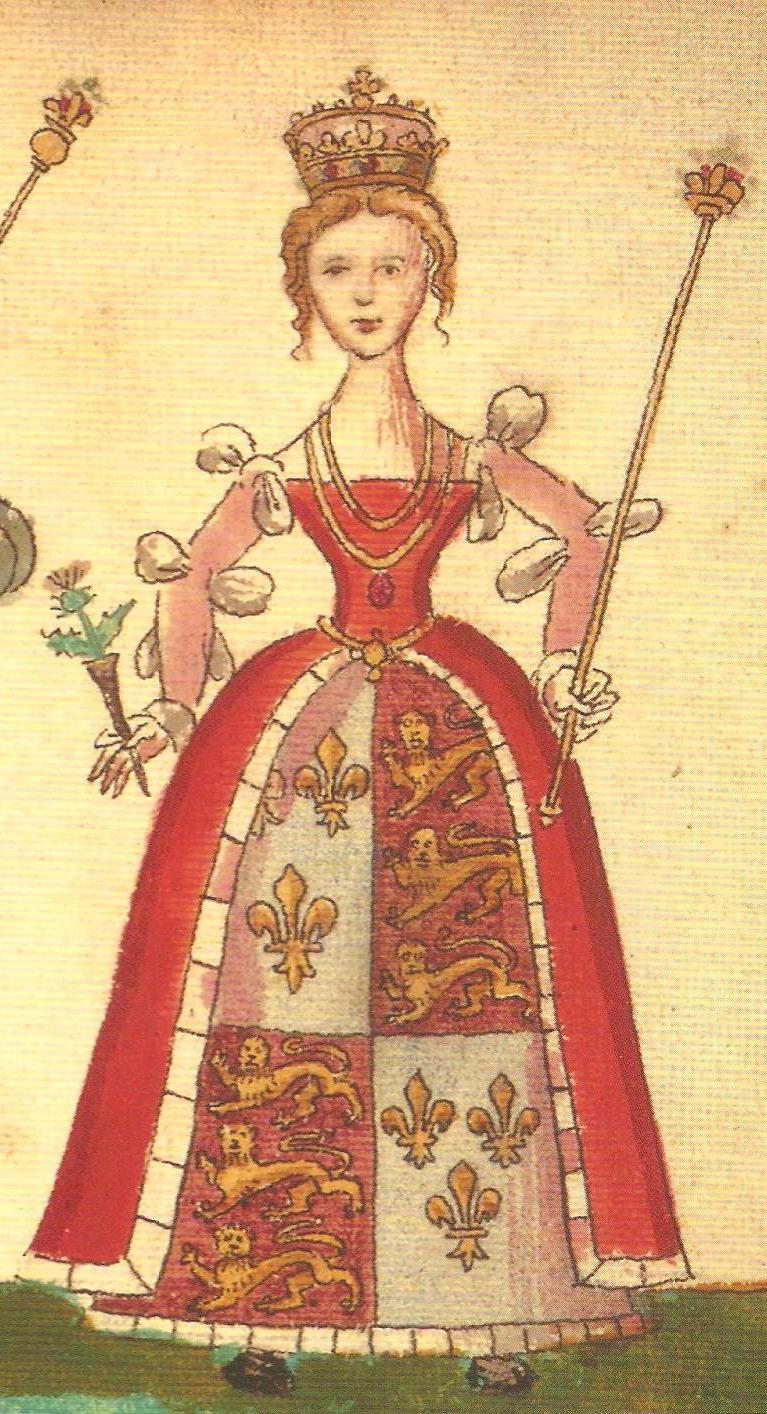
3. Joan Beaufort (1424-1437 & regent 1437- 1439) - She was twenty when she married James I: he made her co-monarch and gave her Stirling Castle as a wedding present, which was nice.  When James I was assassinated in 1437, Queen Joan smuggled their young son, James II, to Stirling Castle for safe-keeping. She then ruled from here as regent, surely making her one of the most powerful women in the land.

4. James IV (1473-1513) - Apparently this James was a passionate supporter of arts and culture (hurrah!). He was clever and well-educated, spoke seven languages and surrounded himself with poets, musicians, writers and philosophers. He was influenced by Classical ideas and the culture of the European Renaissance. He also seemed to rather like building (or at least, having other people build things for him). While at Stirling Caste he commissioned building works on a grand scale including the old Chapel Royal, the Great Hall the Forework and the King's Old Building.

Also, somewhat importantly, in 1502 he signed the rather ambitious-sounding Treaty of Perpetual Peace with England, and the following year married Margaret Tudor, daughter of the English king, Henry VIII. Well, that's all nicely settled then.


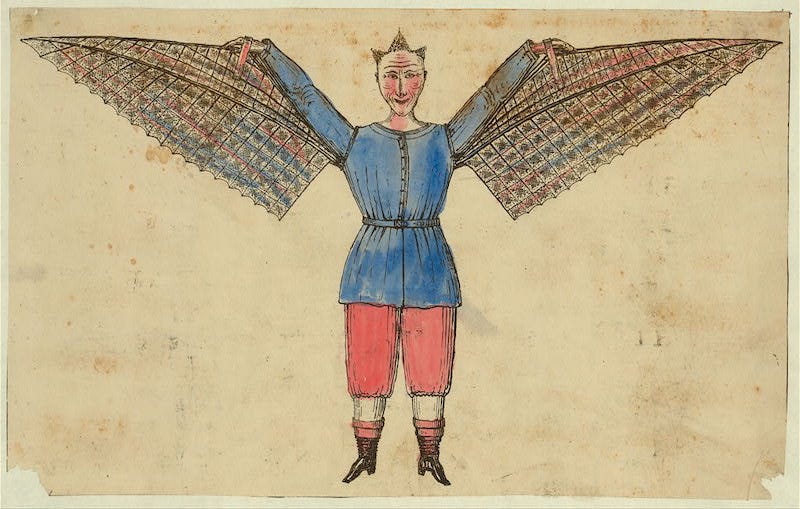
5. John Damian - Not a king, but a fascinating figure nonetheless. He was an Italian alchemist who believed he could transform base metals into gold.  As James IV's court welcomed artists, scientists, and classically-trained poets and thinkers, Damian's claims intrigued the king and he was set up with a laboratory at Stirling Castle. "Despite the generous royal funding, Damian had no success." I wonder why...?

In 1507, in an attempt to retain the king's support, Damian tried a new experiment. He made wings from chicken feathers and announced he would use them to fly to France from the walls of the castle. His doomed flight from the Ladies' Lookout on the west side of the castle ended in a dunghill. Damian blamed "the wrong kind of feather". Is there a play about this? If not; there should be.


6. Mary Queen of Scots (1542-1587) - All joking aside (because she's not exactly known for her sense of humour), Mary is probably the queen that the country knows best. She lived at Stirling Castle until 1548 when she was sent to France "for safe-keeping". She returned to Scotland in 1561. 

As an adult, Mary spent much of her seven years at Stirling Castle. In 1566 the Old Chapel Royal was the setting for the baptism of her son, the future James VI. No expense was spared. Mary borrowed twelve thousand pounds (about two million today) to fund the event. During a great ceremony to impress the foreign emissaries, Mary laid on three days of "feasting, fireworks, music and masquing" in a celebration to rival anything Europe had ever seen.