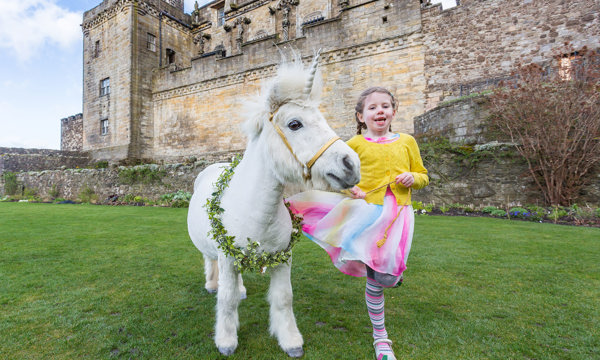
- Assert Your Authority: As the kingdom became more stable, kings assumed greater power and responsibility. Do confront nobles who have grown too powerful - James II was only six when he inherited the crown. He was a pawn in the hands of the Livingston and Douglas families, who used their control of him to gain power and land. At 18 the king took personal control of his kingdom, swept the Livingston's from power, and had the leading members of the family executed. But don't go too far... At Stirling Castle in 1452 James II, then 21, lashed out and murdered the Eighth Earl of Douglas when he refused to bow to his demands. Such a ruthless, unlawful elimination of his rival was very risky and caused general outcry. But James did some swift damage control. He showered traditional Douglas supporters with land grants and so neutralised the threat of a serious invasion.
- Build a Power-Base: To ensure support, kings had to involve their nobles in government and reward their loyal service with lands and wealth. Do encourage loyalty through good management - James IV exercised an inclusive style of government, giving the appearance of taking advice from a wide circle of advisors. He was a dynamic ruler, whose attractive personality allowed him to build close personal ties with his nobles. Although James IV held relatively few parliaments during his reign, the nobility had access to him which they believed gave them influence in policy-making. Don't alienate your most powerful nobles. James II was seen as remote and disengaged. He isolated many of the greater nobles, the king's traditional advisors. Instead, his inner circle consisted of a few lower-born favourites. The nobles were rarely consulted by the king, whose pro-English policies were particularly unpopular. Discontent grew. Eventually the nobles launched a rebellion which ended with James's death after the Battle of Sauchieburn in 1488.
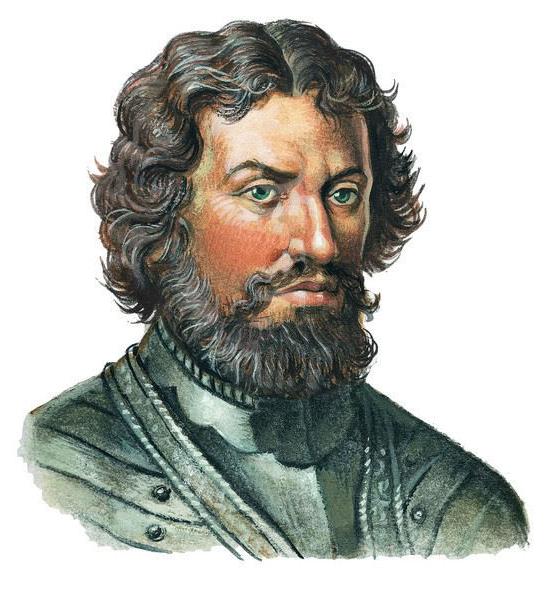
- Wage War: Kings need to be commanding military leaders, in whose service fame, fortune and honour could be won. Do set an example for your followers - Robert the Bruce has the reputation for being Scotland's most successful warrior king. He was the military role-model of medieval kingship and fought, against the odds, for Scotland's freedom. His most famous victory was won at the Battle of Bannockburn in 1314. Don't flee the field before the battle begins. In 1436 James I led a major - and very expensive - expedition to recapture Roxbugh Castle from English control. What should have been a demonstration of military superiority turned into a fiasco. James abandoned the siege before it began. He left behind his expensive artillery - the visible status symbols of a warrior king. James's failure was seen as poor kingship and was a catalyst for his assassination in Perth the following year.
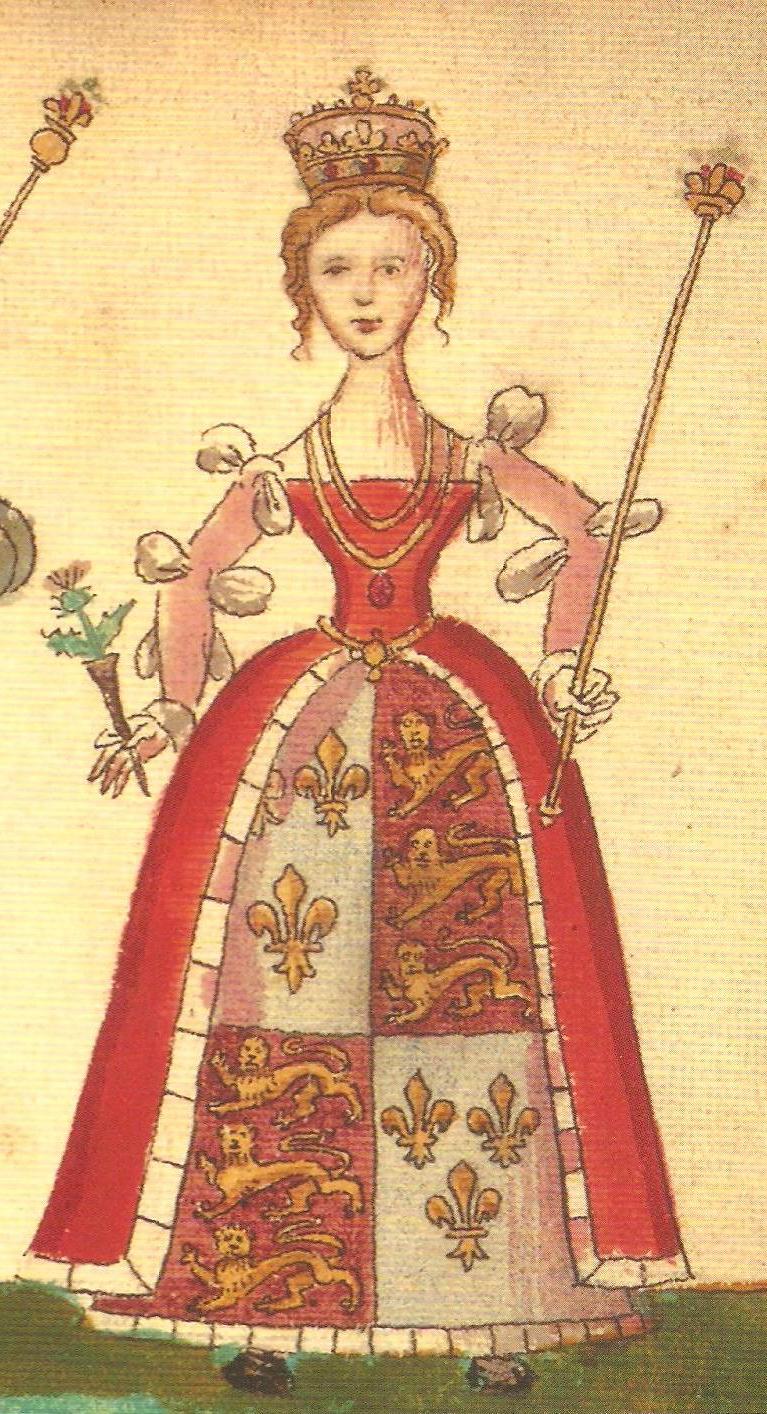
- Secure the Dynasty: Royal marriage was a powerful tool used to build alliances and seal agreements. It was also essential for the provision of a legitimate heir. Do make a prestigious marriage - As their dynasty became more secure, the Stewart kings began to look to other European courts for their brides. They made some impressive diplomatic alliances, bringing wealth in the form of the bride's dowry. When James III married Margaret of Denmark in 1469 her dowry ultimately comprised the highly desirable Orkney and Shetland islands. Don't fail to produce an heir. David II, son of Robert the Bruce died childless in 1371 despite two marriages. He never gave up hope of producing an heir, and attempted to divorce his second wife, Margaret Logie, to marry his mistress, Agnes Dunbar. But Margaret successfully appealed to the Pope to obstruct the divorce. Agnes was still queen-in-waiting, living at Stirling Castle, when David died. The king's infertility ended the Bruce dynasty and the crown passed to David's nephew, Robert II, the first Stewart king.
- Stage a Spectacle: A successful king knew how to make an impression by ensuring he had a physical presence in the realm, while publicly displaying his wealth and status at every opportunity. Do host elaborate events at the royal court, such as pageants and tournaments - In 1449 James II hosted an international tournament at Stirling Castle. Knights o horseback hoped to unseat their opponent and gain fame for their deeds. This sporting event provided welcome entertainment for the nobility and gave James a chance to parade his importance in front of his influential guests. Don't neglect your public image... James III seems to have avoided chivalric sports and public entertainments. There is no evidence of a tournament being held in Scotland at any point during his reign. Instead he horded his wealth. This failure to provide crowd-pleasing spectacles for the court was part of the reason for the eventual rebellion against him.
Friday, 29 January 2021
Friday Five: Everybody Wants to Rule the World
Wednesday, 27 January 2021
At Least It's Not a Marathon: Sprint: How to Solve Big Problems and Test New Ideas in Just Five Days
The question the boys tackle is
how to take an individual activity and focus on finding a solution. The basic
idea is to provide a DIY guide for running your own sprint (five-day
problem-solving exercise) with a clear daily focus and checklists (including shopping
lists for necessary materials) in the back, along with FAQs and a link to the
website (thesprintbook.com) for more information and resources.
The authors recommend removing
all phones, laptops and tablets from the room to focus more fully on the
immediate task. “These devices can suck the momentum out of a sprint. If you’re
looking at a screen, you’re not paying attention to what’s going on in the
room, so you won’t be able to help the team. What’s worse, you’re unconsciously
saying, ‘This work isn’t interesting.’” They acknowledge that not everyone has
the luxury to set other work aside for a week (who picks up the slack?), so
this method can only really work in a big organisation. Interestingly, it can
only really work in person, which is a shame in these ‘unprecedented’ times
when nearly all meetings are conducted over video conferencing systems. The
concepts involve using simple graphics and sketch designs: many of the
suggestions are worked out on white boards and with sticky notes.
They maintain that deadlines
force one to focus when pitching ideas while they also recognise that smaller
parts of the sprint can be used if there is insufficient time to run the whole
week. The ideology can be applied to making a small decision or dealing with a
frustrating problem, and customer interviews can be conducted at any time. The highlights
of the process are the focus on asking the experts, interviewing potential
users, and making decisions on solutions.
They make an effort to use female
pronouns – “The Decider needs to choose one target customer and one target
event on the map. Whatever she chooses will become the focus of the rest of the
sprint.” – but all the references are Silicon Valley frat boy (Star Wars; Apollo 13; Ocean’s Eleven;
Lord of the Rings; Led Zeppelin; Huey
Lewis and the News). The examples they use for the businesses which benefited
from a sprint are: a coffee outlet; a hospitality robot; a software company;
and a medical assessment service. A quick glance at the bios at the back
(masquerading as thank-you notes), reveals that they spent their ‘ordinary’
childhoods computing, recording, designing sailing yachts, playing basketball
and producing music.
Friday, 22 January 2021
Friday Five: Kings and Queens (and a Bonus Oddball) of Scotland
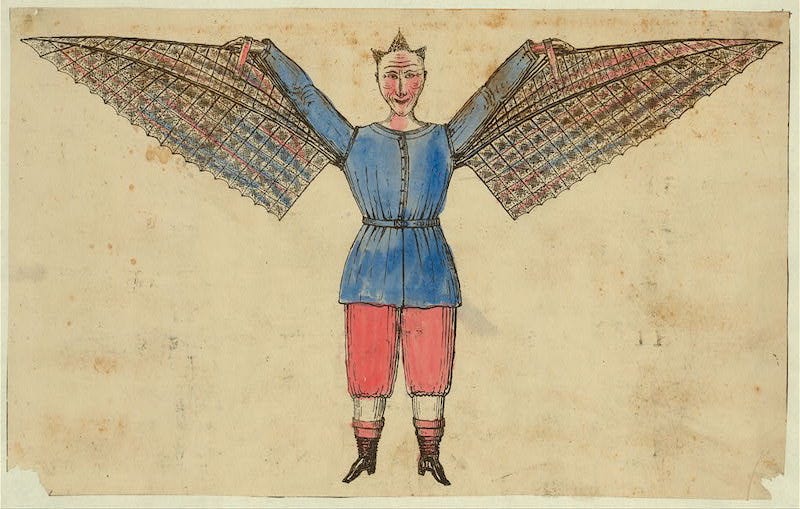
Now, I have no illusions that I am any good at this sort of thing, and this is certainly not any attempt at providing a definitive history. There are, however, a few names that capture the imagination here.
Friday, 15 January 2021
Friday Five: Favourite Books I Read in 2020
My Favourite Books I read in 2020
- The Penelopiad - Margaret Atwood (2005) - a retelling of the myth of Odysseus as narrated by the 'faithful wife' left behind while her husband travels the world having adventures. It's sharp and witty and short. 4.9/5
- A Gentleman in Moscow - Amor Towles (2016) - When people use words like charming and delightful, I tend to shy away, but this book is everything it promised to be. Count Alexander Rostov is sentenced to live out the rest of his life in house arrest in the Metropol Hotel in Moscow. He befriends the guests and the staff and manages to spin an epic tale in a confined environment. Published before hotel quarantine was a thing we all recognised, expect this to be made into a film. 4.8/5
- Ducks, Newburyport - Lucy Ellmann (2019) - I wasn't sure I ever would, because I borrowed it from the library twice (having to return it because it was reserved), but I finally finished it. And wow! Just wow! It's one hell of a challenge (what with being over a thousand pages long and nearly all one continuous sentence), but so rewarding. I am so glad I persevered with this book. It's so complex and insightful and devastating and affirming, and I'm going to miss it. 4.8/5
- Girl, Woman, Other - Bernardine Evaristo (2019) - The joint winner of last year's Booker Prize, this exploration into the lives of twelve black British women is absolutely life-affirming. Each narrative is individual yet they weave together, with some of the stories overlapping to create a tumultuous landscape of love, loss, sorrow and joy, while touching on timeless issues of race and feminism. This might sound worthy and intense: it is, but in the very best way. 4.8/5
- Becoming - Michelle Obama (2018) - Michelle Obama relates the experience of what it's like to be a black woman in a white man's world. She explains how it feels to sacrifice her own career to support that of her partner; to balance the needs of the country with those of her family while being under intense pressure and scrutiny; and how to remain true to her values in a job with no position description but an overwhelming weight of expectations. And she does it all with grace and style. 4.7/5
- The Warlow Experiment - Alix Nathan (2019) 4.5/5 - This novel is based on the true story of an eccentric Victorian gentleman, Herbert Powyss, who conducted an experiment; he placed an advert in a newspaper asking for a man to volunteer to be placed in isolation in his cellar for seven years with ‘every convenience desired’ but ‘without seeing a human face’. John Warlow was the only person who answered the advert, ‘a semi-literate labourer with a wife and six children to provide for’. Alix Nathan imagines how this experiment might have worked, or not, and she has created a rich novel of mental manipulation. She imagines that Powyss wants to see how a mind would cope without social contact and write up his findings to present to the Royal Society.
- The Story of the British Isles in 100 Places - Neil Oliver (2018) - Neil Oliver's story of the British Isles is very personal to him as he shares the places that he thinks are important to the story of who we are. It's fascinating to read his explanations, to remember landmarks or consider them in new ways. It also makes one consider which places one would include in an individual account (For the record, that would be Pendle Hill, Anfield, Manchester Free Trade Hall, Teddington Lock and Marlow Bridge for me.) 4.5/5
- Finding Baba Yaga - Jane Yolen (2018) - This contemporary retelling of an iconic myth is written entirely in blank verse. It is reminiscent of the artful design of a Russian Matryoshka nesting dolls, as elements of Slavic myth, Russian folklore and fairy tales cleverly fit among the contours of American realism. It also explores a number of themes including the nature and power of language, the journey from childhood to adulthood, the relationship between religion and language, ‘good’ and ‘bad’ words, the unique dynamic of female friendships and the mother/daughter relationship. It is familiar; it is unique; it is brilliant.4.4/5
- Dream Angus - Alexander McCall Smith (2006) - Part of the Canongate Myth Series, this novella adapts the Celtic myth of the Celtic God of Dreams. It's concisely and charmingly written and introduces vignettes of characters who drift through the story with all the strange combination of directness and magic that I expect from the writer of The No 1 Ladies Detective Agency and 44 Scotland Street series. 4.3/5
- The Inheritance of Loss - Kiran Desai - (2006) Winner of the Booker Prize 2006, and the reason I read fiction. It is an atmospheric elegy to a bygone era, taking the political (national divides; crumbling international alliances; religious and cultural diaspora) and making it personal (family relationships; love and tolerance; self-identity). Set in the Himalayas and the USA it has a wide scale and detailed language. 4.3/5
- Hollywood Wants to Kill You: The Peculiar Science of Death in the Movies - Rick Edwards and Dr Michael Brooks (2019) - According to the authors, “It may not sound great, but it is. Partly, because it’s an excuse to explore science. Much of scientific endeavour is really about finding ways to avoid death.” It is also an excuse to revisit disaster movies and question whether they really were as crap as you thought. Apparently, despite the fact that all trainee managers at NASA are shown Armageddon to see how many of the 168 factual errors they can spot, drilling a hole into the centre of an asteroid and blowing it up from within is still the best way of dealing with this potential threat. 4.3/5
- The Bear and the Nightingale - Katherine Ardern (2017) - A historical fantasy set in Medieval Russia that incorporates elements of Russian folklore? Yes please. A blend of mythical creatures and Orthodox Christianity? Yes again. Finding out that this is the first part of a trilogy that promises more evocative prose and atmospheric settings? Thrice yes!4.2/5
- The Wall - John Lanchester (2019) - Described as the new 1984, this is sharp and bleak dystopian fiction that isn't so far removed from the present. The younger generation have to patrol the wall and protect what is theirs from the Others who want to come and take it. If anyone gets over the wall, the same number of people (and those who failed to defend it) are put out to sea. It's very powerful and very grim. The first line is, 'It's cold on the wall' and I literally shivered all the way through this (short-ish 270 pages) novel. 4.2/5
Wednesday, 13 January 2021
You'll do girl, you'll do: Finding Baba Yaga
Teenaged Natasha lives with her
parents, and knows she must get away from them and their constant fighting. Ever
since her father has discovered religion, it has become worse as he monitors
her language and behaviour. She runs away into the forest but, although the
woods, stones and water are a recurring fairy tale image or reference, this is
not the one familiar from storybooks and the settings are slightly skewed; “The forest opens like a yawn,/ as if it
knew I was coming,/ has seen me before,/ can’t be bothered to resist.” We
recognise the motifs of the lost child in the woods, but Yolen suggests there
is more to the story if we look, listen, and abandon our preconceptions. At the
end of Chapter Two, The Runaway, in This Is Not a Fairy Tale she writes, “Expect no princes./ Expect no magic rings./
Expect no glass slippers./ Expect no fairy godmothers. / Expect no singing
dwarfs. / Expect no talking dragons. / Expect only/ seven deadlies delivered:/ exhaustion,/
boredom,/ regret,/ hunger,/ anger,/ danger,/ death./ All part of God’s taketh
away.”
And then she encounters Baba
Yaga, with all of her traditional traits. She lives in a house which turns
about on its chicken legs: “It is like
living on a house boat:/ the swell of the waves, the turn of the tides,/ a
moment of emotion, with the ‘e’ removed.” She is a tough old woman with an
iron nose, and the contemporary references to strong women are apparent; “She’s tougher than Clinton or Thatcher ever
were.” This clash of realism and magical imagery continues as she explains
how Baba Yaga flies through the sky in her mortar, guided by her pestle, but no
one see her “unless you count bad dreams”. She flies “across tundra, taiga, major highways,/ avoiding traffic jams,
roundabouts,/ only bothering the occasional helicopter/ or low-flying private
planes.”
Natasha learns to tell her story,
and that “A story is, not always means.”
It may be grim – “I think I know now/
there are no happy evers./ Only happy moments.” – but she grows as a
narrator, examining the meanings of words and exploring postmodernism through
form and structure, drawing attention to the artifice of the narrative. “I am becoming a poet./ I am thinking in
metaphors./ I am walking through a poem.”
Friday, 8 January 2021
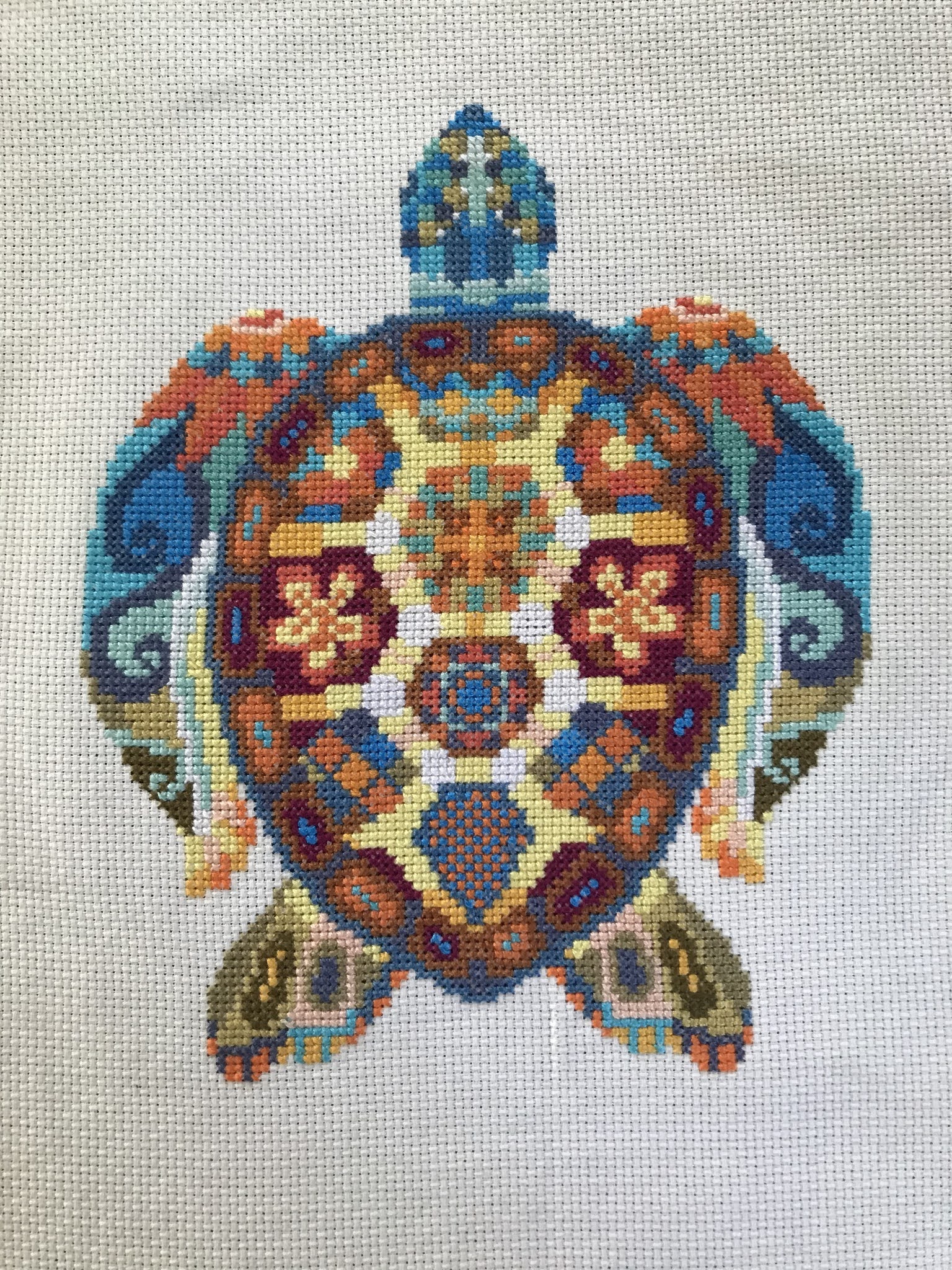
Friday Five: Happy Cross-Stitch
A friend saw this image and thought of me -I can't imagine why! She sent it to me and I turned it into a cross stitch pattern. Now, the question is to who do I give it? There are so many possible recipients!
The following designs are Mandala cross stitch patterns from a calendar that a colleague had at work. She printed them off for me and I enjoyed making them. I didn't always have the exact colours that were specified, but I had a stab (as it were) so they may not be quite true to the original pattern, but I like the art anyway.
Tuesday, 5 January 2021
My Newest Favourite Thing: The Unicorn Tapestries
![]() |
| 1. The Hunters Enter the Woods |
![]() |
| 2. The Unicorn is Found |
![]() |
| 3. The Unicorn is Attacked |
![]() |
| 4. The Unicorn Defends Itself |
![]() |
| 5. The Mystic Capture of the Unicorn |
![]() |
| The Unicorn is Killed and Brought to the Castle |
![]() |
| Some of the threads on bobbins |
![]() |
| Blue and green should never be seen... |